

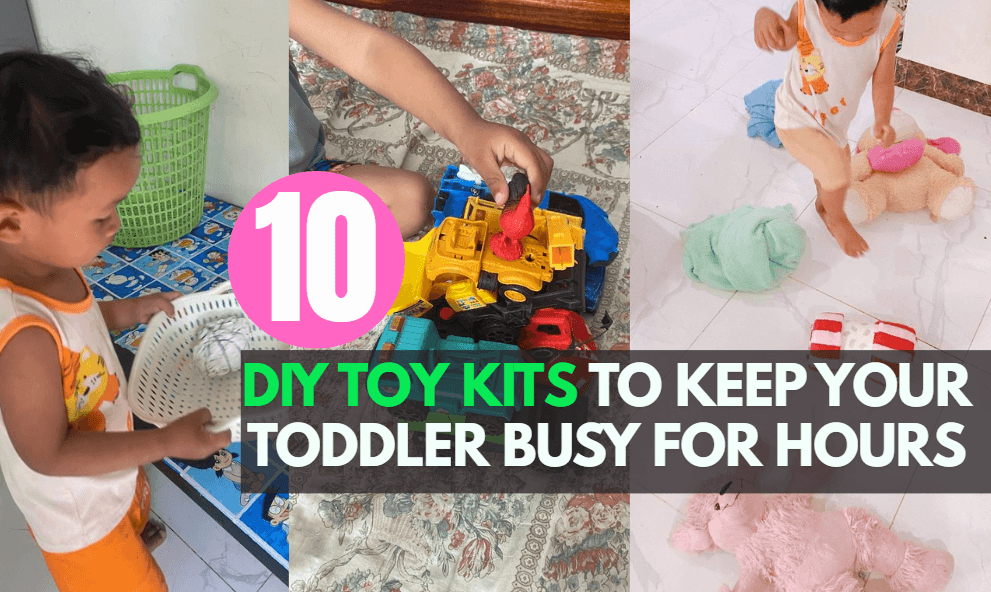
Before I started putting together these simple play setups at home, my son was always crying, throwing things, and constantly looking for trouble.
It was one of those phases where I felt like I could not put him down for a single second without something going wrong.
But once my husband and I started building these little play sets together, my 3-year-old’s behavior changed completely.
He went from screaming to shouting “WOW!” and “Yeah!” and clapping for himself.
Watching him light up like that was everything.
And honestly, the most surprising part?
I finally had time to rest and get through my chores.
The thing that made the difference was simple: choosing play that actually matches what a 3-year-old brain and body need. When the activity fits the child, they stop looking to you for entertainment.
Here are the 10 DIY toy kits and indoor activities for toddlers that have worked for us, and I believe they will work for you, too.
Key Takeaways
- Age-appropriate play is the single most effective way to encourage independent play in toddlers without guilt or tears.
- All 10 activity setups use items you already have at home. No special purchases needed.
- Each activity is designed for 3-year-olds specifically, matching their attention span, energy level, and love of “missions.”
- The toy rotation trick at the end is one of the simplest things you can do to make old toys feel brand new again.
- These are screen-free, low-mess (mostly!), and set up in under 5 minutes.
1. Paper Balls and a Laundry Basket
This is one of the best activities for this age because it is so simple, and yet it holds attention for a surprisingly long time.
I used to let my son play with real balls, but he would cry constantly because he wanted me to pick them up every time they rolled away.
Chasing after them around the room was exhausting for both of us.
How to set it up: My husband crumples paper sheets and wraps them tightly with hair rubber bands to make sturdy little balls.
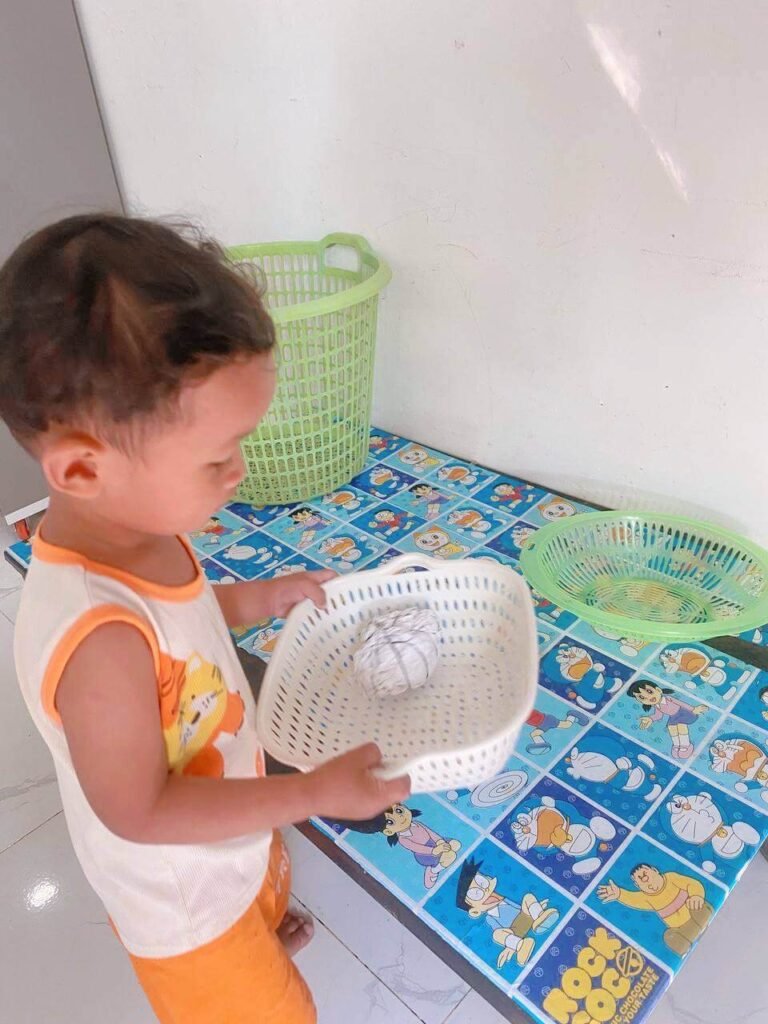
We make 3 to 5 of these and set a laundry basket or a kitchen container across the room as the target.
Because paper balls do not bounce the same way real balls do, they land close by when they hit a wall, so he can pick them up and throw them again on his own.
Pro tip: Before you walk away, give him a mission. “Can you throw all the balls into the basket before I come back?”
That one sentence buys you a good chunk of time.
2. Cars and Plastic Roosters
At 3 years old, children are obsessed with building things up and then knocking them down.
It is not just fun for them.
Stacking and toppling teach cause and effect and give them an early sense of how gravity works.
How to set it up: Mix things up by having him stack colorful toy cars on top of each other, then challenge him to balance a plastic rooster on the very top of the pile without it falling.
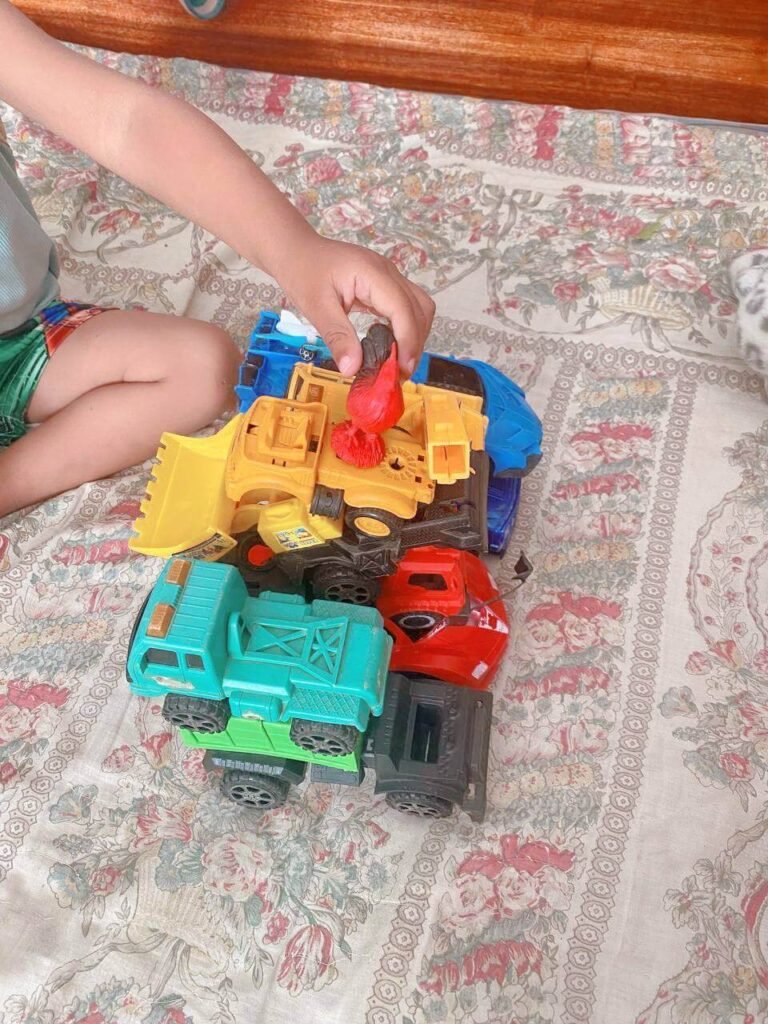
Pro tip: Frame it as a balance challenge. “You have to get the rooster all the way up there without letting it fall!”
The competitive edge of the challenge keeps them at it longer than you would expect.
3. The Magic Rice Pan
This one surprised me the most.
Touching rice with bare hands is genuinely calming for toddlers.
It helps settle a restless or cranky mood and improves focus, which is something sensory play is well known for in early childhood.
The best part? It is easy to clean and does not create the kind of chaos you might be imagining.
How to set it up: Pour some uncooked rice into a shallow pan or baking tray.
Bury small objects inside, like toy animals, a little rubber duck, or even a watch.
He will sit there digging, scooping, and pouring for a long time, just trying to find everything hidden inside.
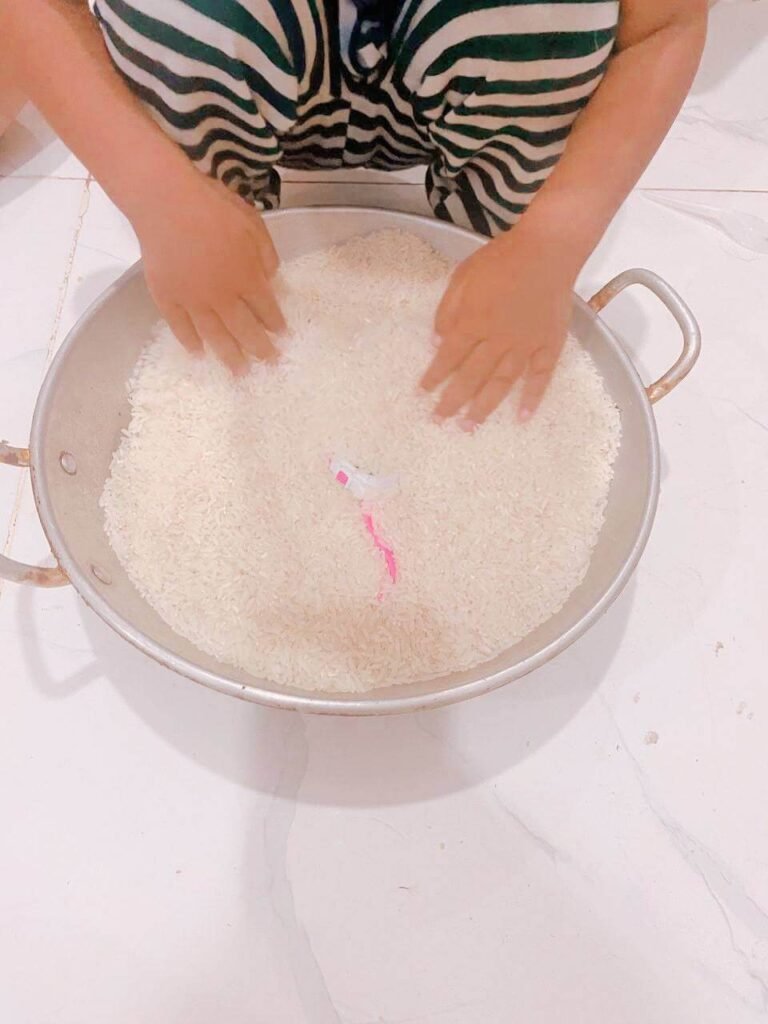
This is one of those setups that works especially well when you need to keep a toddler busy while cooking.
You can do it right next to you in the kitchen.
4. Role-Play Sets: Kitchen, Tools, or Doctor Kits
Toddlers love to do what they see adults doing.
That drive to copy and imitate is actually how they start to understand the world around them.
Giving them their own version of “real work” channels that energy in a really productive direction.
How to set it up: Since I am often in the kitchen, I put together a small pan with toy carrots, tomatoes, and corn, and give my son a job to do while I am busy.
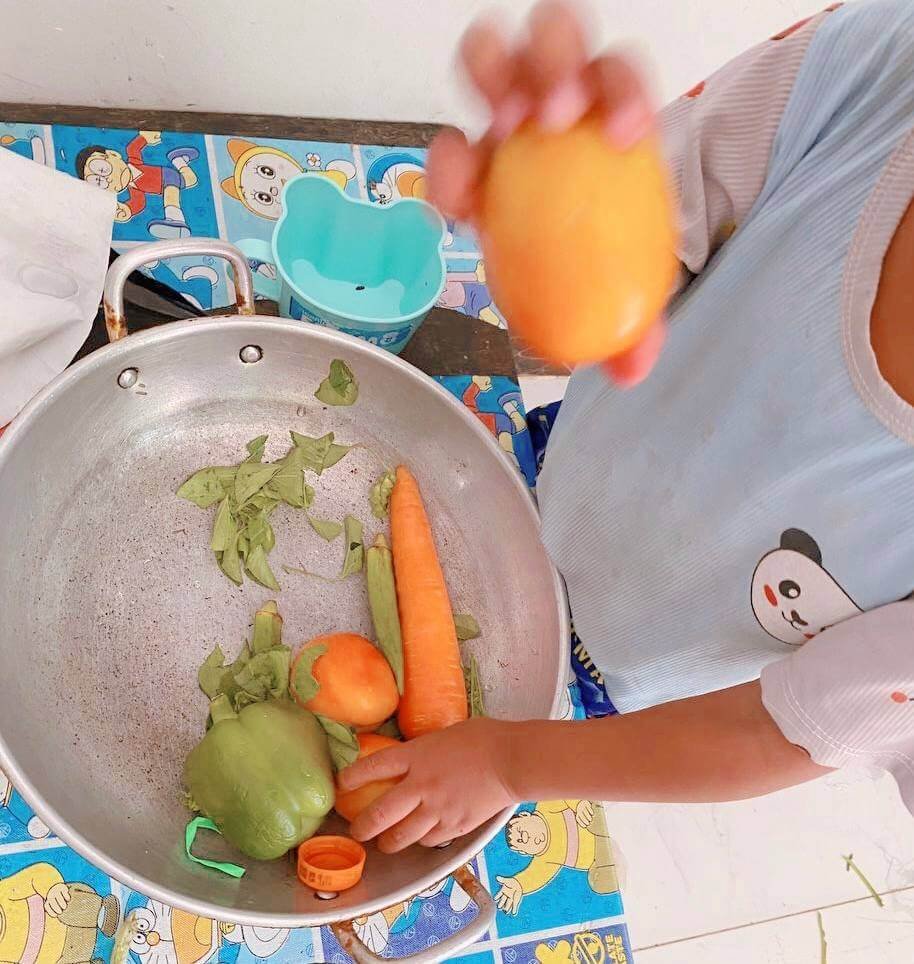
I say, “Can you help me cook soup for your toy dog?” and he is immediately invested.
He is not interrupting me because he has his own important task to complete.
This is one of the most reliable answers to the question of how to get a toddler to play alone.
When they feel like they have a real role to play, they step into it.
5. Train and Car Tracks on a DIY Ramp
Pushing toy cars along a track or down a slope takes concentration.
It is one of those activities that looks simple but is actually building fine motor skills and hand-eye coordination with every pass.
How to set it up: My husband flattens cardboard milk cartons and uses them to build slopes and ramps over a small chair.
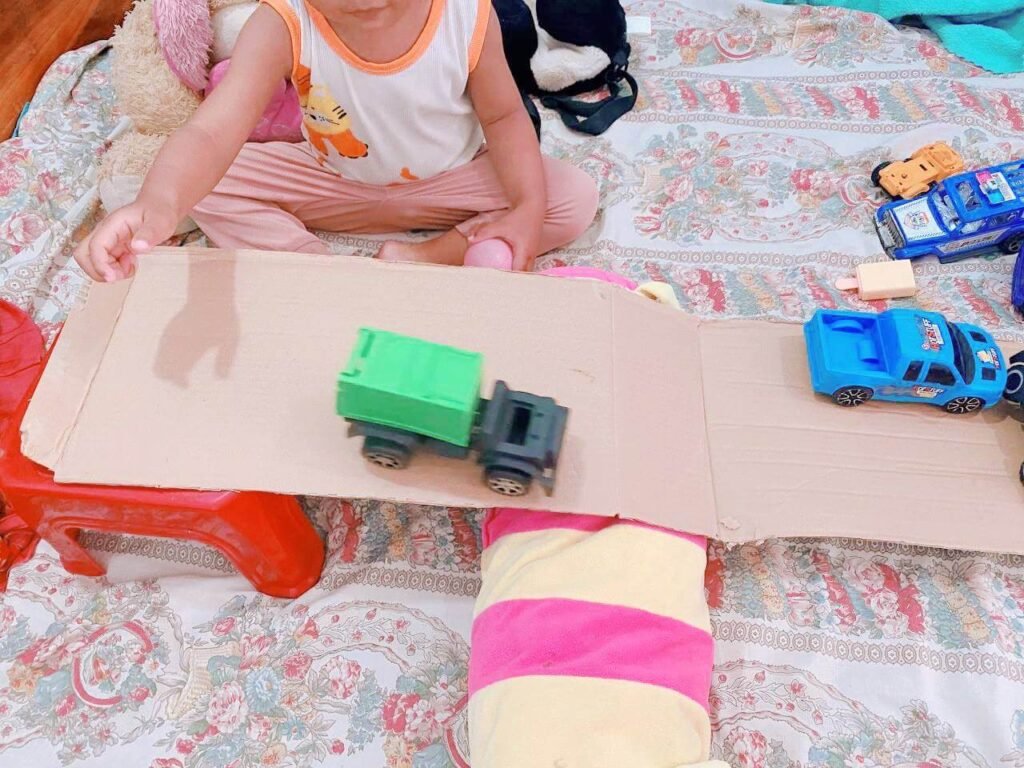
The incline means the cars roll down on their own, which blows my son’s mind every time.
He races car after car and could do it for a very long time.
6. Energy Burners: Indoor Obstacle Course
Sometimes, a toddler cannot settle into a focused activity simply because they have too much energy stored up.
Trying to get them to sit down for something brain-based before they have burned that off is a losing battle.
How to set it up: Lay towels, cushions, or stuffed animals across the floor in a path.
These are the “stones.”
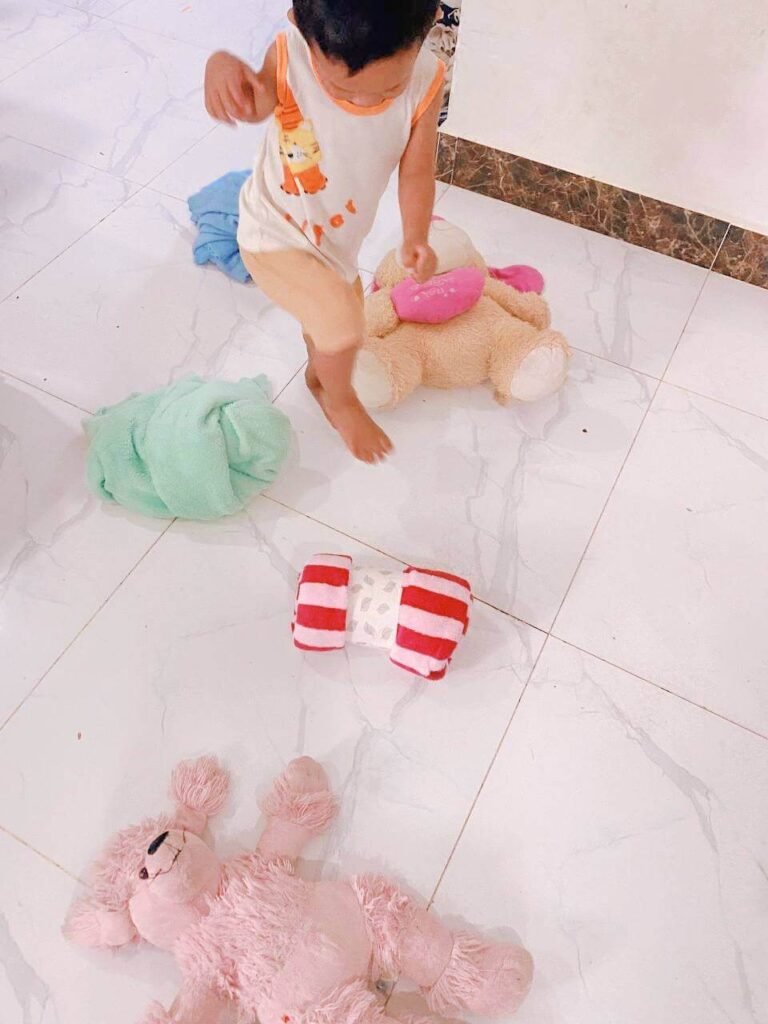
His mission is to jump from one to the next without touching the floor in between.
Pro tip: The mission framing really works here. “Jump across the path but do not touch the stones!” gives it stakes, and he takes it very seriously.
This is one of the best screen-free activities for toddlers who are physically restless, because it channels the energy rather than fighting it.
7. Art Station and Easel Time
Three-year-olds are just beginning to use their imaginations in a real and expressive way.
Painting and scribbling on a large surface gives them a way to get emotions and ideas out of their heads and onto paper.
How to set it up: Do not direct it. Just set out a few colors and say, “I cannot wait to see what you create today!” That open invitation matters a lot.
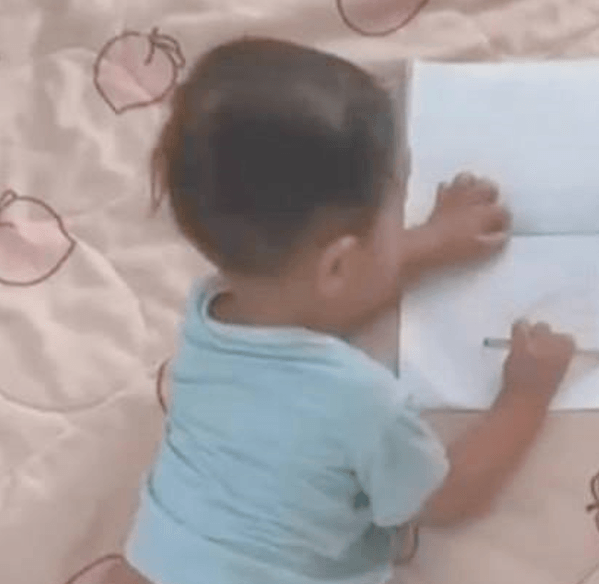
The moment you tell a toddler to draw something specific, the magic disappears.
This works beautifully as an analog play activity and is something even the busiest parent can set up in under two minutes.
8. Car Repair Shop
This is my son’s favorite setup, and it makes complete sense once you understand that kids at this age are driven to take things apart.
Whether something is new or old does not matter to them at all.
How to set it up: Take his toy cars apart yourself first.
Wheels in one pile, the car body in another, the roof separate.
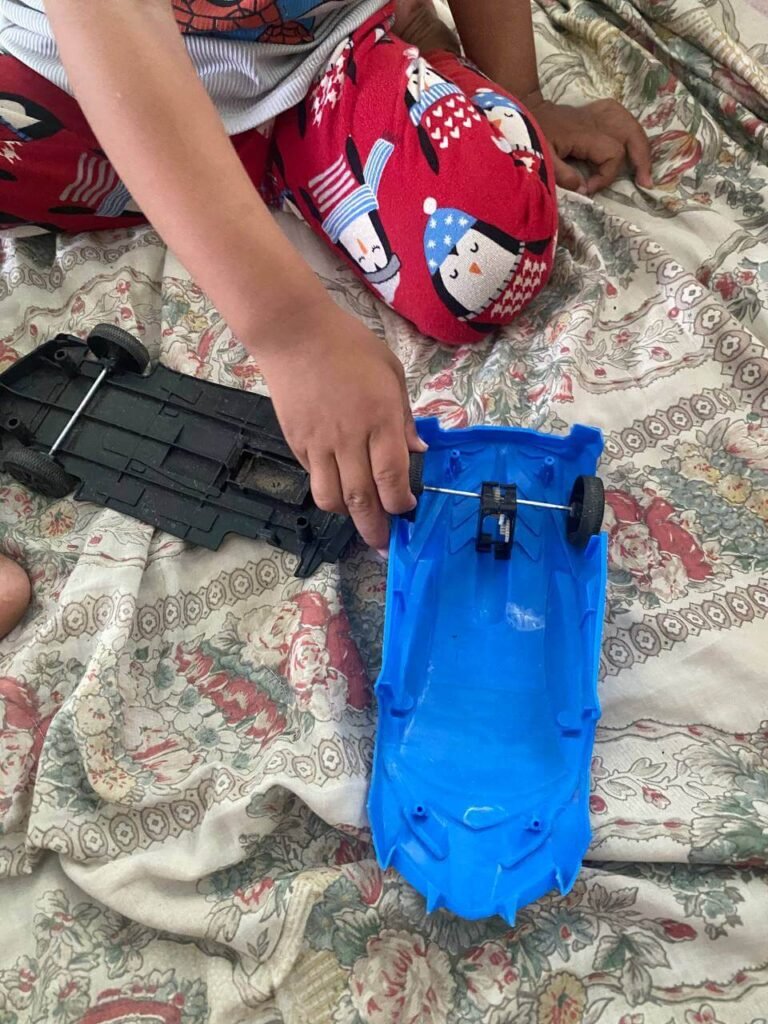
Then hand him the parts and tell him the cars are broken, and you need him to fix them.
He gets to be the expert, and that feeling of being needed and capable is incredibly motivating.
9. Car Wash Game
This activity builds something really valuable in a 3-year-old: a sense of pride and accomplishment.
Kids this age genuinely love the feeling of doing a job well and seeing a clear result.
How to set it up: Gather toy cars in different colors, a small plastic bowl with a little water, and an old toothbrush.
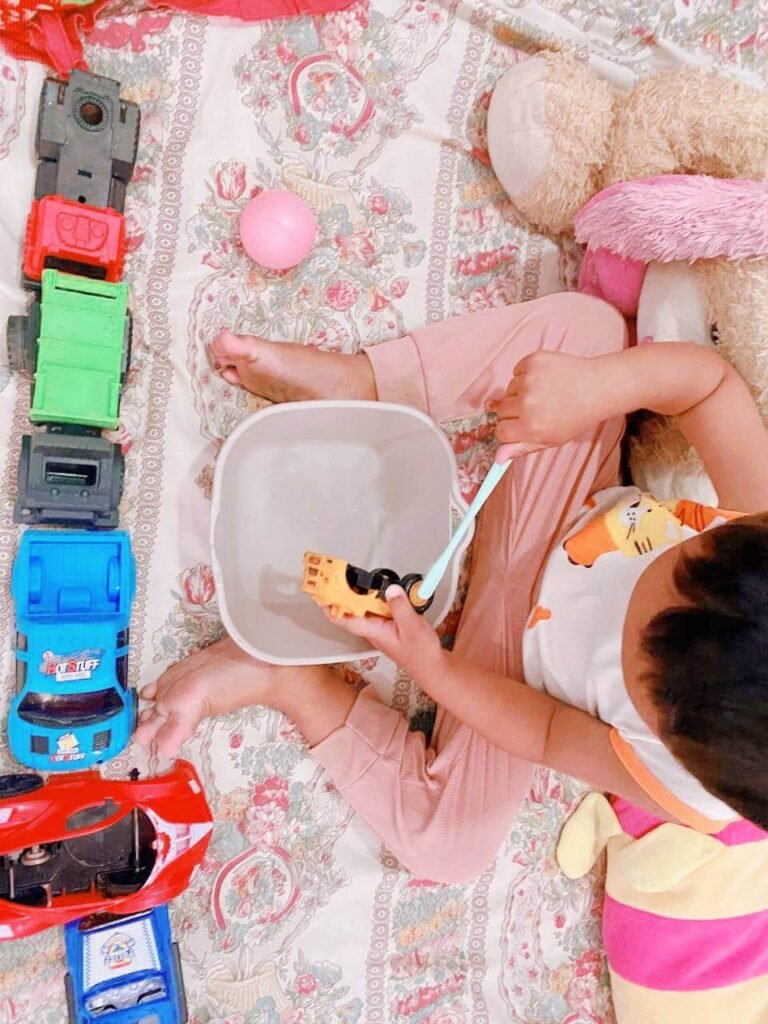
Tell him, “Please help me wash these cars until they are completely clean!”
He will scrub and rinse every single one with full focus, and he will feel so proud when he finishes.
10. Dress-Up and Superhero Capes
Boys at this age love to be heroes. And the best part is that you do not need a store-bought costume for this to work.
A simple piece of cloth tied around the shoulders is enough to send the imagination into full gear.
How to set it up: Hand him a cape and give him a “World Rescue Mission.”
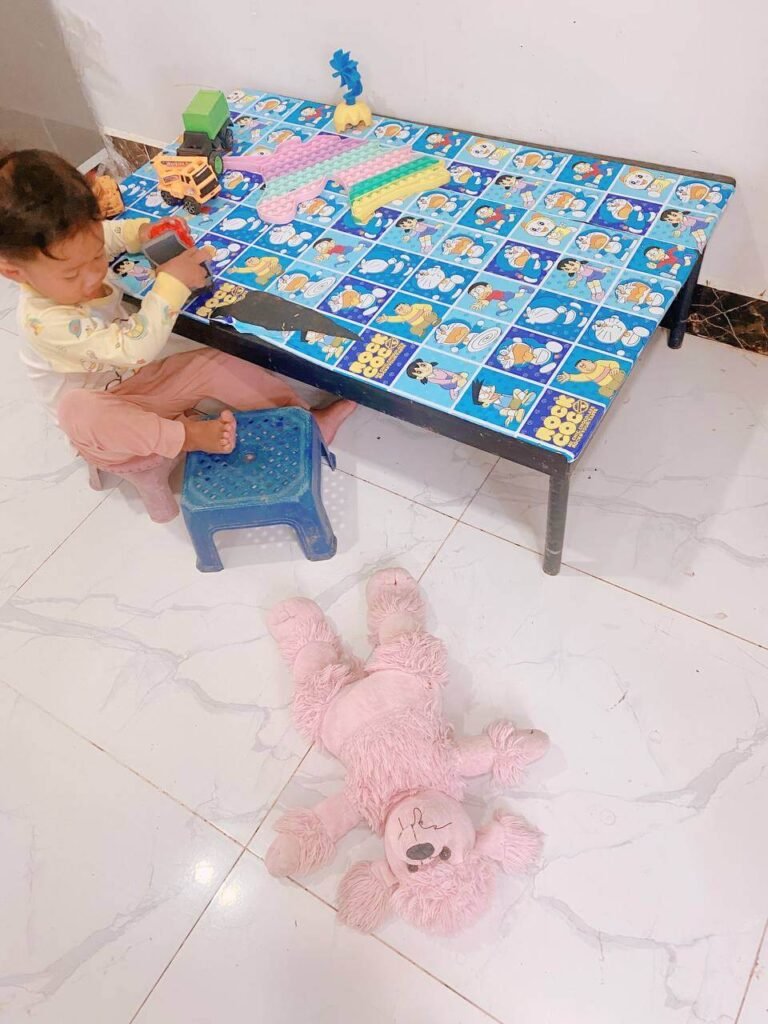
For example: “Little Hero! The Pink Poodle has fallen off the shelf and needs you to save her and bring her to safety! He will take the mission completely seriously, and you will have a good few minutes of peace while the rescue operation is underway.
The Toy Rotation Trick That Makes Everything Feel New
This is the strategy that ties all of the above together.
Do not put all the toys and activity setups out at the same time.
Instead, keep 5 activities available and rotate the other 5 away.
When you bring the stored activities back out a week later, your toddler will react to them as if they are brand new.
The novelty effect is real, and it completely changes how long they stay engaged.
It is one of the simplest toy rotation strategies you can use, and it costs absolutely nothing.
The Bottom Line
You do not need a playroom full of expensive gear to keep your toddler happily busy.
What you need are activities that match exactly where they are developmentally, a clear mission to hook their attention, and a small rotating set of options so nothing feels stale.
These 10 DIY toy kits for toddlers changed my daily life at home.
My son stopped looking to me for constant entertainment, started building confidence through play, and I finally got a real window to breathe and get things done.
Start with whichever one sounds easiest to set up today.
Watch what happens when you frame it as a mission.
And remember: swapping toys in and out every few days is the quiet little trick that makes all of it last.
Frequently Asked Questions
How long should a 3-year-old be able to play independently?
Most 3-year-olds can manage around 5 to 15 minutes of independent play at a stretch, though this varies by child. The activities above are designed to push that window further by giving them a clear “mission,” which keeps them engaged much longer than open-ended play without direction.
What are the best indoor activities for toddlers on a rainy day?
The Magic Rice Pan, the Art Station, the Car Wash Game, and the Car Repair Shop are all perfect for rainy days indoors. They are low-mess, require no outdoor space, and hold attention well. The indoor obstacle course is also great for burning off energy when going outside is not an option.
How do I get my toddler to play alone without crying for me?
The key is giving them a specific mission before you walk away. Rather than just leaving them with toys, say something like, “Can you sort all the red cars into this box before I come back?” That clear task gives them a goal to focus on.
Are DIY toys as effective as store-bought ones for toddlers?
Absolutely, and sometimes more so. What matters most at this age is whether the activity matches the child’s developmental stage, not how much it costs. Paper balls, rice bins, and cardboard ramps hit the right developmental notes for 3-year-olds and often hold attention longer than expensive toys because they can be customized and refreshed easily.
What is the toy rotation strategy, and does it really work?
Toy rotation means keeping only a portion of your toddler’s toys and activity setups available at any one time and swapping them out regularly. When “old” toys come back after a week away, they feel new and exciting again. It works because novelty is one of the strongest drivers of attention in young children, and it also helps prevent the overwhelm that comes from having too many choices at once.
Are these DIY sensory activities safe and messy?
All sensory play requires adult supervision, especially for toddlers who still put things in their mouths. For the Magic Rice Pan, always supervise to ensure they don’t ingest the uncooked rice. As for the mess, using a shallow pan for the rice or playing on a large towel helps contain spills, making cleanup take less than two minutes.
Disclaimer: The content on Sprout Upward is designed to encourage intentional family leadership. I am a mom of two and a former youth worker sharing my real-life experiences, not a licensed therapist or medical professional. These guides adapt my professional team management background to daily home life. Please consult your pediatrician for any clinical, medical, or psychological advice regarding your child.
