

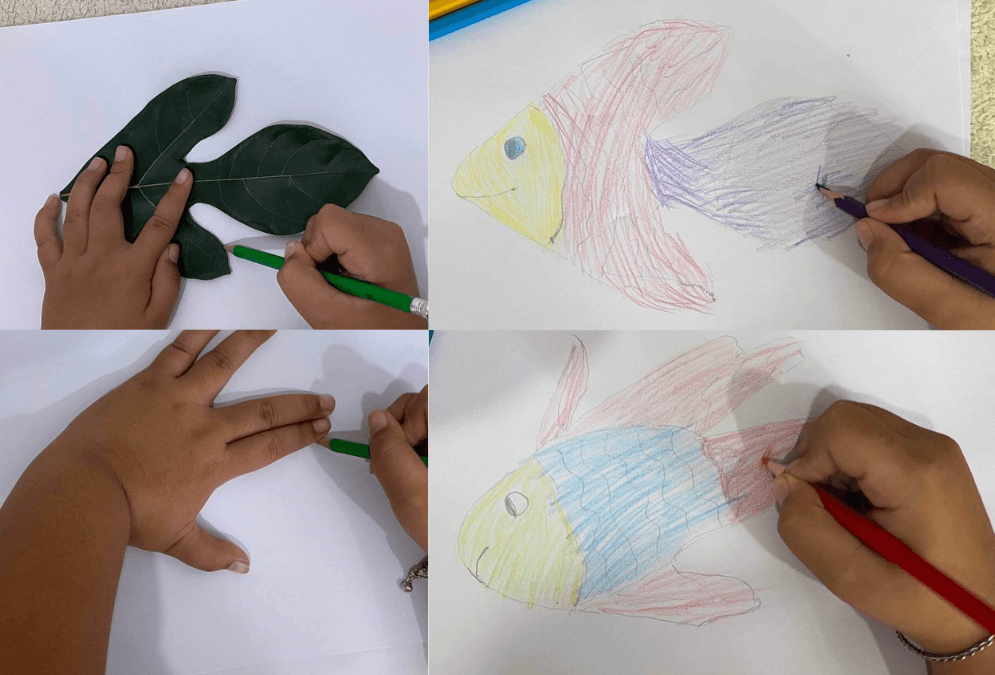
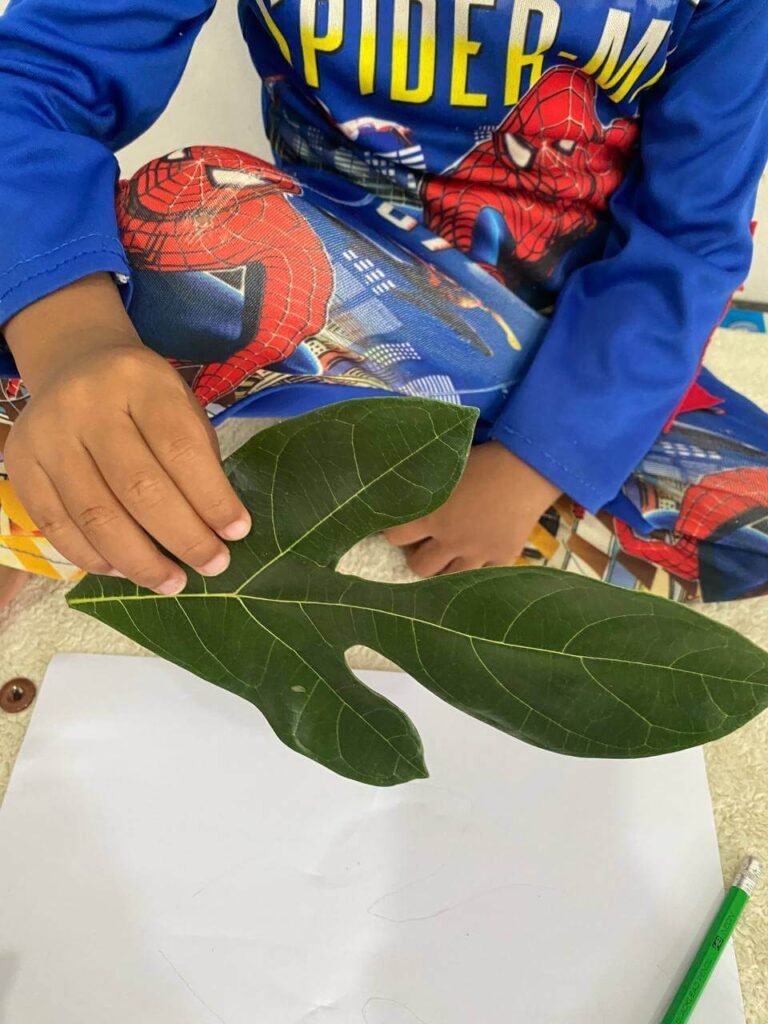
On Saturday afternoon, my husband went to the farm near our house. When he came back, I saw him holding a single jackfruit leaf.
I asked him, “What are you going to do with that leaf?” but he didn’t answer; he just walked into the house. Around 5:30 PM, I suddenly heard my daughter yell, “WOW… a fish! I want to color it like Spider-Man’s shirt! “
That evening, my daughter and son were playing together when their dad asked, “Does anyone want to draw a fish today?” My daughter ran over right away and said, “I do!” Her dad replied, “Let’s get started!”
That single leaf turned into one of the easiest fish drawing activities for kids we’ve ever tried, and by the end of the evening, we had two different fish drawn two different ways.
If you’re looking for a simple drawing activity for your own kids, here’s exactly how we did both.
Key Takeaways
- There are two easy ways to draw a fish for kids: tracing a leaf or tracing your own hand.
- You only need plain paper, a pencil, and coloring pencils. No special art supplies required.
- The leaf method uses the natural shape and veins of a leaf to form the fish’s body and scale pattern.
- The hand-tracing method works anywhere, even without a leaf on hand, which makes it perfect for school, a car ride, or a rainy afternoon.
- Coloring is where kids add their own personality to the fish, and that’s usually the part they enjoy most.
What You’ll Need
- Blank white paper
- A pencil
- Colored pencils
- A jackfruit leaf, or any large, sturdy leaf you can find outside (optional, but it makes the shape much easier and faster)
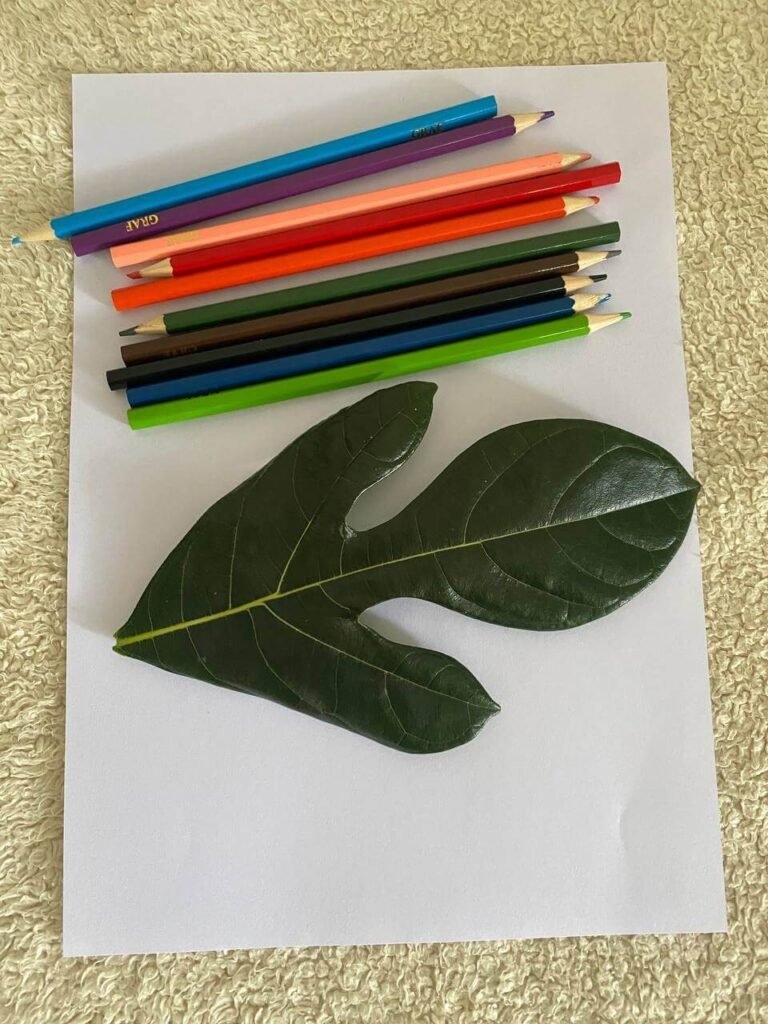
These fish drawing ideas for kids only need a pencil and a few colors, so there’s nothing to buy and nothing complicated to set up.
If you don’t have colored pencils on hand, crayons or markers work just as well.
Method 1: How to Draw a Fish by Tracing a Leaf
This was the first fish we drew, and the leaf did most of the hard work for us.
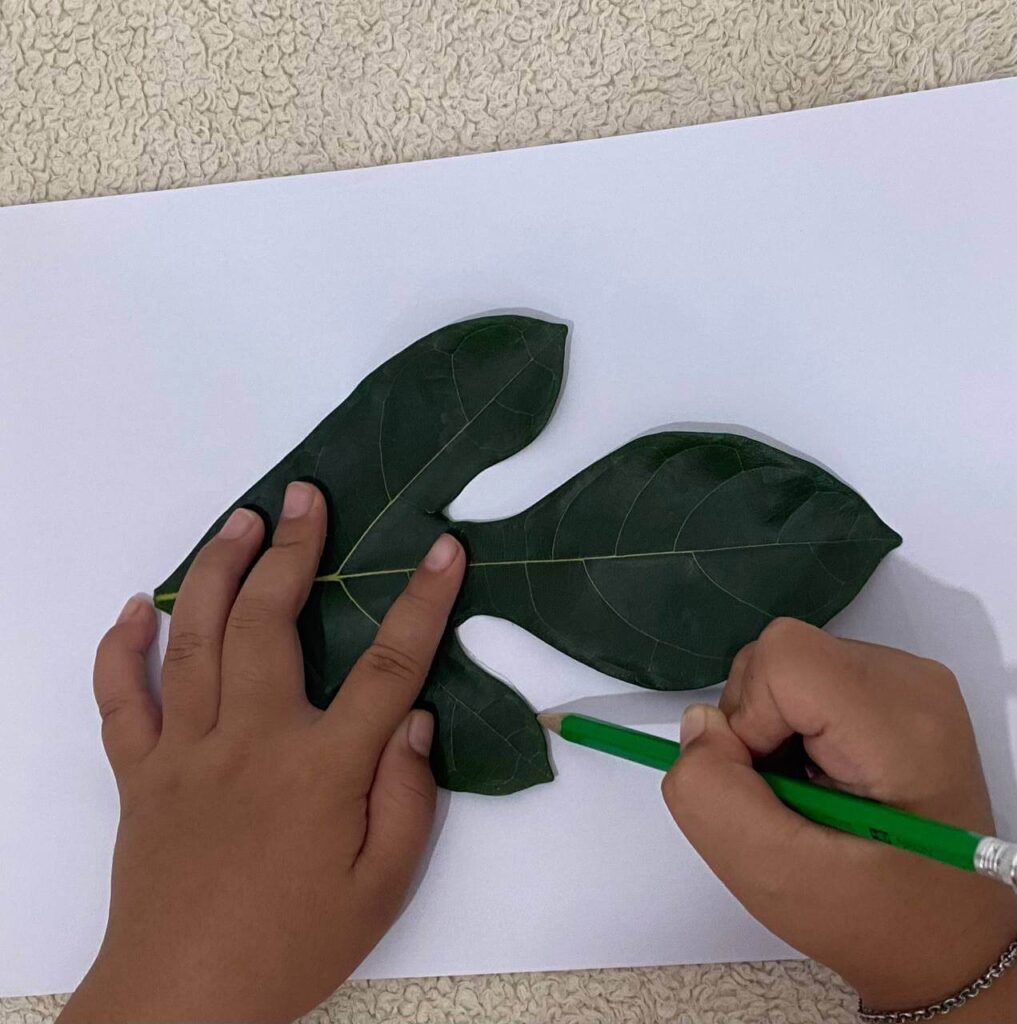
Step 1: Trace the Leaf to Form the Fish Shape
Her dad placed the jackfruit leaf on the white paper and had her gently and lightly trace around it, just enough to leave a faint outline of a fish underneath.
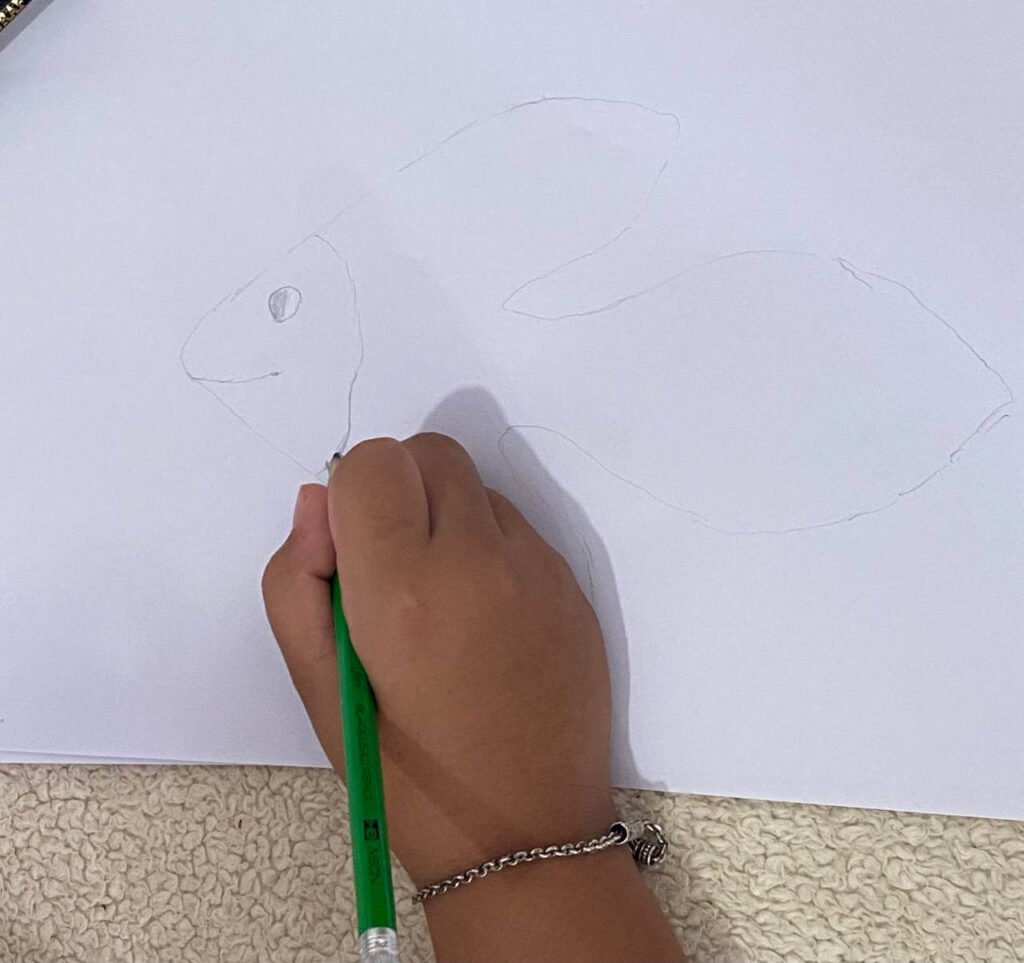
Step 2: Draw the Fish Head
Once she finished tracing the leaf, her dad removed it and told her to draw a backward letter “C” at one end. As soon as she drew it, she said, “Oh…! It’s a big fish…”
Step 3: Add the Mouth and Eye
Next, her dad drew a curved line at the front of the head to form the fish’s mouth, and a small circle a little higher up for the eye.
Step 4: Draw the Fish Scales
Her dad explained that fish need scales to protect themselves, but she wasn’t sure what scales actually looked like.
So he asked her, “Before you comb your hair, what does it look like?” She answered, “Like waves, all tangled together.” Her dad said, “Okay! Draw it just like that, but from top to bottom, across the fish’s body.”
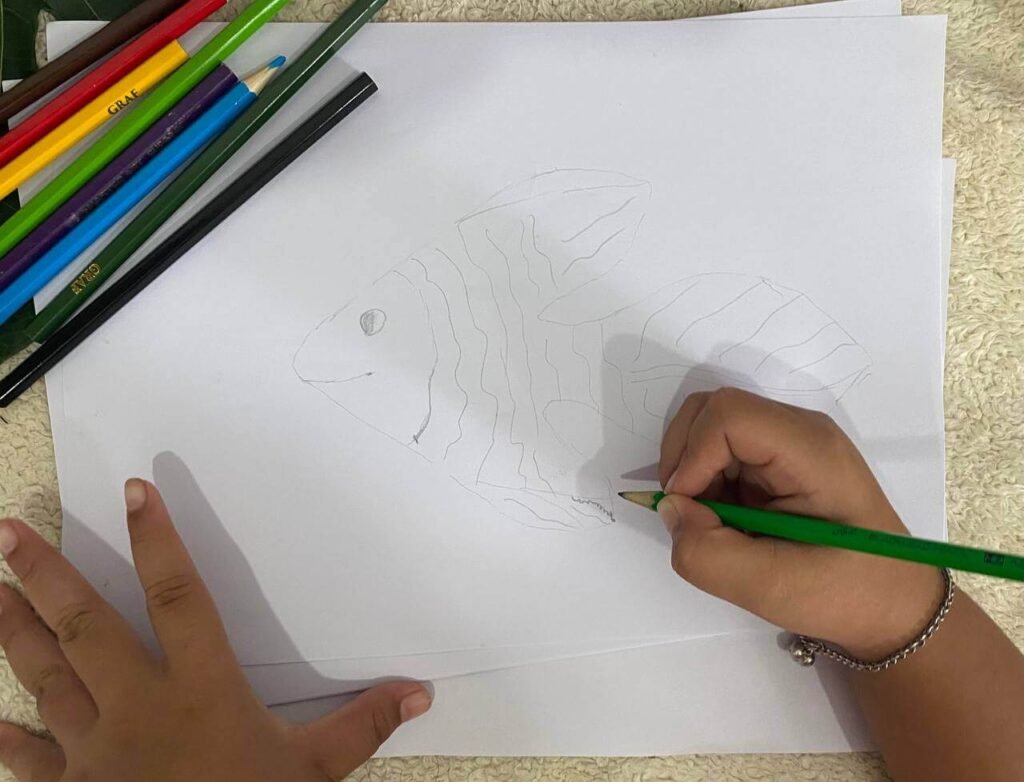
That one comparison made the whole idea click for her right away, and it’s a helpful trick if your own child gets stuck on how to draw fish scales.
Step 5: Color Your Fish
Her dad asked, “Do you want this fish to look beautiful when it swims?” She said, “YES!” and got straight to coloring.
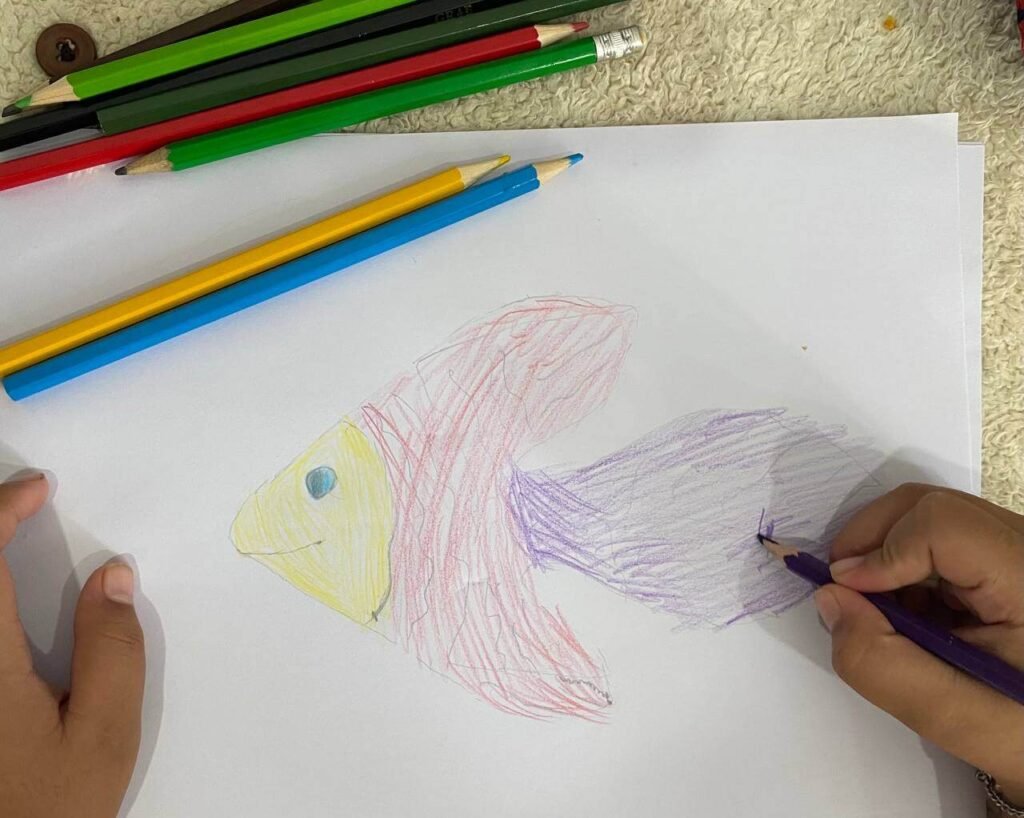
She gave it a yellow head, ocean blue eyes, a red body, and a light green tail, the same color as a young banana shoot.
Those happen to be all her favorite colors, and letting her choose them herself made the drawing feel like it truly belonged to her.
No Leaf Around? Try the Magic Hand Fish Instead
After she finished her first fish, she wanted to draw another one, but her younger brother had already grabbed the jackfruit leaf and torn it apart while playing.
That’s when her dad asked her something worth thinking about: “If you don’t have a jackfruit leaf, or your teacher asks you to draw a fish in the classroom, what would you do?”
She went quiet for a moment, thinking hard for an answer. To break the silence and keep things fun, her dad threw both hands up in the air and blew loudly through his mouth like a magician, which made all of us burst out laughing. Then he announced, “Dad has magic!”
This is where the second method comes in, and it’s honestly just as easy as the leaf version. It’s one of those simple animal drawing ideas that only needs something you already have with you: your own hand.
Step 1: Trace Your Hand
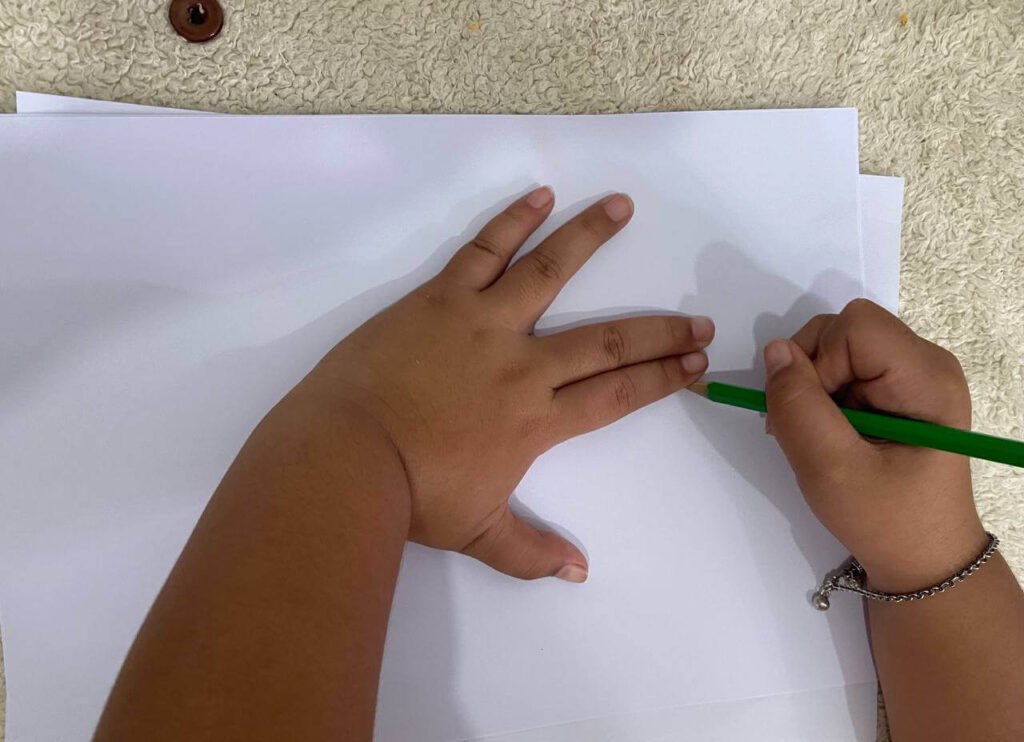
He took his daughter’s hand, placed it on a fresh sheet of white paper, and spread her middle fingers apart slightly to form the fish’s tail. Then he had her gently trace around her hand, just like she did with the leaf earlier.
Step 2: Draw the Head and Tail Shape
This time, he told her to draw a normal (not backward) letter “C” at the base of the palm to shape the head. Everything else followed the same steps as the first fish.
Step 3: Finish the Mouth, Eye, and Scales
The mouth, the eye, and the scales were all drawn exactly the same way as the leaf fish, using the same curved mouth line, small circle eye, and wavy “hair-like” scale pattern from top to bottom.
Step 4: Color It Your Way
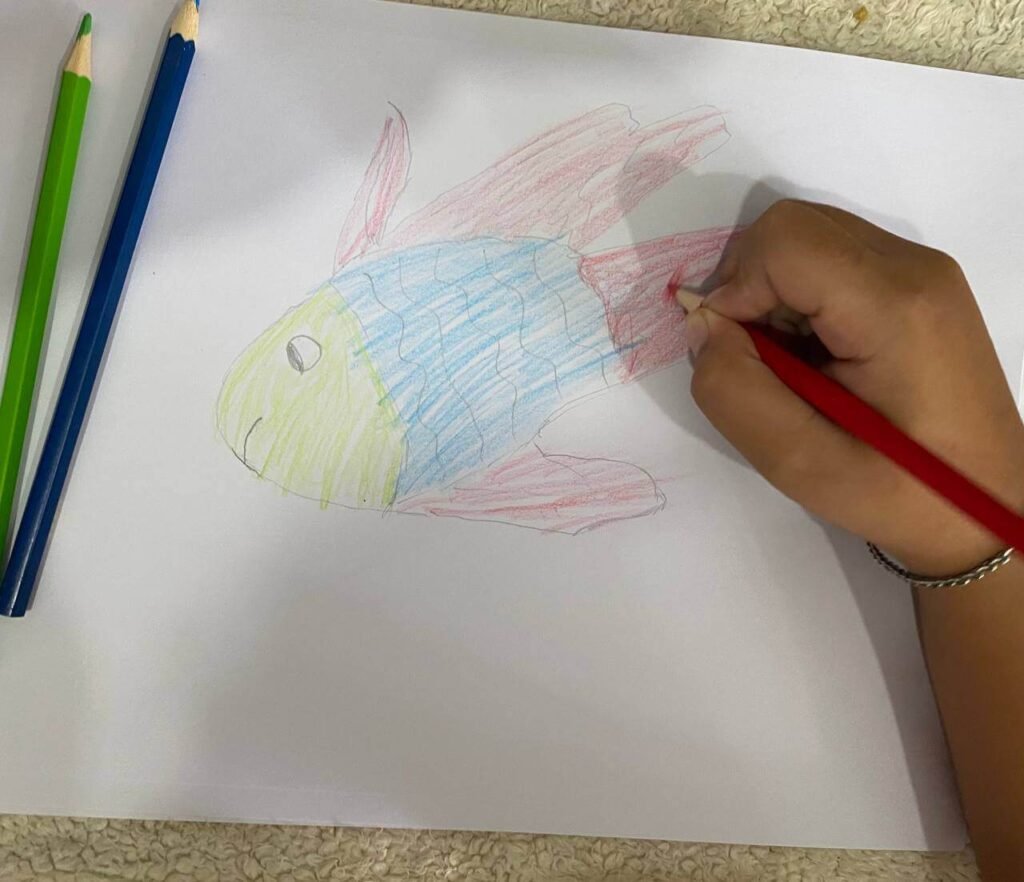
When it came time to color, she picked colors just like her little brother’s Spiderman shirt, and she even gave this one its own name: “Spiderman Boy.” Watching her name her own creation was honestly the best part of the whole afternoon.
Why These Two Methods Work So Well
Both of these fish drawing ideas for kids work because they take away the hardest part of drawing for a young child, which is figuring out where to even start.
A leaf or a hand already has a natural, interesting outline, so the child isn’t staring at a blank page wondering what to do.
They’re simply following a shape that’s already in front of them and turning it into something new.
This also makes both methods a good, simple fish drawing for preschoolers and early elementary kids, since the tracing part removes most of the guesswork, while the coloring part still leaves plenty of room for their own choices and imagination.
Tips for a Smoother Drawing Session
Let your child pick their own colors, even if a purple fish body doesn’t look “realistic.” That choice is part of what makes the drawing theirs.
If a leaf tears or isn’t available, jump straight to the hand-tracing version. It’s a great backup for drawing activities at home when you don’t have any craft supplies ready.
Keep a few different leaf shapes on hand if you want to try this again. Wider leaves tend to make a rounder fish body, while narrower leaves make a longer, slimmer one.
Don’t worry about the drawing looking “perfect.” The backward C, the wavy scales, and the slightly wonky fins are what make it look like a real child’s drawing, and that’s exactly the point.
Final Thoughts
What started as one strange, silent walk into the house with a single jackfruit leaf turned into an entire afternoon of drawing, laughing, and a little bit of dad-magic.
If you’re looking for an easy fish drawing for kids to try at home, both of these methods, the leaf and the hand, are worth keeping in your back pocket.
One works when you’re out in the yard with something fresh to trace, and the other works anywhere, any time, with nothing more than the hand your child already has with them.
Try both versions with your own child and see which fish they end up naming. Ours will always be “Spiderman Boy.”
Frequently Asked Questions
What if my child’s hand keeps moving while I trace it?
If your preschooler is extra wiggly, try placing a small loop of washable painter’s tape under the paper to stick it to the table. You can also gently hold their wrist with your free hand to keep their fingers steady while you trace.
Besides a leaf or a hand, what else can we trace to make a fish?
If you want to try different shapes, grab a small paper plate (perfect for a round pufferfish) or the curved handle of a wooden spoon (great for a long, skinny eel). Anything sturdy with a defined edge will work!
My child is getting frustrated drawing the scales. What’s a good backup plan?
If the ‘tangled hair’ wavy lines are still a bit too tricky for their fine motor skills, ditch the pencil! Let them dip their fingertip in washable paint or an ink pad and stamp fingerprints all over the fish’s body to create colorful scales.
