

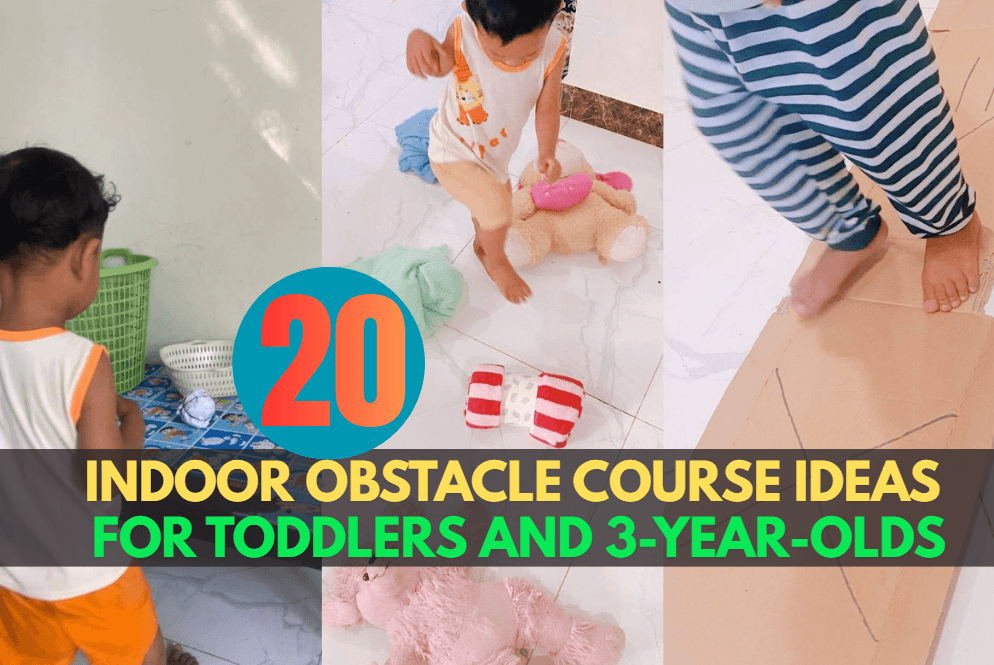
If your toddler is climbing the walls — sometimes literally — you are in the right place.
These indoor obstacle course ideas cost nothing, use items you already have, and keep kids ages 2 to 5 busy, happy, and genuinely learning while they play.
Key Takeaways
- A full DIY indoor obstacle course for toddlers can be built using pillows, chairs, blankets, string, and a laundry basket.
- “Heavy work” stations (such as pushing, pulling, and carrying) calm the nervous system and help restless toddlers feel focused and settled.
- Agility stations build balance, coordination, and the motor planning skills children need for school.
- Brain-boosting pitstops teach self-control, color recognition, and attention without your child realizing they are learning.
- You can reset the entire course in under 10 minutes and run it in reverse to double your playtime.
- A clear start signal (banging a pot, ringing a bell) and a finish celebration make the experience feel structured and rewarding.
Why I Started Building Obstacle Courses at Home
My son was three years old, and I was exhausted.
Not the tired-from-a-long-day kind of exhausted.
The kind where you have already been awake for two hours, and it is only 8 in the morning because someone has been jumping on your stomach.
He was not being naughty.
He just had more energy than our apartment knew what to do with.
I had tried screen time, puzzles, and organized crafts.
Some of it worked for a while.
Nothing worked the way movement did.
When I started setting up a simple at-home obstacle course using cushions and kitchen chairs, something shifted.
He was calmer after. More focused. Easier to settle at night.
That was the beginning of what became our daily ritual — a rotating indoor obstacle course for 3-year-olds that we rebuild a little differently every few days, using whatever is lying around the house.
Below are the 20 stations that have made the biggest difference for us, why each one works developmentally, and exactly how to set each one up.
What Makes a Good Toddler Obstacle Course
Before jumping into the stations, it helps to understand what you are actually building and why it works.
The best setups combine three types of movement: heavy work (pushing and pulling against resistance), agility work (balance, coordination, and spatial awareness), and brain work (focus, sorting, and impulse control).
When you mix all three, you are not just burning energy.
You are building a nervous system that knows how to regulate itself.
That is why children who do this kind of structured physical play tend to be calmer and more focused afterward, not more wound up.
The stations below are divided into those three categories.
You do not need to use all 20 at once.
Six to eight stations in a loop are plenty for most toddlers and preschoolers.
Part 1: Heavy Work Stations
Heavy work is a term used by pediatric occupational therapists to describe activities that push or pull against the muscles and joints.
For toddlers, this kind of input is deeply regulating.
It tells the nervous system exactly where the body is in space, which helps restless kids feel calm, grounded, and ready to focus.
These are the first stations I set up whenever my son is having a rough morning.
1. The Book Sled
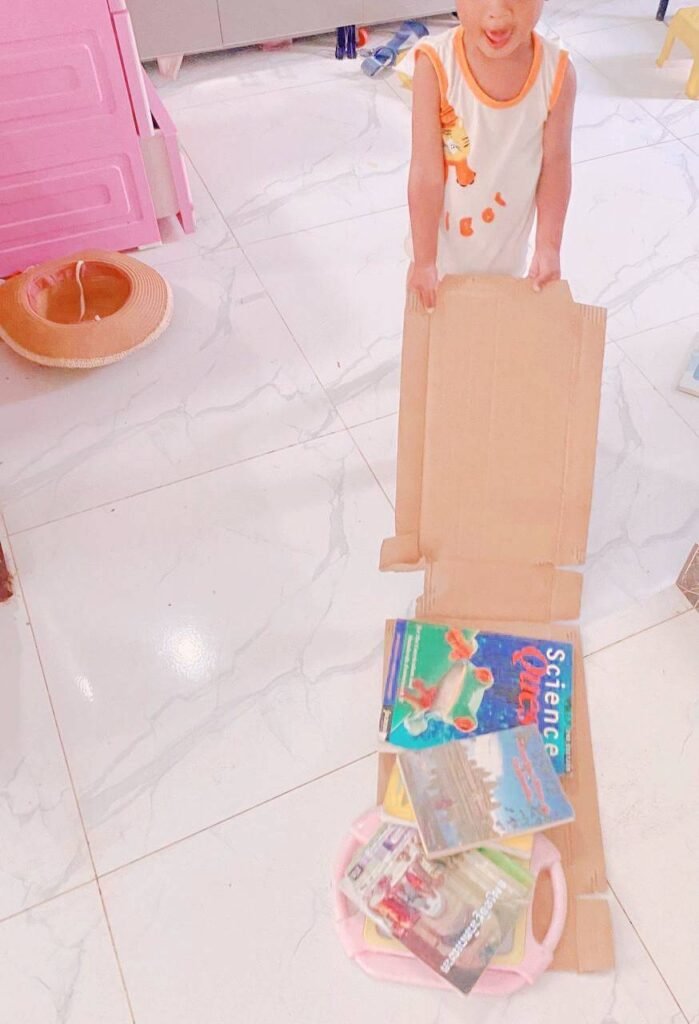
What it builds: Upper body strength, grip, and focus through sustained effort.
How to set it up: Take a flattened cardboard box or empty milk carton and stack three or four books on top.
Your child grabs the edge and drags the whole thing across the floor from one end of the room to the other.
What to expect: Most 3-year-olds love the resistance and will ask to add more books.
Let them. The heavier it gets, the more regulating it is.
2. The Bike Walk
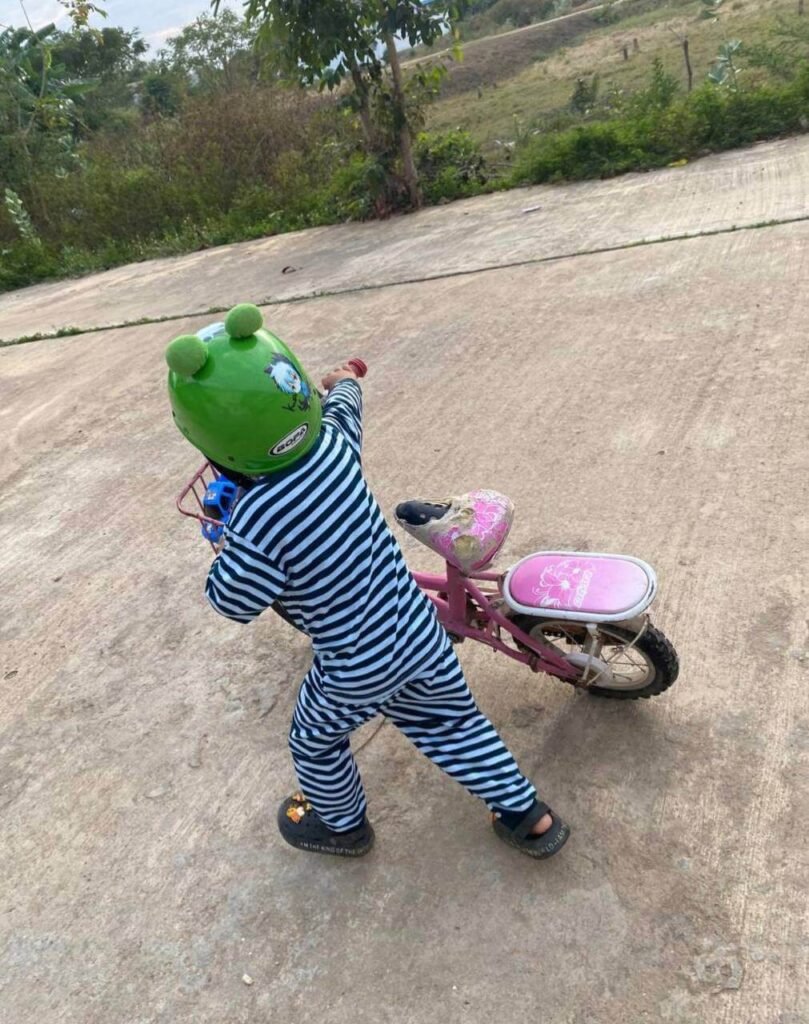
What it builds: Full-body coordination, leg strength, and spatial awareness.
How to set it up: Instead of riding, your child walks alongside their balance bike or small pedal bike and steers it through a simple path you mark out with towels or cushions.
What to expect: Keeping a bike upright while navigating a path requires constant small adjustments from the whole body.
It is harder than it looks and deeply satisfying when they get it right.
3. The Chair Pull
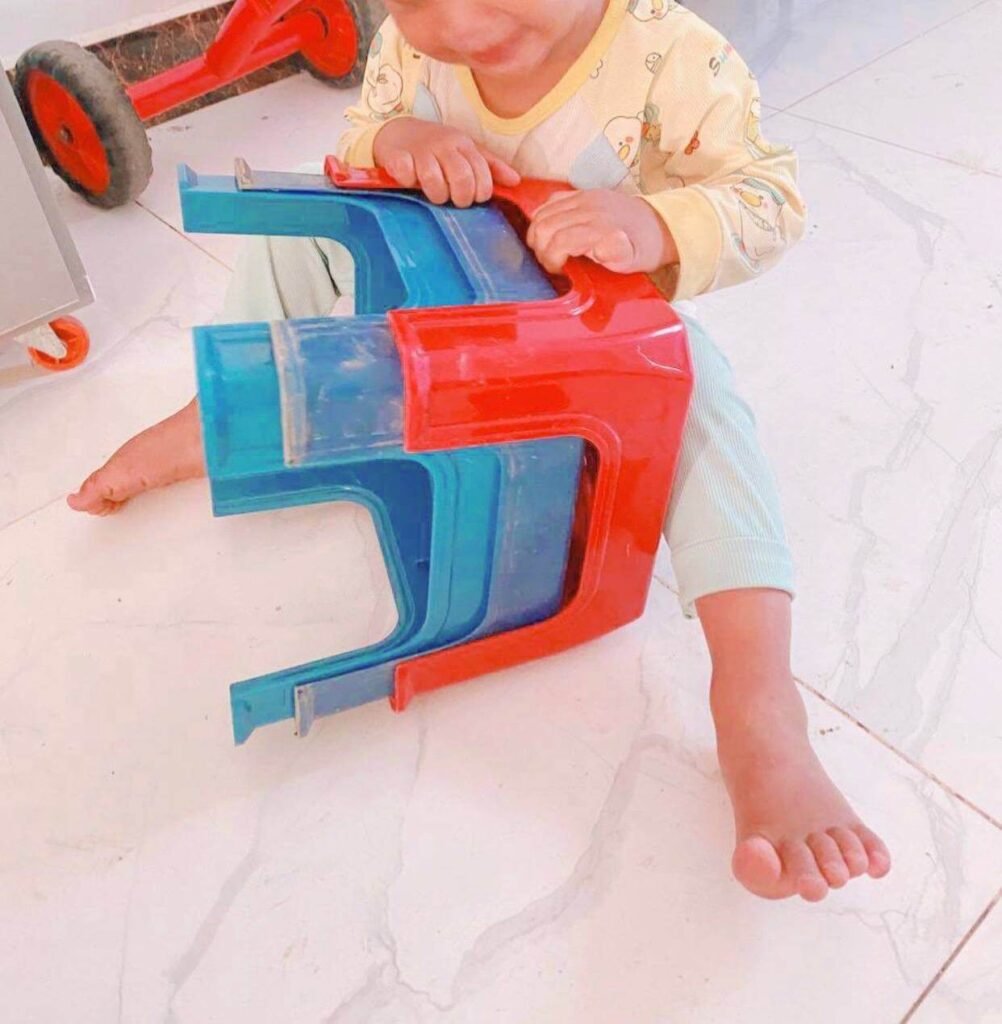
What it builds: Arm strength, grip, and early problem-solving.
How to set it up: Stack two or three lightweight plastic chairs together.
Your child’s job is to pull them apart one at a time and carry each one to a new spot across the room.
What to expect: Some kids will figure out the best way to grip and pull almost immediately.
Others will experiment for a few minutes.
Both responses are good.
4. The Little Helper (Sweeping Station)
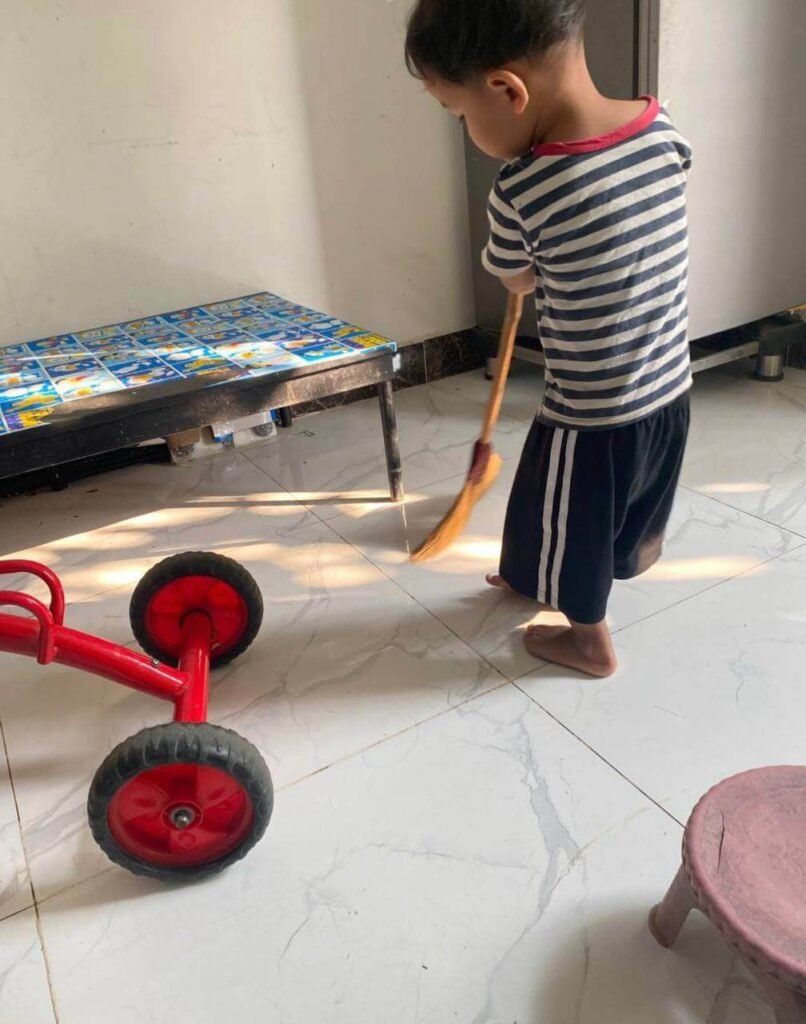
What it builds: Bilateral coordination — the ability to use both sides of the body together — plus sustained attention.
How to set it up: Hand your child a broom and a small pile of scrunched paper on the floor.
Their job is to sweep it all into a specific corner before moving to the next station.
What to expect: Sweeping looks easy, but requires your child to coordinate both arms while visually tracking the pile.
At age 3, this is genuine work.
5. Pillow Mountain
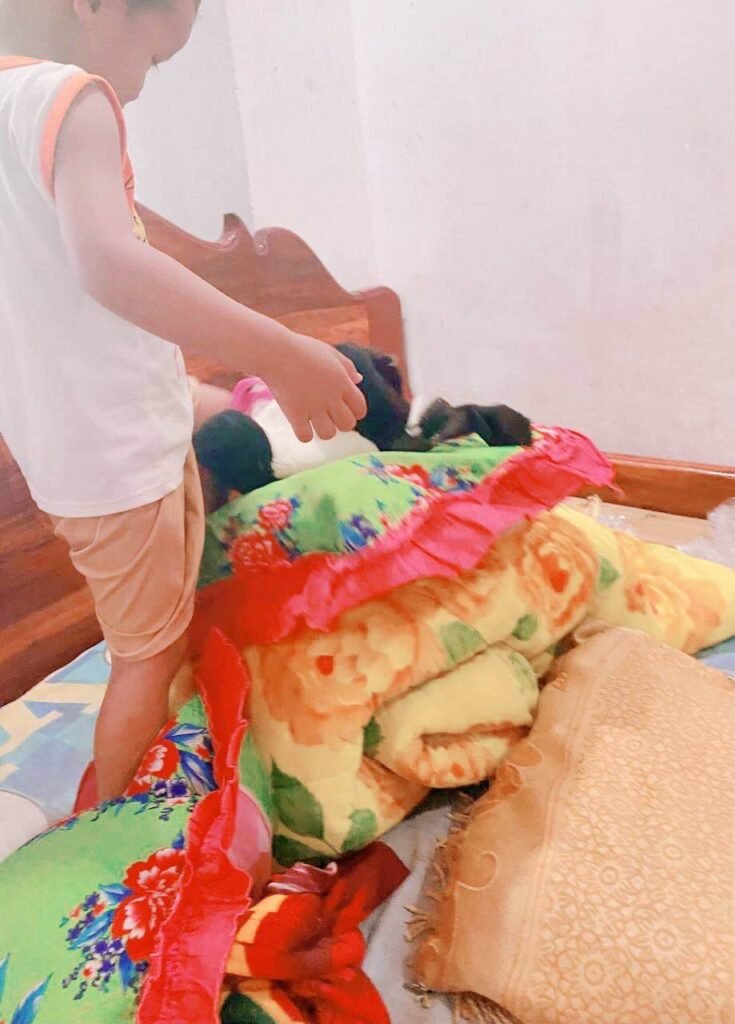
What it builds: Balance, core strength, and confidence on uneven surfaces.
How to set it up: Stack sofa cushions, throw pillows, and folded blankets into a soft mountain shape. Your child climbs up and over from one side to the other.
What to expect: Unstable surfaces force constant balance corrections throughout the whole body.
Even a small pillow mountain provides significant sensory input.
6. The Log Roll
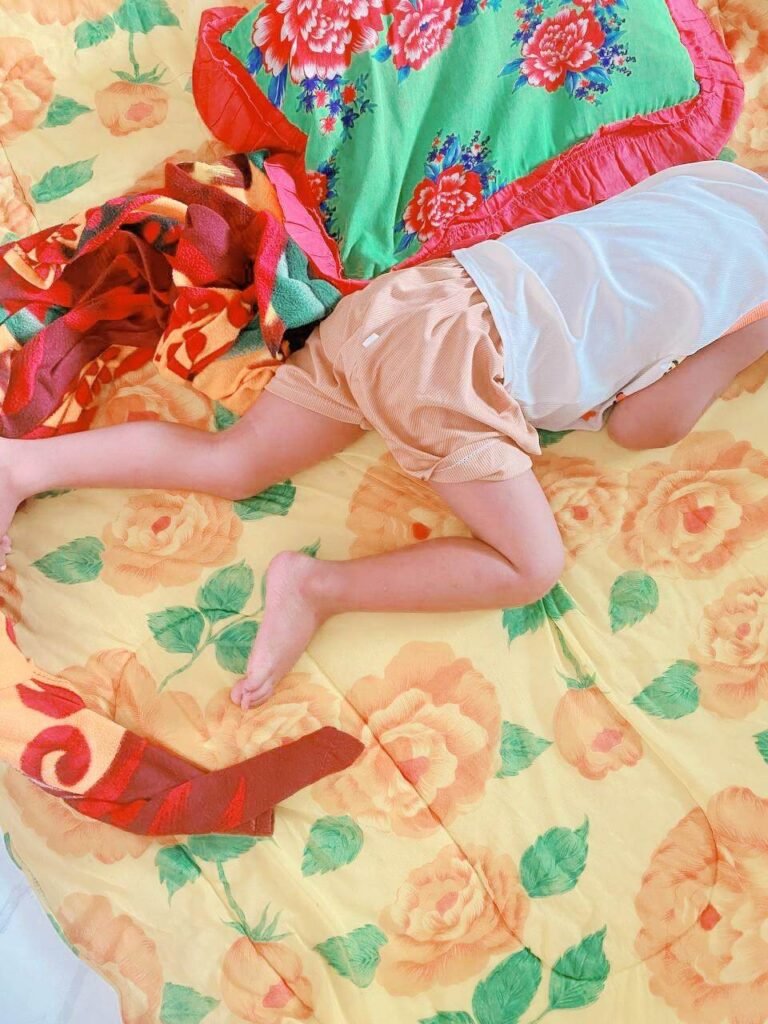
What it builds: Core muscle strength and body organization.
How to set it up: Lay a thick blanket flat on the floor.
Your child lies across one edge with their arms tight against their sides and rolls their whole body to the other end.
What to expect: Keeping the body straight while rolling is surprisingly tricky for many 3-year-olds.
Start on a carpeted surface and give them a few rounds to get the hang of it.
7. Jumping Over Lava
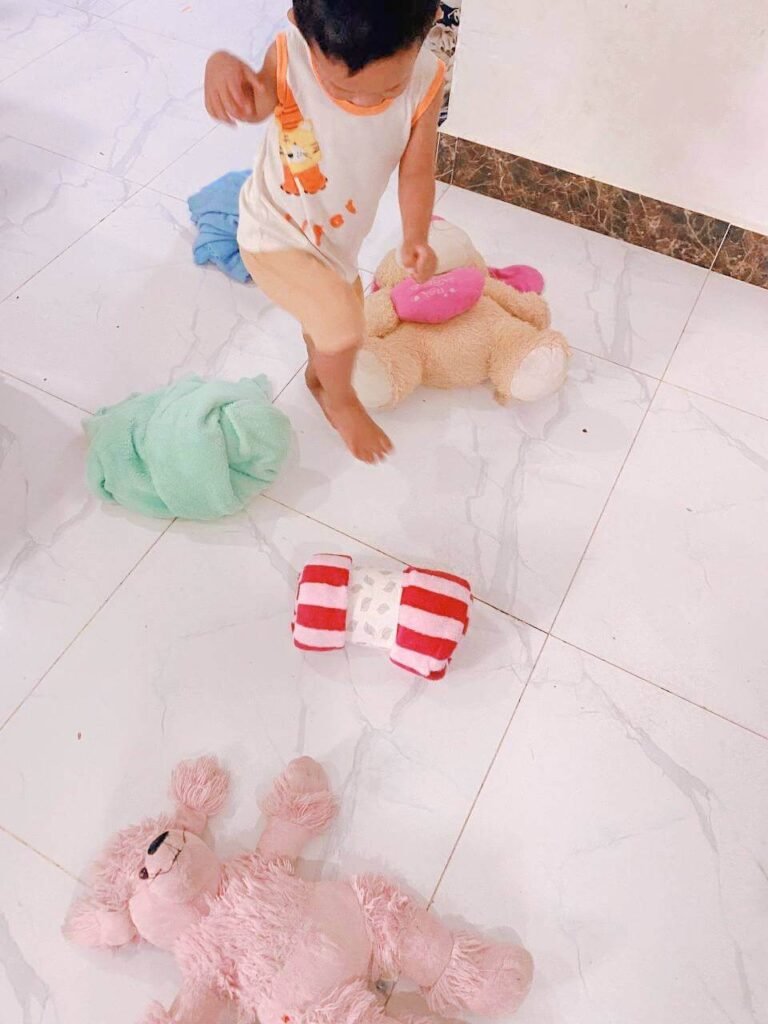
What it builds: Explosive leg strength, landing control, and spatial judgment.
How to set it up: Scatter towels, small cushions, and stuffed animals across the floor as “islands.”
The floor between them is lava.
Your child jumps from island to island without touching the floor.
What to expect: Two-footed jumping and controlled landing are genuine gross motor milestones at age 3.
This station makes practicing it feel like an adventure.
Part 2: Agility Ninja Stations
These agility stations focus on motor planning — the brain’s ability to figure out how to move through space before actually doing it.
It is the foundation of safe play, sports, and eventually, handwriting.
8. The Tightrope Walk
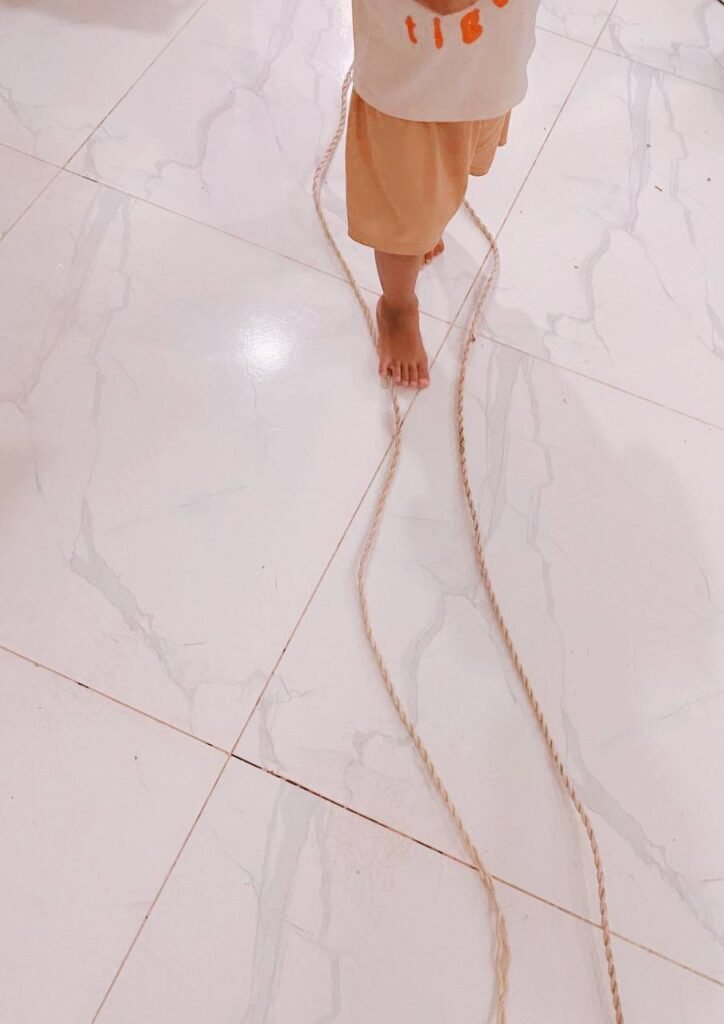
What it builds: Balance, visual focus, and deliberate movement.
How to set it up: Lay two pieces of string or yarn parallel to each other on the floor, about hip-width apart.
Your child walks down the middle without stepping outside the lines.
What to expect: The key is the narrow path — it forces your child to look ahead and think about each step rather than running on autopilot.
9. The Laser Web
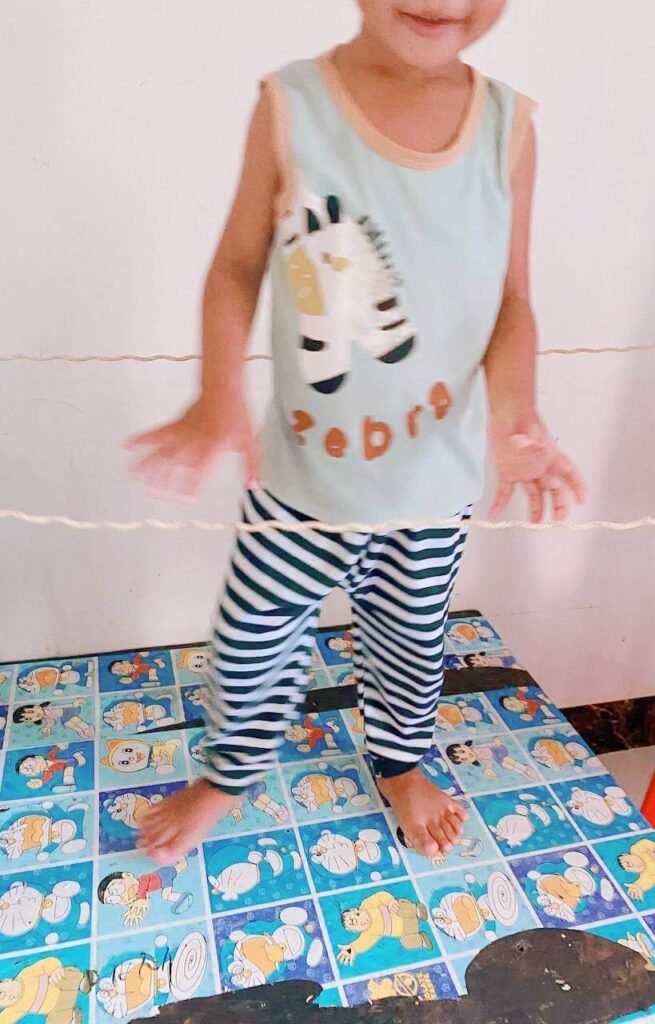
What it builds: Spatial reasoning, body awareness, and 3D thinking.
How to set it up: Stretch yarn or soft string across a hallway in a crisscross pattern, attaching it to doorknobs, chair legs, or pieces of furniture.
Your child crawls or steps through the web without touching any of the strings.
What to expect: Navigating the web requires your child to mentally map their body in three dimensions — a skill that underpins both reading and writing development later on.
10. The Blanket Tunnel
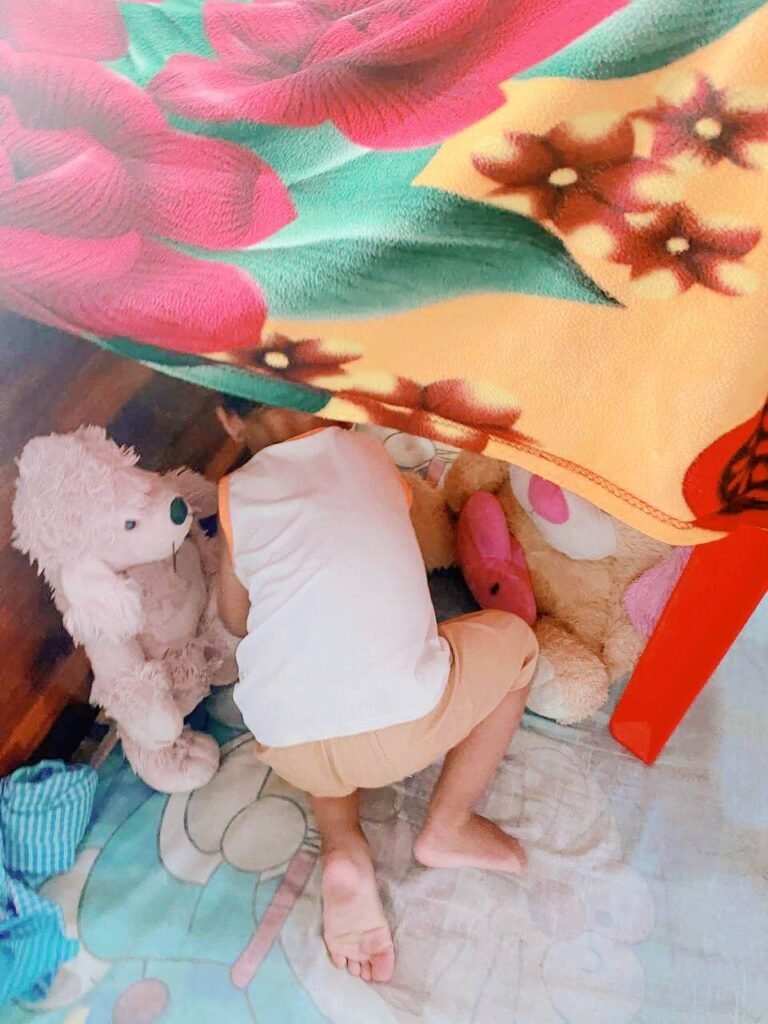
What it builds: Shoulder and neck strength, plus the upper body stability needed for a pencil grip.
How to set it up: Drape a blanket over two chairs facing each other, leaving a gap underneath. Your child crawls through on hands and knees.
What to expect: Crawling on hands and knees is one of the best upper-body exercises for young children.
The shoulder muscles being developed here are the same ones that will support a pencil grip in a year or two.
11. Paper Ball Basketball
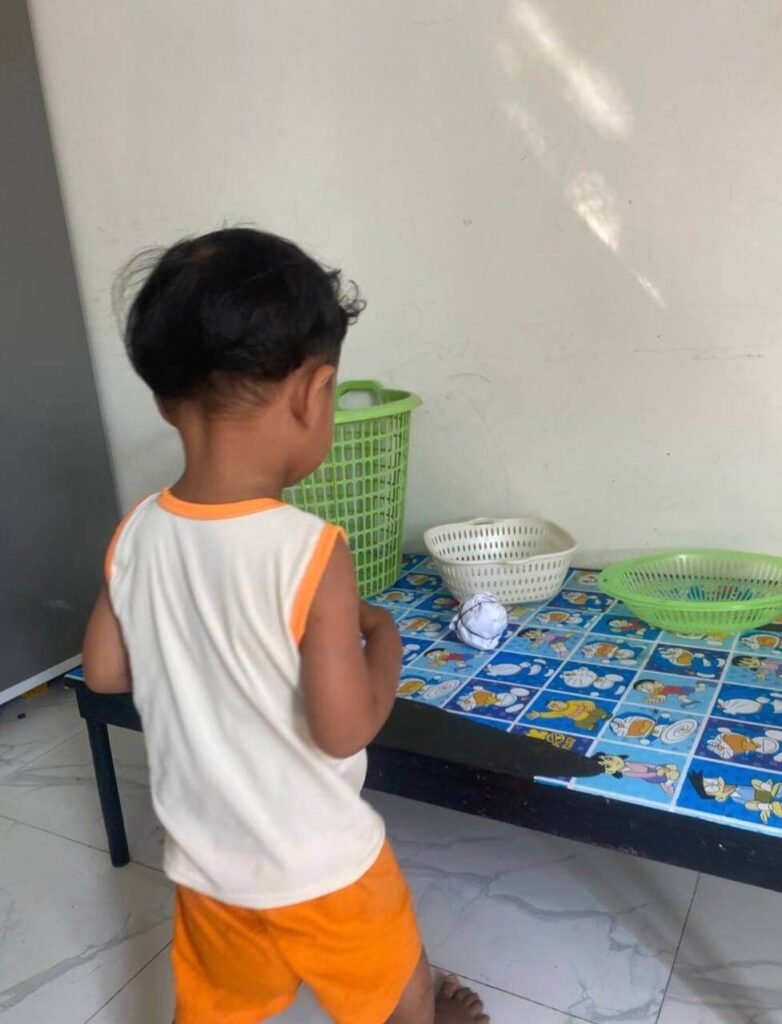
What it builds: Hand-eye coordination and aim.
How to set it up: Scrunch old newspaper or notebook paper into balls and have your child toss them into a laundry basket set at different distances.
Start close and move back as accuracy improves.
What to expect: This is a simple station but a very popular one.
Most kids will want to keep going until they make a certain number in a row.
12. The Stool Bridge
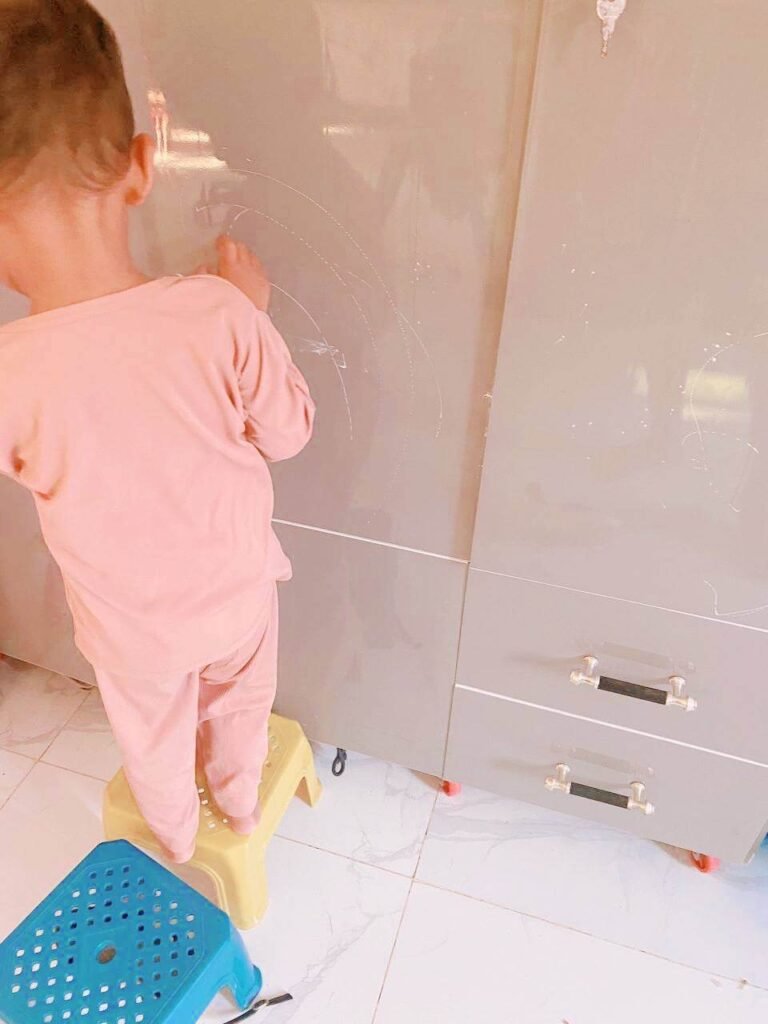
What it builds: Depth perception, confidence with heights, and controlled stepping.
How to set it up: Line up three or four small plastic stools close to a wall or piece of furniture your child can touch for balance.
They step from stool to stool without touching the floor.
What to expect: Stepping onto elevated surfaces and judging the gap between them develops the visual system in ways that flat-surface play cannot replicate.
13. Animal Mimicry Run
What it builds: Full-body strength, imagination, and movement variety.
How to set it up: Call out an animal at the start of each round, and your child moves through the whole course like that animal.
Bear crawl, frog jump, crab walk, inchworm, bunny hop.
What to expect: Each animal movement pattern uses the body differently.
Bear crawls build shoulder strength.
Frog jumps on the train’s legs. Crab walks are quietly excellent for core stability.
Part 3: Brain-Boosting Pitstops
Every good circuit needs a few stations that slow the body down and fire the brain up.
These are not rest stops.
They are focus stations that build the same attention and self-regulation skills children need in a classroom.
14. The Toy Rescue Mission
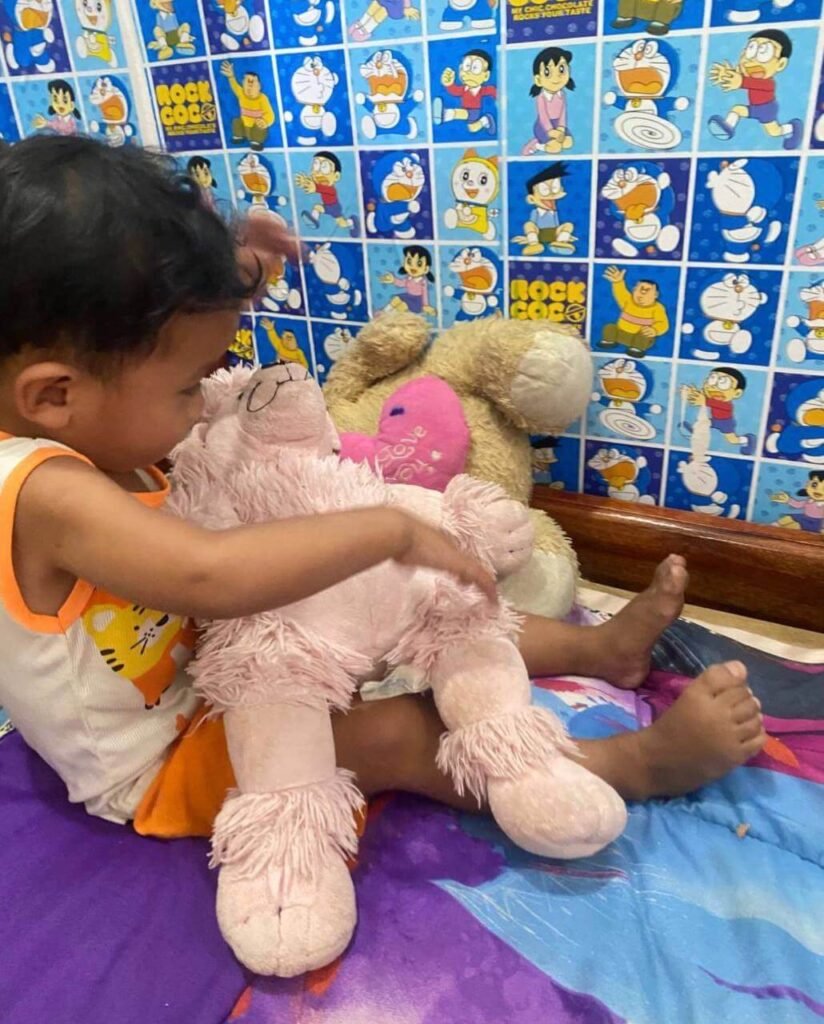
What it builds: Divided attention and task persistence.
How to set it up: Give your child a stuffed animal at the start and explain that their one job is to carry it safely through the entire course without dropping it.
Everything else in the course stays the same.
What to expect: Holding something carefully while completing physical challenges requires two kinds of focus at once.
For a 3-year-old, that is a genuine cognitive workout.
15. Color Sorting Station
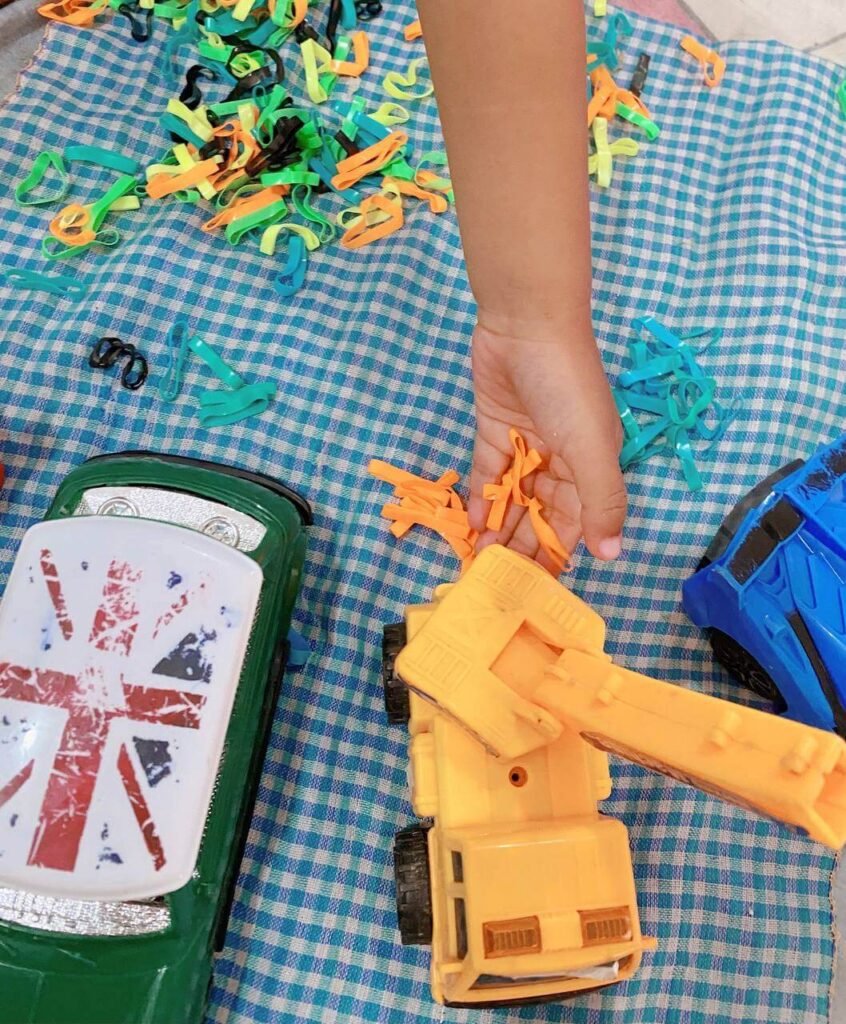
What it builds: Visual discrimination, color recognition, and classification skills.
How to set it up: Place a pile of colorful hair ties alongside a selection of toy cars.
Your child matches each hair tie to the car that shares its color before moving on.
What to expect: Sorting by a single attribute like color is a foundational pre-math skill.
The physical handling of objects makes it more concrete and engaging than flashcard-based learning.
16. The Freeze Zone
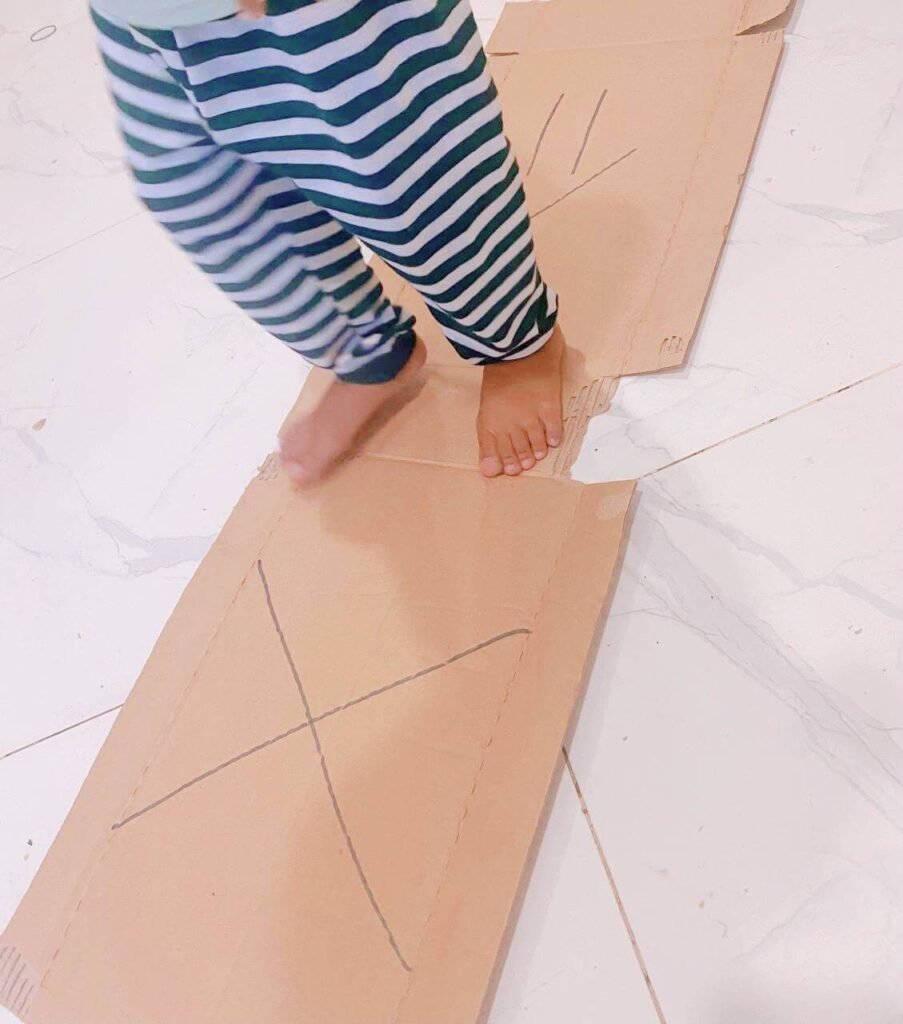
What it builds: Impulse control, listening skills, and the ability to stop a movement intentionally.
How to set it up: Draw or write arrows (go) and X marks (freeze) on flattened cardboard and scatter them along the course.
When your child hits an X, they must freeze completely until you say go.
What to expect: Stopping on command is surprisingly difficult for toddlers because it requires overriding physical momentum.
This is the same self-regulation skill they will need when a teacher says, “Stop what you are doing.”
17. The Rice Dig
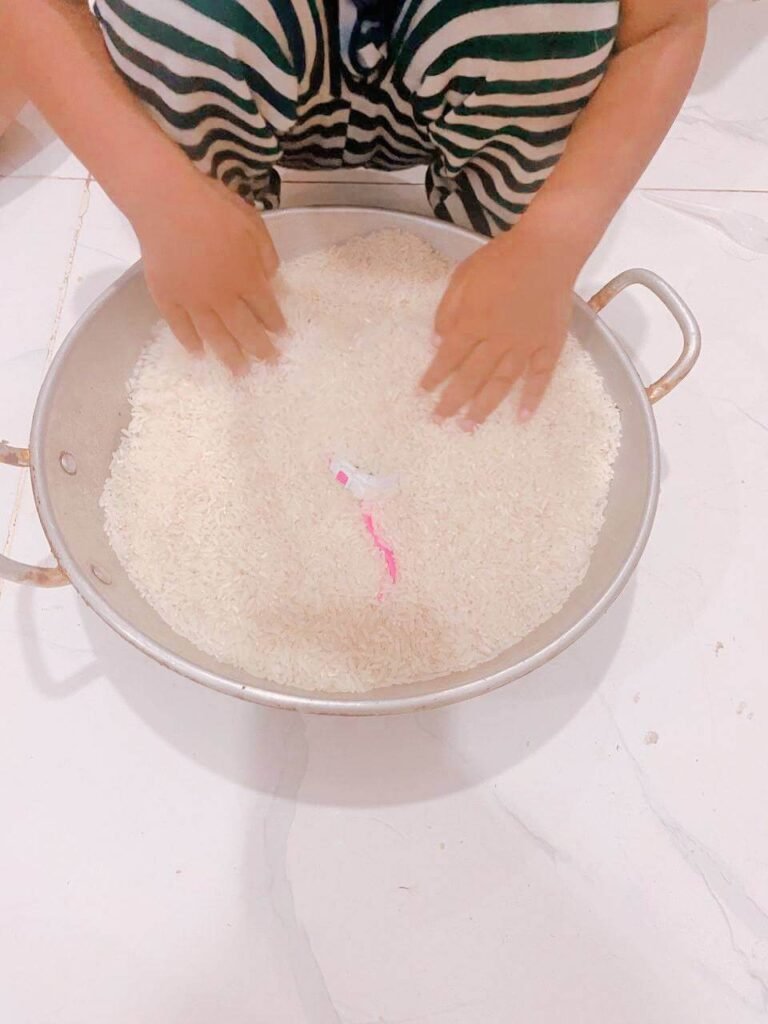
What it builds: Tactile sensory processing and calm, focused concentration.
How to set it up: Fill a pot or large container with uncooked rice and hide a small toy or household object inside.
Your child digs through the rice with both hands to find it.
What to expect: Digging through rice is a tactile sensory activity that many kids find genuinely calming.
It is especially good as a station after a high-energy jumping or climbing section.
18. Balloon Keep-Up
What it builds: Visual tracking, full-body coordination, and reactive movement.
How to set it up: Blow up a balloon and challenge your child to keep it in the air from one end of the course to the other.
No letting it touch the floor.
What to expect: A balloon moves slowly and unpredictably, which is actually perfect for developing visual attention in young children. It forces the eyes and body to work together in a relaxed, playful way.
19. The Heel-to-Toe Balance Beam
What it builds: Vestibular balance, midline crossing skills, and focused movement.
How to set it up: Apply a strip of masking tape to the floor and ask your child to walk along it heel-to-toe, placing each foot directly in front of the other without stepping off.
What to expect: Heel-to-toe walking is a vestibular challenge that also develops the midline crossing ability children need for reading and writing.
Most 3-year-olds need several attempts before they get a full pass.
20. The Sorting Finish Line
What it builds: Transition from high movement to calm focus, plus basic classification skills.
How to set it up: At the very end of the course, set out a simple sorting task: a few colored blocks to sort by color, some shapes to sort by size, or a pile of socks to match into pairs.
The course is not finished until the sorting is done.
What to expect: Moving from running and jumping into a quiet seated task teaches your child how to bring their own energy level down on purpose.
That skill alone is worth the 30 seconds of setup.
3 Things That Made This Work Better Than I Expected
Use a sound to start and finish
My son needs clear signals to shift between activities.
I bang a wooden spoon on a pot at the start and ring a small bell at the finish.
Those two sounds now act like a Pavlovian switch — he hears the pot and his whole body gets ready to move.
He hears the bell, and he knows it is time to wind down.
It took about three sessions to establish, and now I use it every single day.
Run the course yourself first
The first time I explained a new station step by step, my son stared at me blankly.
The second time, I ran the whole course with maximum enthusiasm while he watched.
He was practically pushing me out of the way before I finished.
Toddlers and preschoolers learn almost entirely through watching and copying.
Explaining wastes both of your time.
Demonstrating works every time.
Run it backwards
Once your child knows the layout, reverse the direction.
Same pillows, same chairs, same string — but now the finish line is the start line.
It looks and feels like a completely different challenge and buys you an extra 15 to 20 minutes without moving anything.
I discovered this by accident, and it is now my most-used parenting trick.
Setting Up Your Own DIY Indoor Obstacle Course (A Simple Framework)
You do not need to use all 20 stations or follow a specific order.
Here is the framework I actually use when building a new course:
- Start with 1 or 2 heavy work stations. These warm the body up and settle the nervous system before asking your child to focus on anything more precise.
- Add 2 or 3 agility stations in the middle. These are the most physically demanding and work best once the body is warm and regulated.
- End with 1 brain-boosting station. Finishing with a calm focus task helps your child transition out of the course smoothly and makes the whole session feel structured.
- Total setup time: Under 10 minutes once you know the stations.
- Total tidy-up time: About the same, if your child helps.
A Note on Preschoolers and Older Kids
Most of these setups work just as well for 4- and 5-year-olds.
For older kids, you can increase the difficulty by narrowing the tightrope, adding more freeze zones, making the laser web more complex, or timing each round and encouraging your child to beat their own record.
For children under 2, stick to the softer stations: pillow mountain, blanket tunnel, balloon keep-up, and the rice dig.
Skip anything that involves stepping between elevated surfaces or carrying objects near staircases.
Closing Thoughts
Play is not the opposite of learning. For children under 6, play is how learning happens.
Every jump, balance, crawl, and sort in this course is building something real — strength, coordination, attention, self-regulation, and the physical confidence that carries children through childhood.
These indoor obstacle course ideas have cost me nothing and given back more than I can measure.
I hope they do the same for you and your little one.
Frequently Asked Questions
What is a good indoor obstacle course for 3-year-olds?
The best obstacle course for 3-year-olds combines pushing and pulling (heavy work), balance and crawling (agility), and one or two simple focus tasks (brain work).
Good starting stations include a pillow mountain to climb, a blanket tunnel to crawl through, a tightrope to walk, and a color sorting task at the finish. Six to eight stations in a loop are plenty. You can build the whole thing from sofa cushions, chairs, string, and a laundry basket.
How do I set up a DIY obstacle course at home?
Setting up takes less than 10 minutes. Just follow these steps:
- Clear a path: Move coffee tables or breakables out of the way.
- Pick 5-6 stations: Use household items like sofa cushions, a blanket tunnel, and a line of tape.
- Arrange in a loop: Ensure there is a clear flow from one station to the next.
- Create a start/finish signal: Use a bell or a pot to signal when the course begins and ends.
What are heavy work activities for toddlers, and why do they help?
Heavy work activities are movements that push or pull against the muscles and joints: dragging a weighted sled, pushing a bike, carrying a stack of books, or climbing over a pile of pillows. Pediatric occupational therapists recommend them because they stimulate the proprioceptive system — the sensory system that helps children understand where their body is in space.
For toddlers who feel restless, aggressive, or emotionally dysregulated, heavy work can provide the physical input their nervous system is craving and help them feel calm and focused afterward.
What gross motor activities are good for 3-year-olds indoors?
The best gross motor activities for 3-year-olds indoors include jumping over objects on the floor, crawling through a blanket tunnel, climbing over a pillow stack, walking heel-to-toe along a tape line, and rolling across a blanket.
These activities develop the strength, balance, coordination, and body awareness that form the foundation for safe outdoor play, sports, and eventually handwriting.
How long should a toddler obstacle course session last?
Most 3-year-olds will stay engaged for 15 to 30 minutes, though some will want to repeat the course several times back-to-back. Follow your child’s lead. If they are moving through the course with focus and enthusiasm, let them keep going.
If they start getting frustrated, knocking things over deliberately, or refusing to follow the stations, that is usually a sign they need a quieter wind-down activity. The log roll or rice dig works well as a calm ending.
Is it safe to set up an obstacle course for toddlers indoors?
Yes, with a few sensible precautions. Keep stations away from hard corners and stairs. Make sure climbing stations like pillow mountains are against a wall or soft landing surface. Supervise continuously and adjust the difficulty to match your child’s current abilities.
Avoid stations that involve jumping from heights until your child has solid two-footed landing control — which most children develop between 3 and 4 years old.
Can an indoor obstacle course work for preschoolers, too?
Yes. Most of the stations listed above work perfectly for 4- and 5-year-olds with minor adjustments. Make the tightrope narrower, add more freeze zone cards, increase the complexity of the laser web, or introduce a timed challenge where your child tries to beat their own score. Preschoolers also enjoy running the course with a partner and taking turns being the “timer.”
My child loses interest quickly. What can I do?
Novelty is the key to keeping toddlers engaged. Instead of building a completely new setup, try running the existing circuit in reverse. You can also add a new challenge, like asking them to carry a favorite stuffed animal through the stations without dropping it, or timing them to see if they can beat their previous record.
Disclaimer: The content on Sprout Upward is designed to encourage intentional family leadership. I am a mom of two and a former youth worker sharing my real-life experiences, not a licensed therapist or medical professional. These guides adapt my professional team management background to daily home life. Please consult your pediatrician for any clinical, medical, or psychological advice regarding your child.
