

Disclaimer: The content on Sprout Upward is designed to encourage intentional family leadership. I am a mom of two and a former youth worker sharing my real-life experiences, not a licensed therapist or medical professional. These guides adapt my professional team management background to daily home life. Please consult your pediatrician for any clinical, medical, or psychological advice regarding your child.
When my daughter started first grade, every morning was the same: “Wake up!” “Hurry up!” “Wash your face!” “Did you pack your bag?” I’m fairly sure I’m not the only parent who has lived this exact loop before 8 a.m.
I’d already tried looking up a morning routine chart for kids online and printed a few.
None of them stuck. Then one day, my husband pointed out that nothing seemed to change from one morning to the next.
He walked into our daughter’s room and took down the morning activity pictures I’d stuck on the wall above her multiplication table.
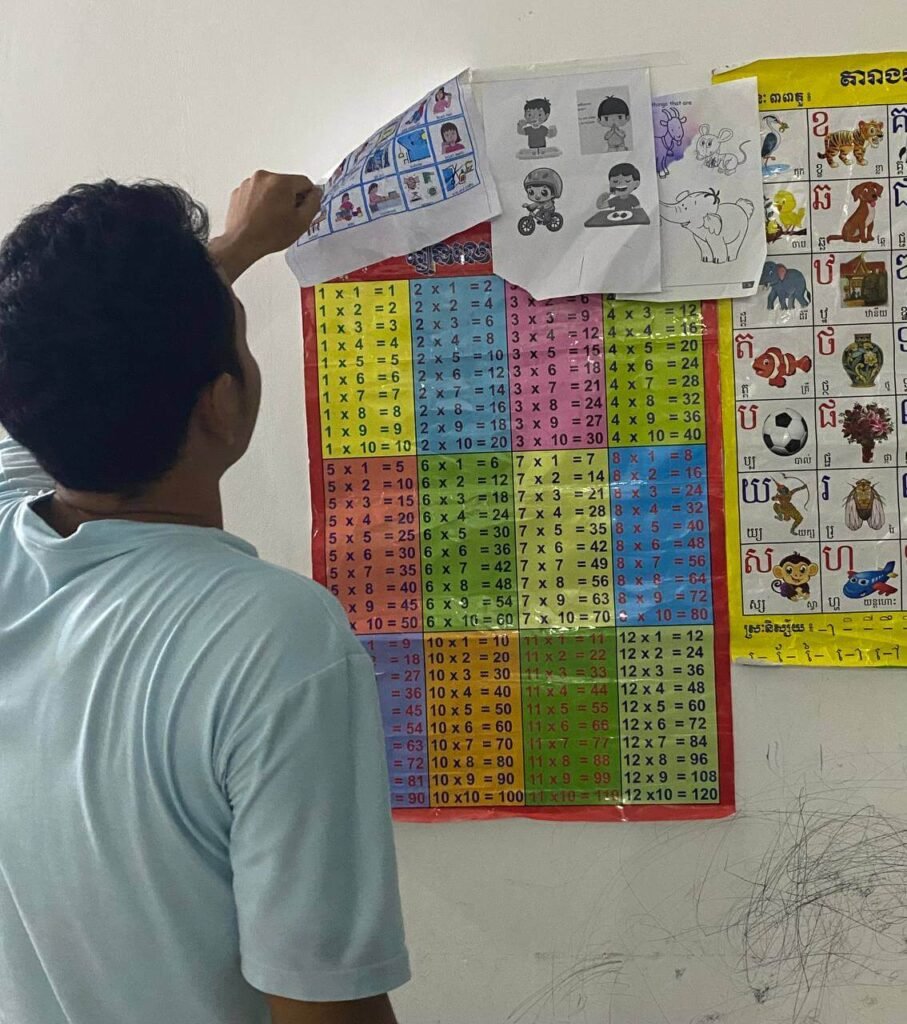
When I asked why, he just said, “It looks too cluttered.”
That Sunday, like we always do, we held a family meeting. He handed our daughter a whiteboard and a marker instead of another chart we’d made for her.
What came out of that one evening turned into eight small habits that changed our mornings from shouting matches into something closer to “we’ve already done it.”
Here’s exactly what we did, in case your mornings look anything like ours used to.
If you want to know exactly how we made this chart and why putting it on her bedroom door was the secret, read our step-by-step guide to creating a DIY morning checklist.
Key Takeaways
- A visual chart your child draws and designs themselves works far better than one you make for them, because they actually understand and remember their own order of tasks.
- Most morning chaos comes from too many small decisions; packing everything the night before (the “Launchpad”) removes most of that pressure.
- The When/Then Rule turns getting ready into the gateway to things your child already wants, like breakfast or play, instead of a daily fight.
- A few quiet minutes of connection before any instructions makes kids far more willing to cooperate.
- A small time buffer turns rushing into “bonus time,” which kids treat as a reward instead of a threat.
- Letting natural consequences, like forgetting a water bottle, teach the lesson works better than repeating yourself five times.
- Staying calm yourself is the habit that holds the whole system together. If you panic, every other strategy falls apart.
- Start with one strategy at a time instead of trying to fix every morning habit at once.
1. The Visual Power Chart: A Morning Routine Checklist for Kids They Actually Follow
Telling a child “go get ready” is vague, and it usually forces parents into a cycle of repeating the same instructions over and over.
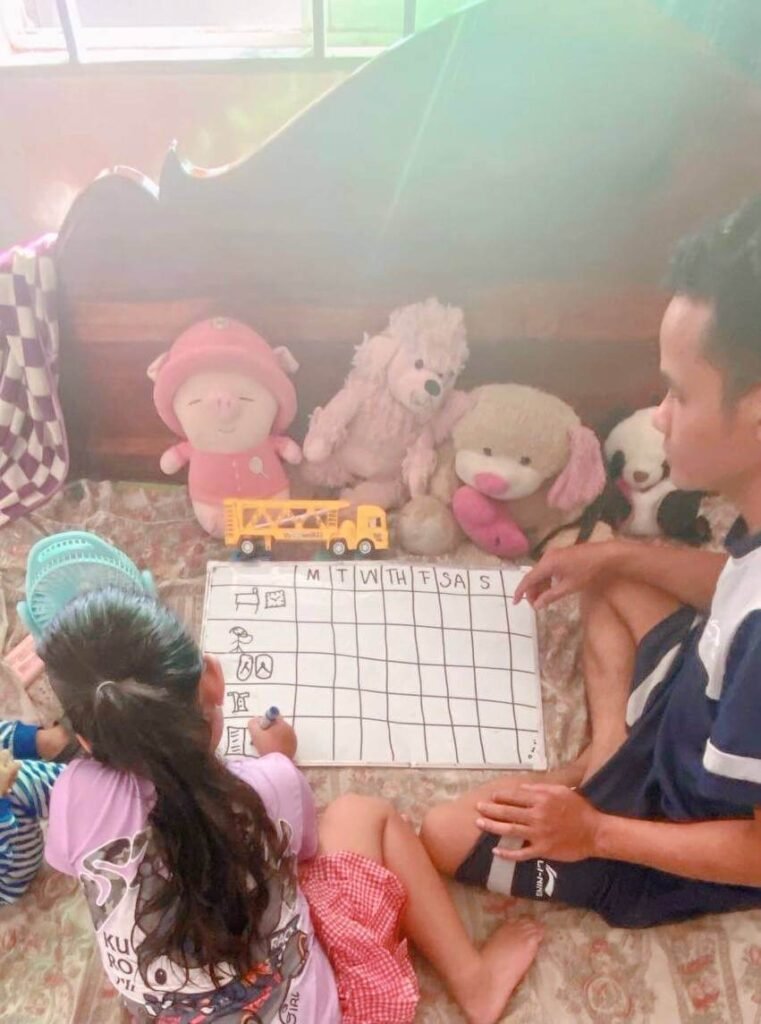
Constant reminders can make a child feel like they’re being managed every minute, while handling their own tasks makes them feel capable of doing it themselves.
A visual chart shifts that responsibility from your voice to the checklist on the wall.
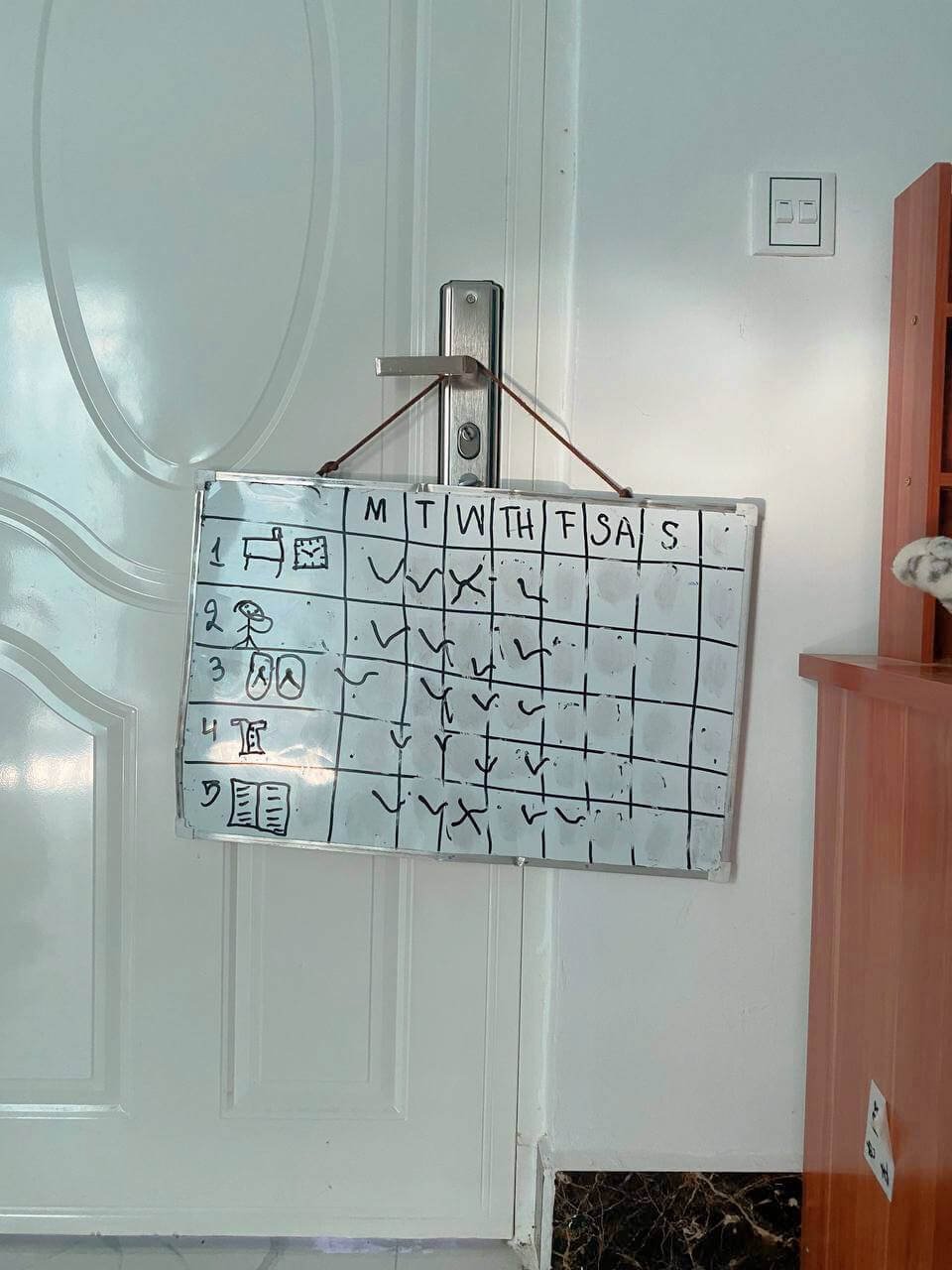
My husband sat down with our daughter and asked her to write down three to five essential morning tasks, things like getting dressed, brushing her hair, brushing her teeth, and eating breakfast, in whatever order she wanted to do them.
I was honestly surprised by what she came up with. The charts I’d made before were based on what I wanted her to do, not what actually made sense to her.
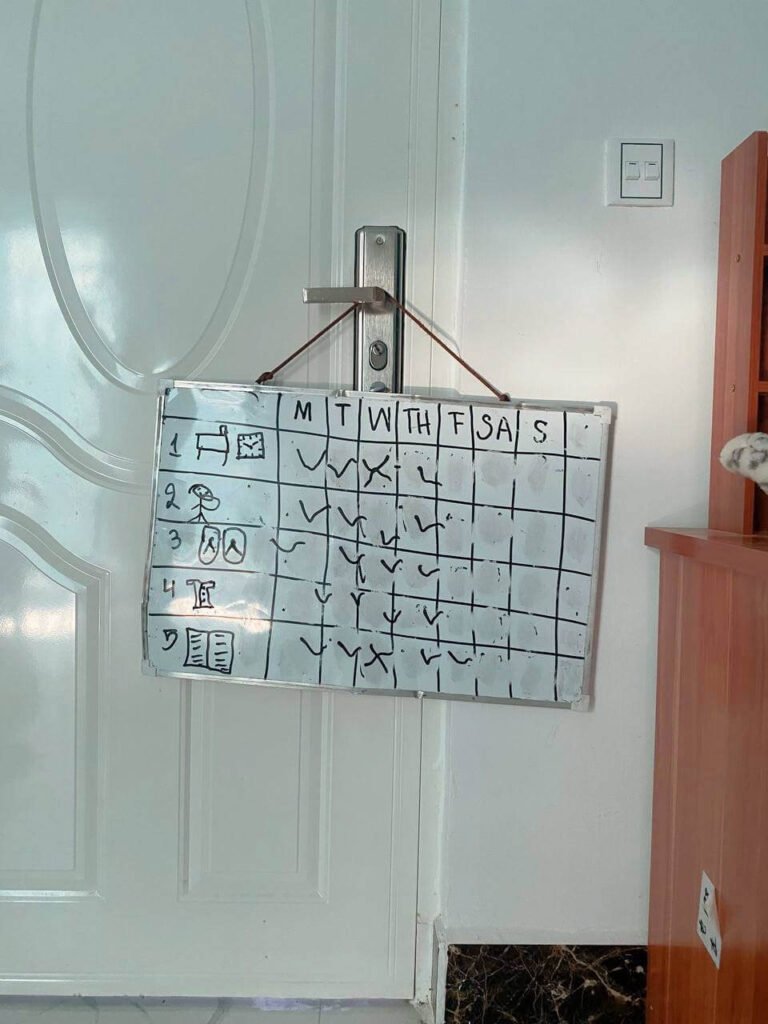
She drew her own sequence: a bed and a clock for waking up and making the bed, a hand-to-mouth gesture for washing and brushing, and small drawings for putting on shoes and her uniform.
She understood the flow instantly, because it was her plan, not mine.
That’s really the difference between a generic printable and a checklist that sticks.
It doesn’t need to look polished. It just needs to make sense to the kid using it.
2. The Night Before Launchpad: A Simple Night Before Routine for School Mornings
Most morning chaos comes down to too many decisions packed into too little time.
Kids get overwhelmed trying to find shoes, books, or the right shirt all at once, and preparing everything the night before saves that energy for the next morning instead.
We picked a spot near our front door as a “Launchpad” for everything she needs.
Before bed, she packs her bag, fills her water bottle, and picks out her clothes for the next day, including socks and underwear.
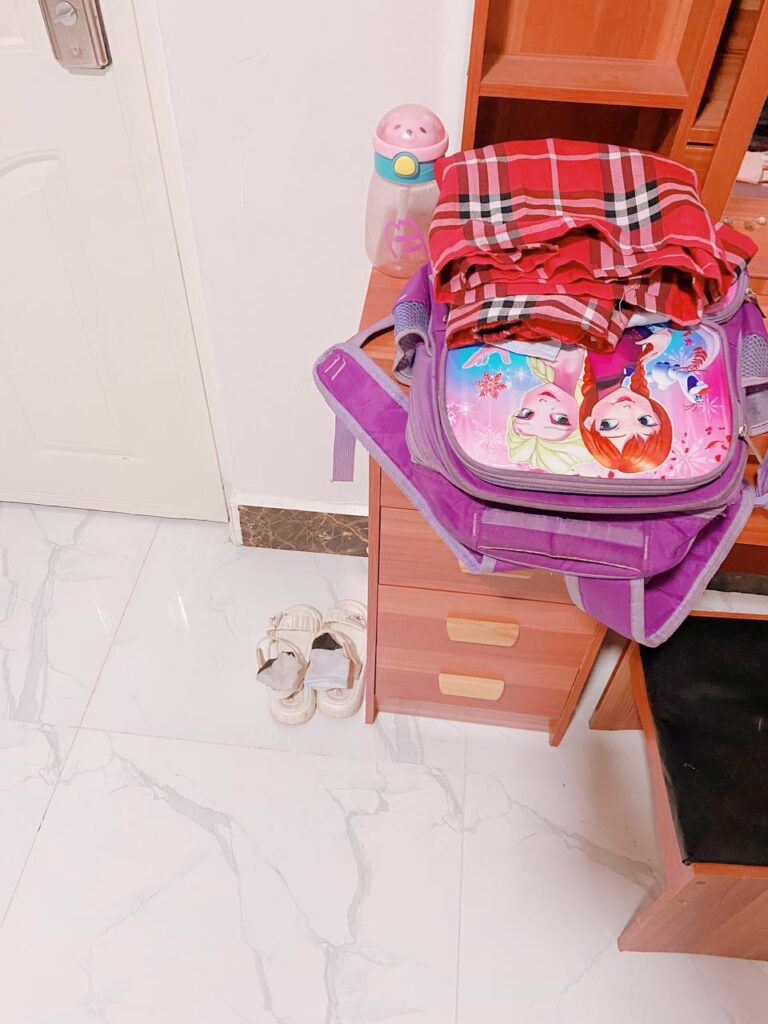
She leaves her uniform on top of her bag and her shoes underneath it.
When I asked why she organized it that way, she said, “It’s easy for me. I wash my face, put on my shoes, and just pull on my clothes.”
This one change alone removed most of our morning arguments. There was simply nothing left to look for.
3. The When/Then Rule for Kids: Make Getting Ready the Gateway to Fun
We’ve found this approach, similar to what is often called the When/Then rule in parenting circles, extremely effective for cutting out the negotiating before it starts.
Instead of treating “getting ready” like a chore or a punishment, it becomes the gateway to the things your child already enjoys.
It also teaches time management without you having to explain what that even means.
We apply it strictly: “When you’re dressed, have made your bed, and finished brushing your teeth, then you can eat breakfast and read your storybook.” No play or screen time happens until the “when” tasks are fully done. There’s no debate about it; the rule decides, not us.
4. Five Minutes of Connection Before Any Instructions
Waking up to commands like “Hurry up, you’re late!” first thing tends to make a child cranky and resistant, which often turns into tears or pushing back.
A few quiet minutes of connection before giving any instructions makes a child far more willing to cooperate.
We wake our daughter five to ten minutes earlier than she needs.
Those first five minutes are just for being together: rubbing her back, asking about her dreams, or sharing a quiet hug. No chores, no schedule talk, until those few minutes are over.
5. Build In Bonus Time So Rushing Doesn’t Ruin the Morning
Kids don’t experience urgency the way adults do.
Feeling constantly rushed makes them nervous and unsure of themselves, and a small time buffer means that if something goes wrong, like a fight with shoelaces, it doesn’t wreck the whole morning.
We worked out the actual time she needs to get ready, and now we wake her fifteen minutes earlier than that.
We treat the extra time as a reward: “If you finish your chart quickly, you get ten minutes of bonus time to draw, play with the dog, or play with Lego before we leave for school.”
That one sentence gives her a real reason to move quickly, without anyone raising their voice.
6. The Weekly Morning Review: How to Stop Nagging Kids in the Morning for Good
At this age, kids want their opinions to count. If you only ever give orders, you miss the chance to get them genuinely involved.
Every Sunday or Friday, we have a five-minute chat: “What was the hardest part of the morning for you? What do you think we should change to make mornings better?”
When she has a say in the plan, she follows it more easily, because it’s hers too, not just a list we handed her.
This weekly check-in is honestly one of the simplest ways to stop nagging your child in the morning.
The chart reminds during the week, and the Sunday chat fixes whatever isn’t working before it turns into another week of frustration.
7. Let Natural Consequences Teach What Reminders Can’t
We used to worry constantly that she’d be late or forget something. But sometimes forgetting an item really is the better lesson.
If she forgets her water bottle or snack at home, and it’s genuinely safe to do so, we don’t rush it over to her.
We let her figure out the problem herself, asking the teacher for water or borrowing from a friend.
It teaches her to be more careful next time, without a single reminder from us.
It’s a lesson she remembers far better than anything we could have said.
8. Your Calm Is the Anchor That Holds the Whole Routine Together
This might be the most important point of all eight.
If you panic or raise your voice, every habit above collapses instantly.
If our daughter is running late, instead of “Hurry up, we’re late!” we take a breath and say calmly, “I see you aren’t ready yet.
If we don’t leave now, you’ll be late for school. What should we do now?” When you stay calm, your child can focus on solving the actual problem instead of reacting to your tone. That single shift changes the whole morning.
How to Start a Morning Routine for Kids Without Yelling This Week
Don’t try to put all eight strategies in place at once. That’s the fastest way to give up by Wednesday.
- Week 1: Set up the Launchpad. Just the night before packing, nothing else.
- Week 2: Add the Power Chart, the visual checklist that your child draws themselves.
- Week 3: Bring in the When/Then Rule.
- Week 4 onward: Layer in the Sunday review and natural consequences as they come up naturally.
Building it in stages is what actually made it stick for us. Trying to fix everything overnight is exactly how most morning routines for kids fall apart within a week.
Final Thoughts
None of this fixed our mornings overnight, and I don’t think any honest parent’s story would say it did.
But each week we added one small piece, and within a month, mornings stopped being a shouting match and turned into something closer to routine.
If you’re looking for calm, practical changes that actually work rather than another printable that ends up in a drawer, this is what a real morning routine for kids without yelling looks like once you live with it for a while: not a perfect chart, but a system your child helped build and genuinely wants to follow.
Frequently Asked Questions
What is the best morning routine for kids without yelling?
The best morning routine for kids without yelling relies on a visual chart, night-before preparation, and parental calmness. While there isn’t one single fix, this combination worked for our family because it removes morning decisions.
How do I stop nagging my child in the morning?
Shift the reminding from your voice to a chart. Once the checklist is done, pair it with the When/Then Rule so getting ready leads straight into something they want, like breakfast or playtime. A short weekly review also catches problems before they turn into daily nagging.
At what age should kids start using a visual morning checklist?
Most parents start somewhere around four to six years old, once a child can recognize pictures or simple symbols. Younger kids can usually follow drawings just as well as older kids follow written words.
What is the When/Then Rule in parenting?
The When/Then Rule in parenting is a simple structure where a wanted activity only happens after a needed task is finished. For example, “When you’re dressed, then you can eat.” This removes negotiation because the rule decides, not the parent.
Should I let my child make their own morning checklist?
You should let your child make their own morning checklist because they will actually understand and remember a chart they draw themselves. Letting them choose the order of tasks makes them more likely to follow it without constant reminders.
What are some natural consequences of parenting examples for school mornings?
A common example of a natural consequence on school mornings is allowing a child to forget their water bottle or snack. As long as it is safe, letting them solve the problem by asking a teacher teaches the lesson better than parental nagging.
