

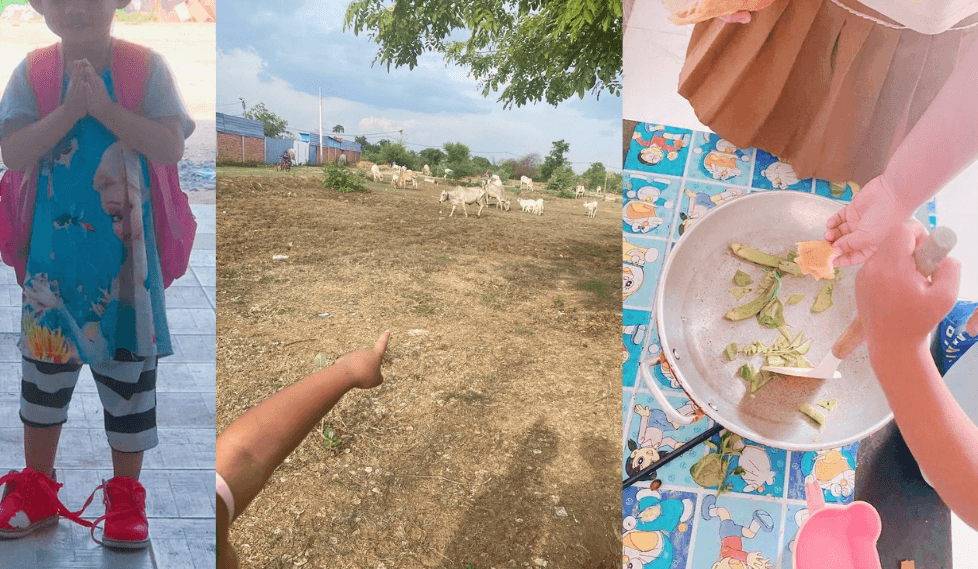
Disclaimer: The content on Sprout Upward is designed to encourage intentional family leadership. I am a mom of two and a former youth worker sharing my real-life experiences, not a licensed therapist or medical professional. These guides adapt my professional team management background to daily home life. Please consult your pediatrician for any clinical, medical, or psychological advice regarding your child.
Every mother has lived this moment.
You are standing at the stove, balancing a spoon in one hand and three unfinished thoughts in your head, and your child walks up and asks a question that demands a real answer.
Not a quick one. A real one.
I have been in that spot more times than I can count, cooking while my 8-year-old daughter stands beside me asking things like: “Mom, why don’t we put bread in this soup?” and “Why do we have to sampeah when we see elders, but my English teacher just shakes hands?”
For a long time, I answered quickly, just to keep moving.
But the more I paid attention to her questions, the more I realized something: these little moments were not interruptions to my day.
They were the day.
They were exactly where her thinking was being shaped.
This article shares five habits to develop a child’s intelligence that our family actually practices.
Every habit here comes from a real story, a real conversation, and a real mess at the kitchen table.
If you are looking for ways to raise a smarter, more curious child using only the life you are already living, read on.
Key Takeaways
- In our family, we’ve seen that consistent daily habits matter more than natural talent alone.
- Encouraging your child to ask questions and test their own doubts builds critical thinking from an early age.
- Reading together every night, even one or two pages, is one of the most reliable reading habits for a child’s love for learning.
- Outdoor experiences give children real-world knowledge that no screen can fully replace.
- Simple drag-and-drop coding games are a genuinely fun way to develop kids’ problem-solving skills as young as six.
- Cultural traditions teach children that “different” does not mean “wrong,” building respect and open-mindedness.
- You do not need expensive programs or special tools. The most powerful learning moments happen inside everyday life, right next to you.
What Daily Habits Make a Child Smarter?
Before getting into the habits, here is the honest answer to that question: the habits that make children smarter are the ones that ask something of their minds.
Not just their attention.
Their thinking.
When a child has to ask why, compare two things, test an idea, or understand someone else’s point of view, they are building the kind of intelligence that sticks.
None of that requires a special schedule.
It requires a parent who is present and willing to follow the question through.
5 Habits to Develop Child Intelligence at Home
Habit 1: Cultivate Questioning and the Search for Truth
One evening, my husband wanted Karkor, a traditional Cambodian soup.
I started cooking, and my daughter watched from nearby. “Why does this soup have so many vegetables?” Then, almost immediately: “Mom, why don’t we put bread in this soup?”
I was focused on the pot, so I gave the easy answer. “We don’t do that because it wouldn’t taste good.” She wasn’t satisfied. “
But we can eat bread, and we can eat soup.
Why can’t we put them together?”
My husband stepped in calmly. “When bread touches liquid, it gets soggy and loses its flavor.” She looked at him with full skepticism. “I don’t believe it.”
So he found a safe bowl, added water and some vegetables to simulate the soup, and placed a small piece of bread inside.
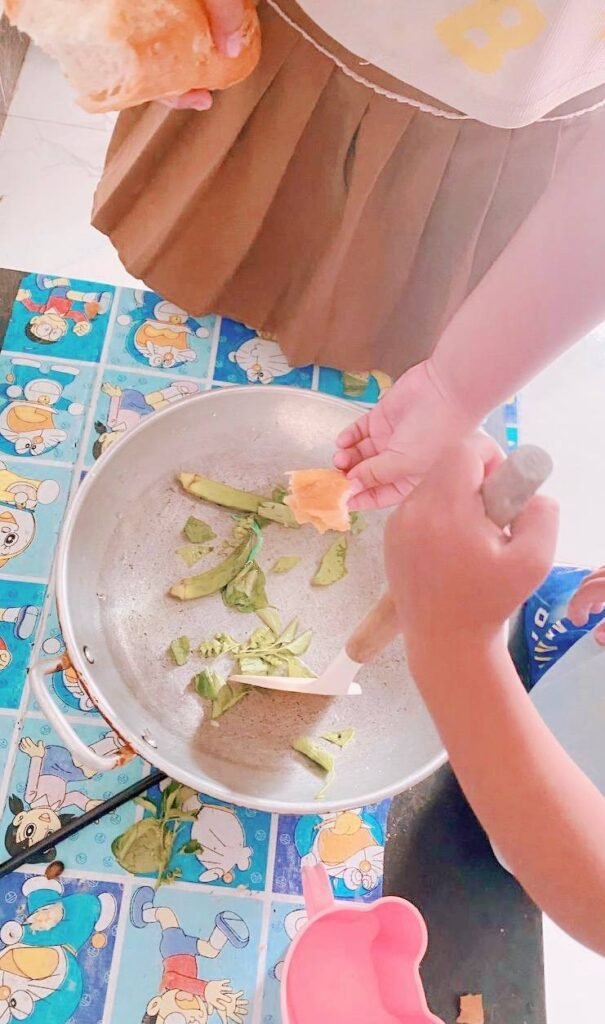
About seven minutes later, she leaned over the bowl, and her expression changed completely. “Oh! The bread dissolved, just like Dad said!”
What this teaches: Do not let your child’s doubt sit unanswered.
That skepticism is not stubbornness.
When I was reading about how to handle her endless questions, I found an article from NAEYC that completely changed my perspective.
It helped me realize that exploring these everyday curiosities together is how we can help her build critical thinking.
When you follow a question through to an actual test, you show your child that uncertainty is something to investigate.
True understanding always comes from following the question, not from accepting the first answer you hear.
Habit 2: Build a Reading Habit That Goes Beyond the Words
Before bed, we have a quiet ritual: we read one or two pages of a book together.
It does not have to be a long session.
Consistency matters far more than length.
Recently, we read a traditional Khmer fable about the Tortoise and the Hare.
When we reached the part where the rabbit eats bananas and falls asleep, my daughter put her finger on the page and stopped me.
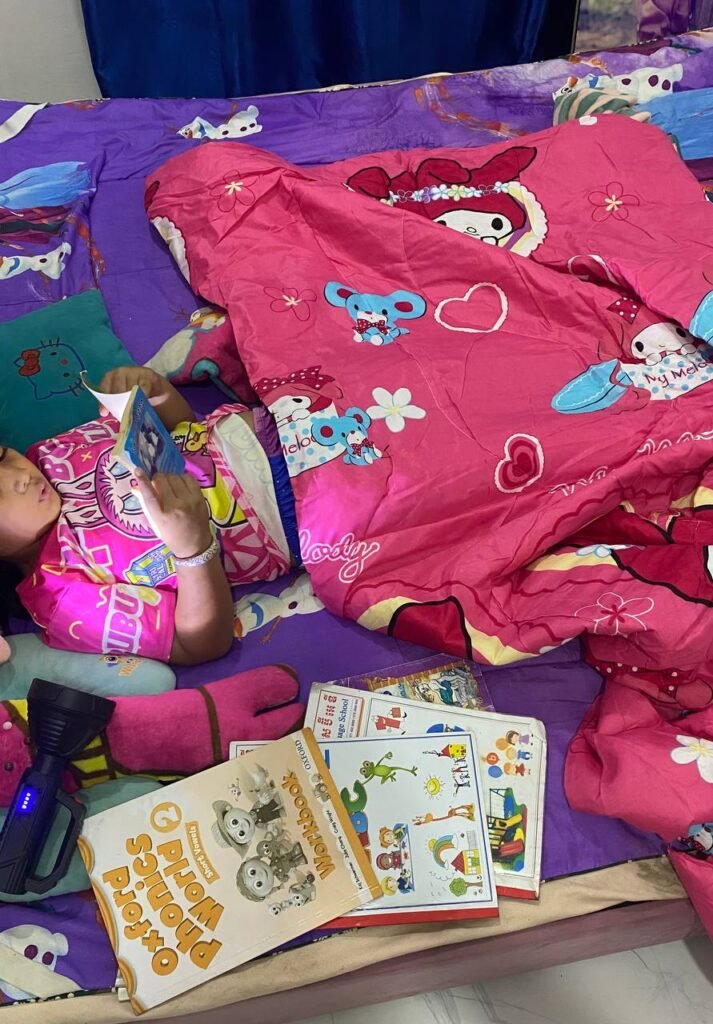
“That is not true! Why would the rabbit sleep? Why did he forget his duty? I don’t believe it. That is not how the real world works!”
I smiled because that reaction meant she was actually thinking.
I explained, “This is a teaching story, dear.
It is trying to show us what happens when someone is careless or overconfident.” She sat quietly for a moment.
Then she said, “Oh. So the rabbit lost because he thought he already won.”
That is the moment a story becomes a lesson.
What this teaches: Reading habits for children’s brain development are about much more than vocabulary or phonics.
They are about the thinking that happens around the book.
When your child asks a question during reading, answer it clearly.
When they go quiet, ask them something open: “What do you think the rabbit should have done differently?” Open questions keep young minds moving.
Yes-or-no questions tend to close the conversation before it gets anywhere interesting.
Habit 3: Use Culture and Tradition as a Window to the World
In Cambodia, the sampeah is one of our most meaningful everyday traditions.
Every morning, before my daughter walks out the door for school, she presses her palms together, bows slightly, and says, “Mom, Dad, I’m going to school now.”
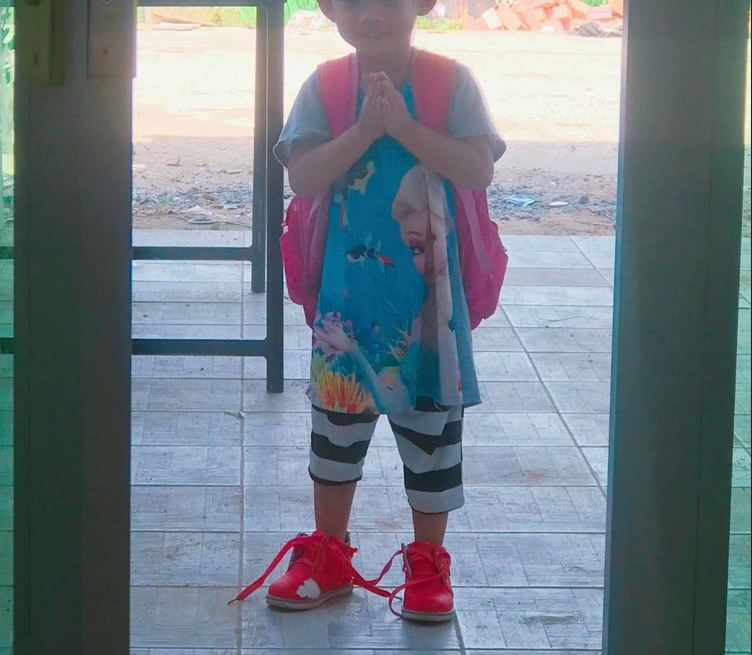
It takes three seconds.
But we have done it every single school day since she started.
One Friday, she came home with a puzzled look on her face. “Mom, I saw my foreign teacher today.
He did not sampeah.
He just shook hands and said ‘Hello.'” She was clearly trying to sort out which way was right.
I took a breath before answering, because I wanted to get this one right. “Your teacher is not wrong. Different countries have different ways of showing respect. I am sorry I did not explain that to you earlier.”
She nodded slowly, taking it in.
What this teaches: Cultural habits teach children something that no worksheet can: that their way of doing things is not the only way, and that difference is not the same as being wrong.
A child who understands this becomes more curious about other people and more open when they encounter something unfamiliar.
That openness is one of the quieter but more lasting habits that make children smarter in the long run.
Habit 4: Let the Outside World Do Some of the Teaching
Last Sunday, we drove out to the countryside for the afternoon.
As we passed a wide open field, my daughter spotted a herd of cows grazing on dry grass and immediately stretched her arm out the window, pointing.
“Mom! If the cows eat raw grass like that, won’t they get a stomachache?”
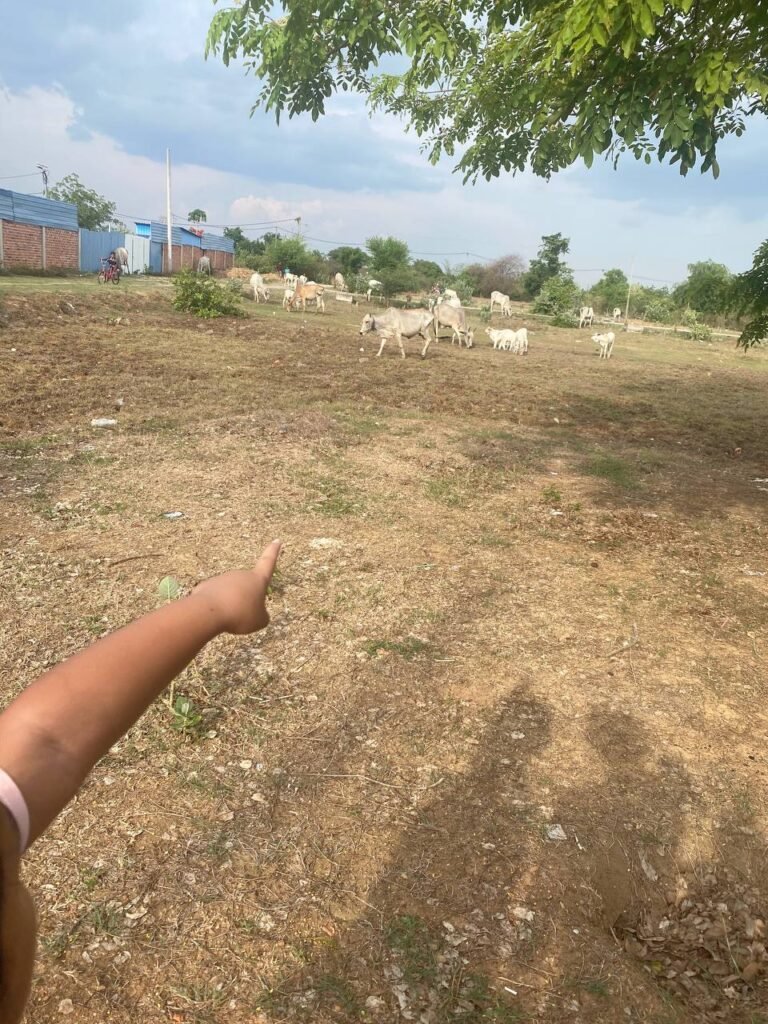
I paused, genuinely surprised by the question.
Then I explained that cows have a different digestive system from humans.
Their bodies are designed to process raw grass in a way ours simply are not.
Later, I understood exactly why she made that connection.
We have a rule at home: raw vegetables should be washed and cooked before eating, or you risk a stomachache.
She was applying that home rule to the cows.
She was using what she already knew to reason about something new.
That is not a small thing.
That is how a curious, intelligent mind works.
What this teaches: The outdoor learning benefits for kids go far beyond fresh air and exercise.
The world outside the home gives children real, concrete things to compare, question, and connect to what they already know.
A countryside field, a morning market, a walk near a river, these are classrooms without walls, and they are far more vivid than anything a screen can offer.
You do not need to travel far.
You just need to go somewhere new together and let your child notice things.
Habit 5: Use Coding Games to Grow Problem-Solving Skills
In her free time, my husband often plays drag-and-drop coding games with my daughter.
Before they begin, he takes a minute to explain the logic of the game: she has to arrange the pieces in the correct order to move the character forward.
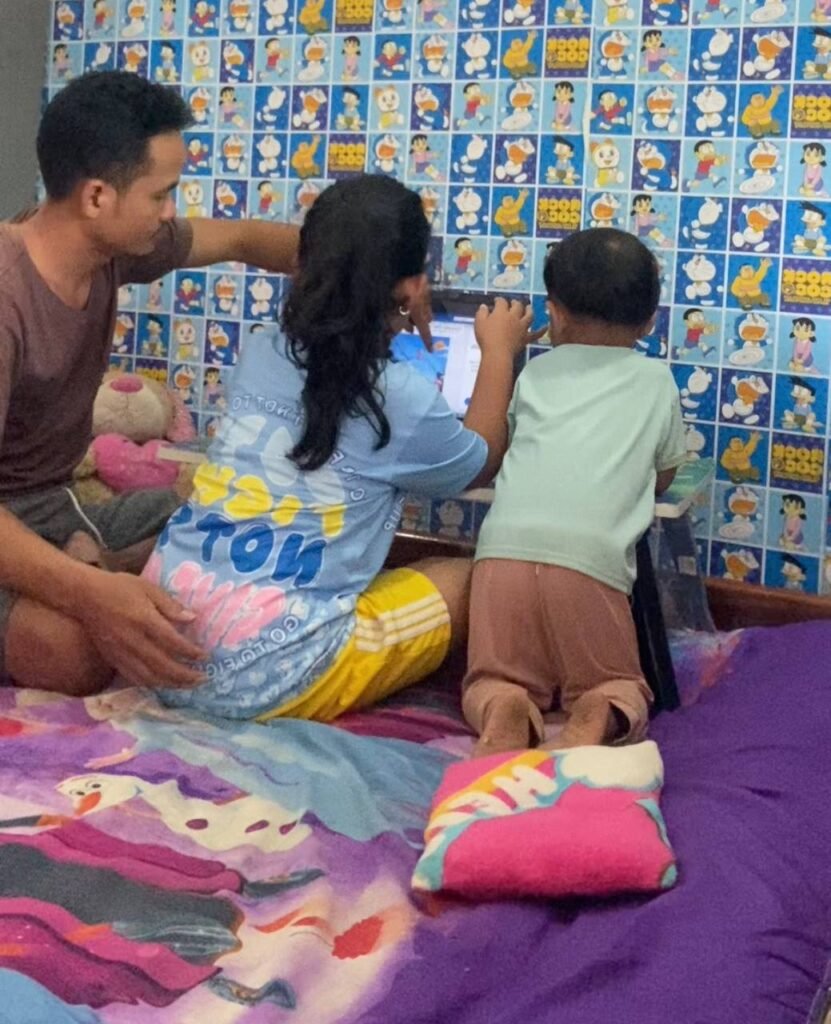
One wrong piece means nothing works, and she has to find and fix the mistake.
The frustration comes quickly. “Why do they make it so hard? Why can’t it just be easy?”
My husband always gives the same answer: “If it were always easy, your mind would not grow.
You have to learn how to solve problems before you can move forward.”
She rolls her eyes a little. And then she tries again.
What this teaches: Coding games to develop problem-solving in kids do not need to be complex or expensive.
Simple drag-and-drop games teach children that a mistake is not a reason to stop.
It is a clue that tells you where to look.
I’ve read that navigating these small frustrations is exactly how children build patience and problem-solving skills, skills that quietly transfer to every other area of a child’s thinking.
How to Raise a Curious and Intelligent Child: What These Five Habits Share
Looking at all five habits together, something becomes clear.
None of them requires buying anything special.
None of them depend on perfect parenting or a perfectly organized schedule.
What they share is something simpler: a parent who is present, who takes the question seriously, and who turns an ordinary moment into a thinking moment.
The habits to develop a child’s intelligence that matter most are not the ones you schedule.
They are the ones woven into daily life.
The soup is on the stove.
The bedtime book.
The morning goodbye at the door.
The Sunday drive through the countryside.
The game before bed.
These moments are already there.
They just need a parent who is willing to follow them through.
Conclusion: Intelligence Is Built in the Ordinary Moments
If there is one idea I hope stays with you from this article, it is this: your child’s best learning happens right next to you, inside the moments you are already living.
You do not need a curriculum for curiosity.
You need to take the question seriously.
You need to test the bread in the water.
You need to explain why the cows are different from us.
You need to sit with your child and let them figure out why the character would not move.
Start with one of these habits this week.
Practice it consistently.
Let your child see that their questions matter, that the world outside your door is worth exploring, and that not knowing the answer is only the beginning of finding it out.
That is the simplest truth I know about how to develop a child’s intelligence that actually lasts.
Frequently Asked Questions
At what age should children start learning to code?
We started introducing simple drag-and-drop coding games when our daughter was around five or six to teach basic logic and sequence. The goal at this age is not to write code. It is to practice problem-solving and build the understanding that effort, not luck, produces results.
Why do children ask so many questions, and how should parents respond?
Young children ask questions because their minds are actively building connections between what they know and what they observe. In our home, I’ve found that the most helpful thing I can do is engage with the question honestly, even without a perfect answer.
You can explore the answer together, run a simple test as we did with the bread and soup, or look it up side by side. Following the question through teaches far more than just giving the right answer.
How do reading habits support a child’s love for learning?
Reading together exposes children to new ideas, vocabulary, and ways of understanding the world. When parents ask open questions around the story, they train the child to think beyond what is written and form opinions of their own. This is a habit that builds gradually, which is exactly why even one or two pages a night adds up to something significant over time.
What are the outdoor learning benefits for kids?
Being outdoors gives children a real-world context for things they have learned at home or at school. It builds observational skills, encourages curiosity about nature and the people around them, and gives them experiences that a screen cannot replicate.
Even a simple outing to a new place can produce a learning conversation you did not plan for.
How does teaching cultural traditions help a child’s thinking?
Cultural habits like the sampeah teach children that the world holds many different ways of doing things, all of them valid. This builds perspective-taking, which is one of the quieter foundations of critical thinking. A child who understands that their way is not the only way becomes more curious about others and more thoughtful in how they engage with the world.
Do I need to spend money to raise a curious, intelligent child?
No. Every habit described in this article uses things you already have: your kitchen, your bookshelf, a walk outside, your family’s traditions, and an inexpensive coding game on a device you probably own. The most important ingredient is your presence and your willingness to follow your child’s question wherever it leads.
