

Disclaimer: The content on Sprout Upward is designed to encourage intentional family leadership. I am a mom of two and a former youth worker sharing my real-life experiences, not a licensed therapist or medical professional. These guides adapt my professional team management background to daily home life. Please consult your pediatrician for any clinical, medical, or psychological advice regarding your child.
Last Sunday night at 8:50 PM, my daughter suddenly screamed from her room.
My heart raced.
I thought something terrible had happened.
When I rushed in, she was standing by her desk with wide eyes. “Mom! I cannot find my pen case and eraser!”
I had to stop myself from laughing.
She was not hurt.
She was not scared.
She was organized.
She knew Monday was a school day, and she refused to wait until morning to sort herself out.
We found the pen case on the study table where she had been sitting with her dad and brother earlier that evening.
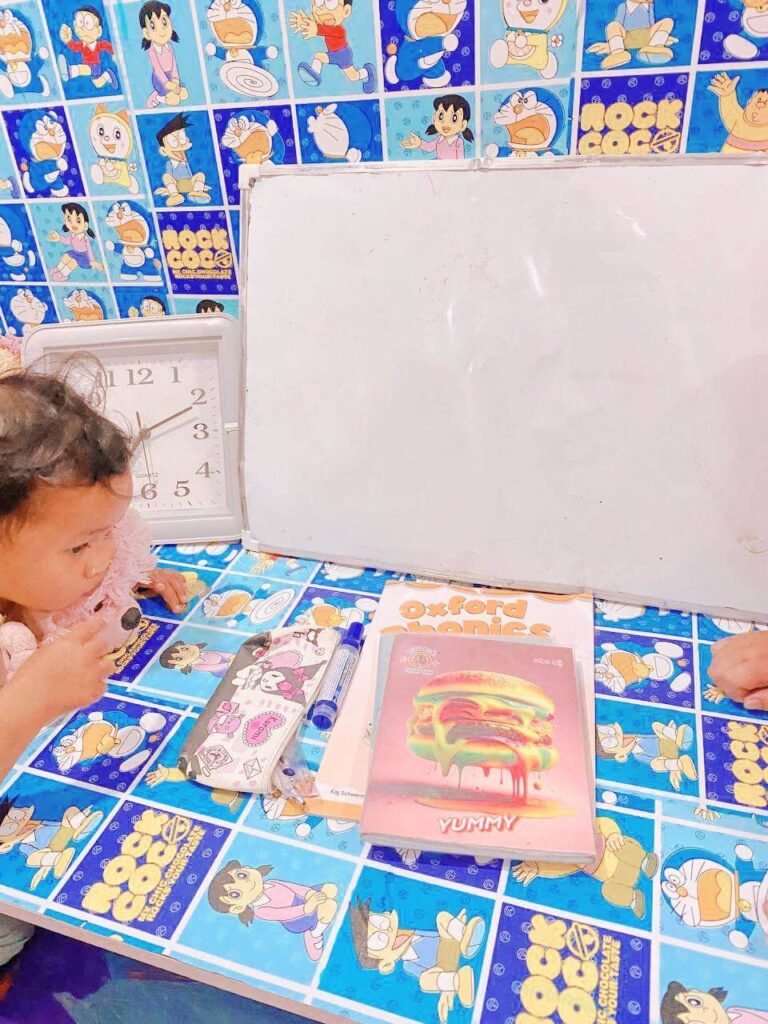
That small moment told me everything.
The chores she had been doing for months were working.
She was learning to manage her own life, one small task at a time.
If you have an 8-year-old and you are wondering what chores are actually age-appropriate, or how to get your child to do them without a daily battle, this guide is for you.
Below you will find 16 chores perfectly suited for second graders, the methods we actually use at home, and honest tips on how to teach responsibility without turning your house into a boot camp.
Key Takeaways
- Eight-year-olds are ready for 16+ age-appropriate chores that build real-life skills.
- The best chores for this age teach responsibility, organization, and independence, not just tidiness.
- Focus on the child’s effort, never perfection. Correcting their work after the fact kills motivation fast.
- A simple daily routine (3 to 5 chores per day) works better than a long weekly list.
- You do not need to tie chores to allowance at this age. Responsibility alone is a strong enough reason.
- A printable chore chart helps kids stay consistent without constant reminders from parents.
What Tasks Are Best for Second Graders?
By age 8, most children are ready to handle multi-step tasks, follow a routine, and take real pride in contributing to the family.
They are old enough to understand why a task matters, not just how to do it.
A good rule of thumb: give your child three to five chores per day, chosen from a mix of self-care tasks (managing their own things), household tasks (contributing to shared spaces), and learning tasks (things that teach empathy or life skills).
The goal is not a perfectly clean house.
The goal is a child who grows up knowing how to take care of themselves and the people around them.
16 Age-Appropriate Chores for 8-Year-Olds (With Methods)
1. Packing Her Own School Backpack
This is one of the best chores for building organizational skills and independence at the same time.
If your child forgets a notebook, she learns a natural lesson about responsibility, one that is far more effective than anything you could say.
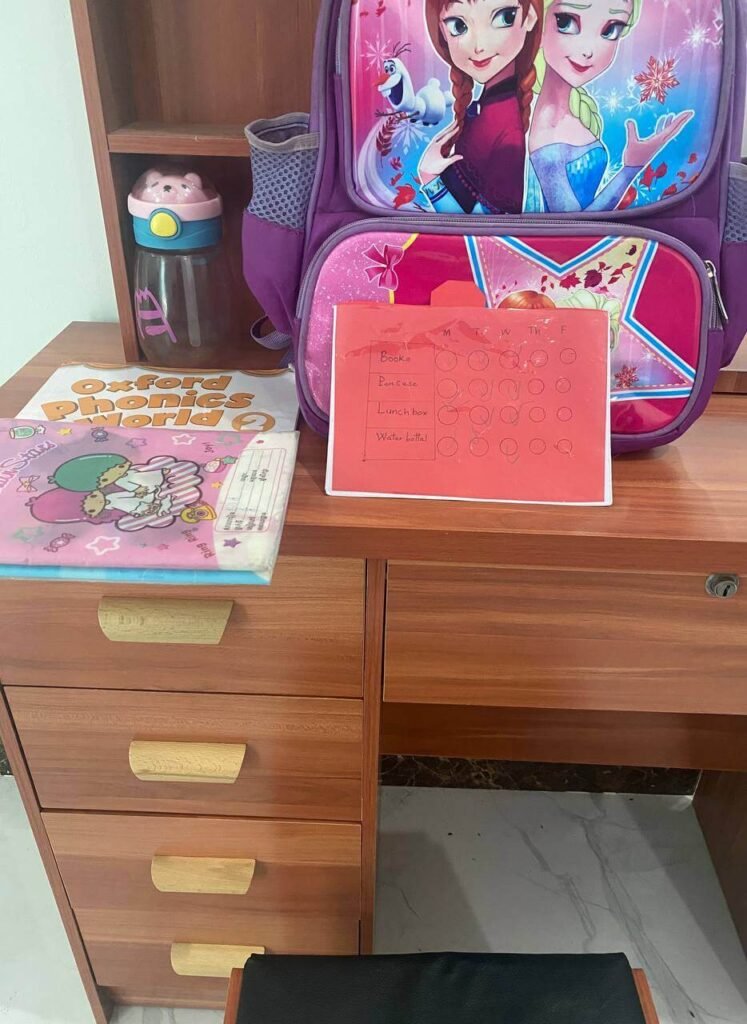
How we do it: We started with a simple checklist stuck inside the bag flap: books, pen case, lunch box, water bottle.
For the first 30 days, she checked it every single night.
Now she does not need the list at all. That is exactly why she noticed her pen case was missing before bed.
2. Sorting and Putting Away Laundry
Eight-year-olds are surprisingly good at sorting and categorizing.
This chore makes use of a skill they are already developing naturally.
How we do it: I do not expect hotel-quality folding.
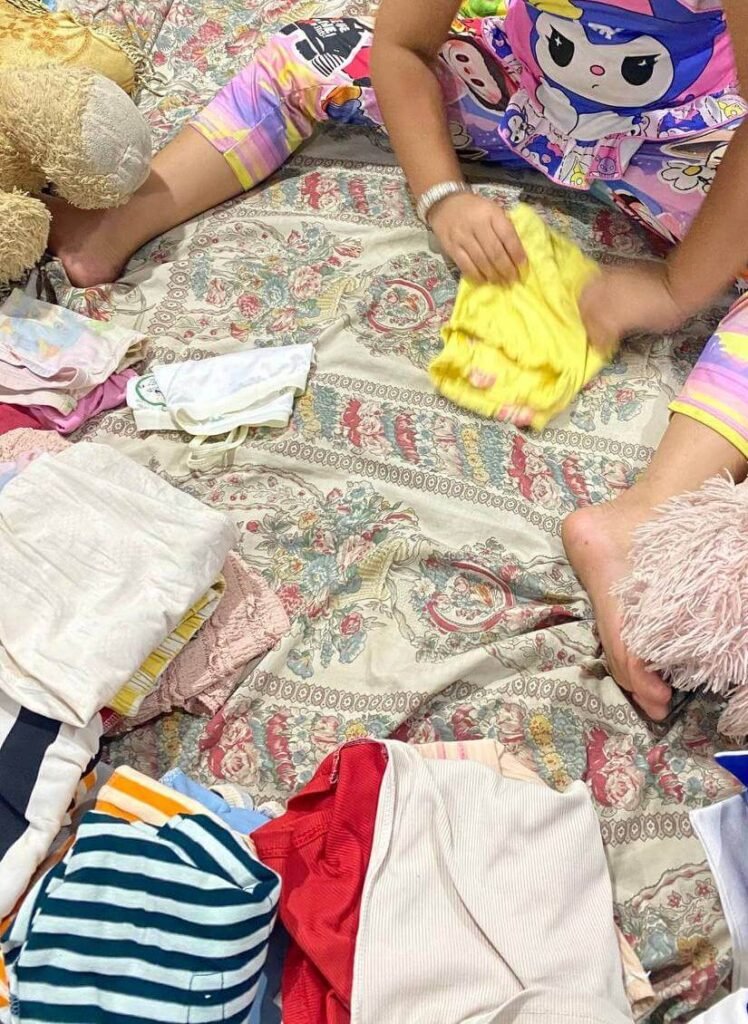
She sorts the clean laundry into two piles: her clothes and her younger brother’s clothes.
Even if the folds are a little uneven, she is learning to manage her own belongings without being told every time.
3. Hand-Washing Small Clothing Items (The Empathy Lesson)
This one is not really about getting laundry clean.
It is about teaching children that the clothes they wear to school do not just appear fresh and folded by magic.
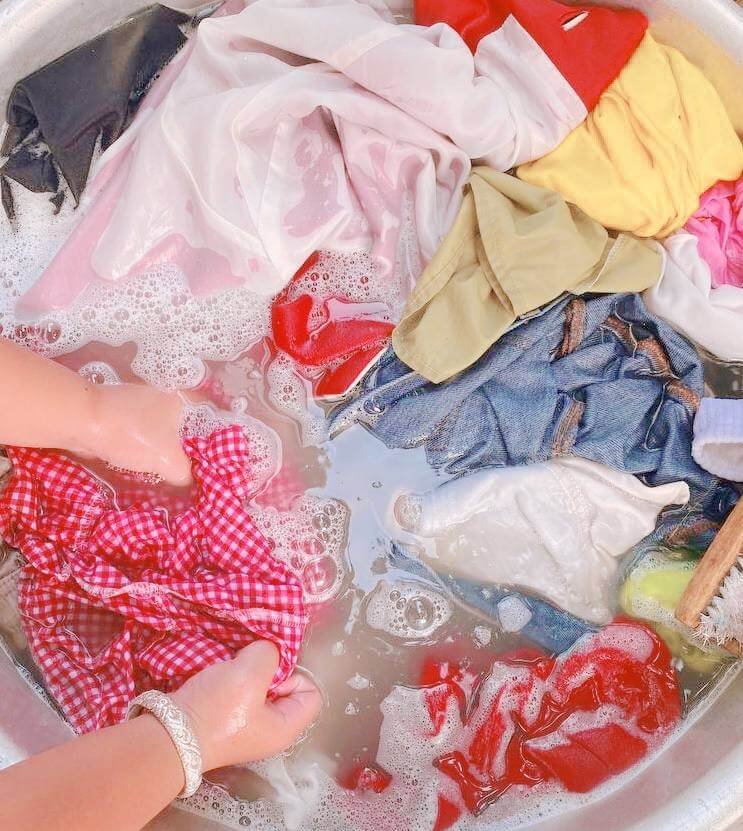
How we do it: On weekend mornings, I give her a small basin of soapy water and a few light items to wash.
When she says, “Ugh, my hands hurt,” or “There is so much to wash,” I just smile and nod.
She is figuring out, on her own, how much effort goes into the clean clothes she takes for granted every day.
4. Setting and Clearing the Dinner Table
This teaches teamwork and gives children a real role in the family’s daily rhythm.
How we do it: We use a small foldable table for her and her three-year-old brother during meals to keep things safe.
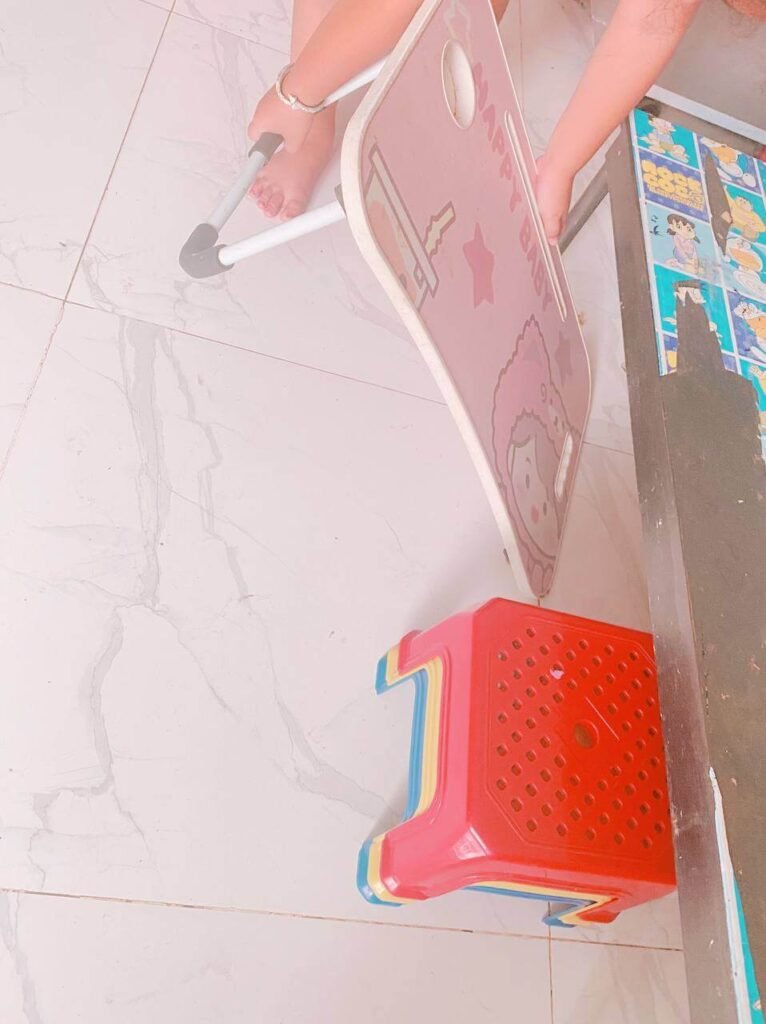
After eating, she is the “Table Captain.” She clears the plates, folds her placemat, and slides their table neatly under ours.
The room stays tidy, and she feels genuinely useful.
5. Feeding and Watering Pets
Taking care of another living thing is one of the most powerful ways to build compassion and reliability in children.
How we do it: The rule in our house is simple: “The dog eats before you eat.” This one sentence turns feeding time into a reliable daily habit rather than something she does only when she feels like it.
6. Organizing Plastic Dishes and Containers
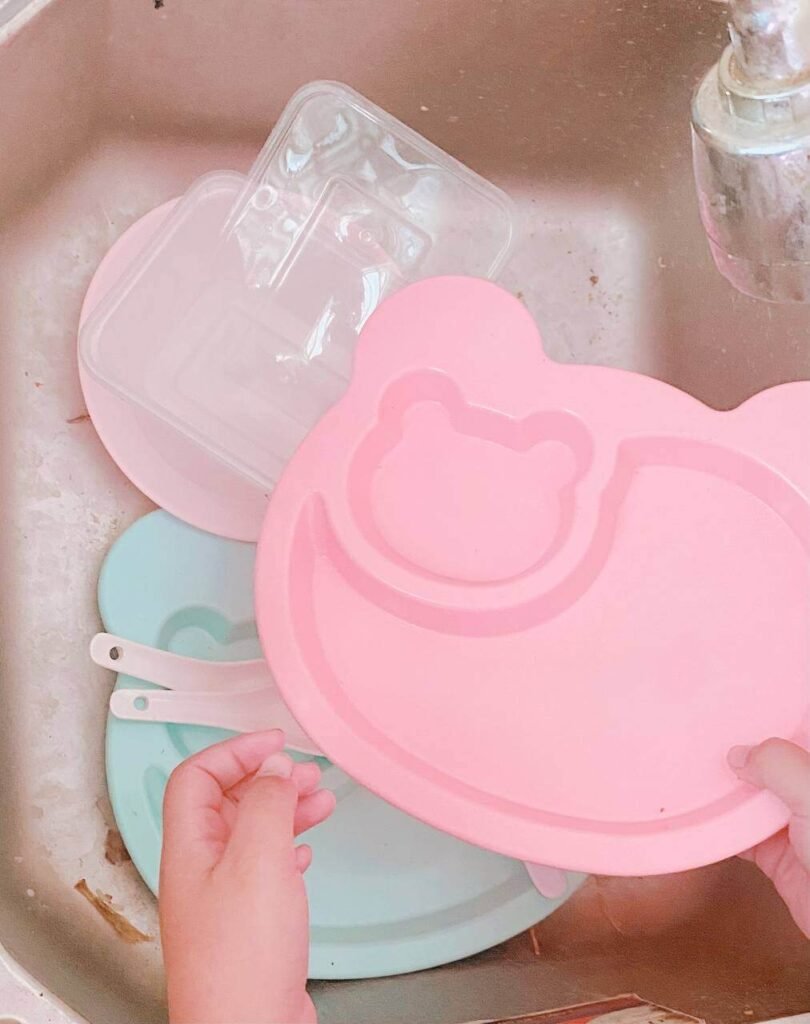
How we do it: She puts away plastic containers, lids, spoons, and forks after they are washed.
It is low-stakes and easy to succeed at, which is exactly what you want when a child is just building confidence with kitchen tasks.
Safety note: Always keep sharp knives and heavy glassware out of reach.
Stick to plastic and lightweight items for this age group.
7. Emptying Small Wastebaskets
When she comes home from school, one of her first tasks is to bring her bedroom’s small trash bin out to the main bin.
It sounds minor, but it teaches her to care for the whole house, not just her own room.
8. Dusting Flat Surfaces
This is a chemical-free, easy-to-succeed-at chore with results your child can actually see right away.
Kids this age love instant visible progress.
How we do it: She uses a feather duster on the TV stand, her own desk, and the bookshelf.
The whole thing takes about five minutes, and she genuinely enjoys it.
9. Making Her Bed
A made bed is a small win to start the day.
It takes two minutes and gives children a sense of accomplishment before they have even had breakfast.
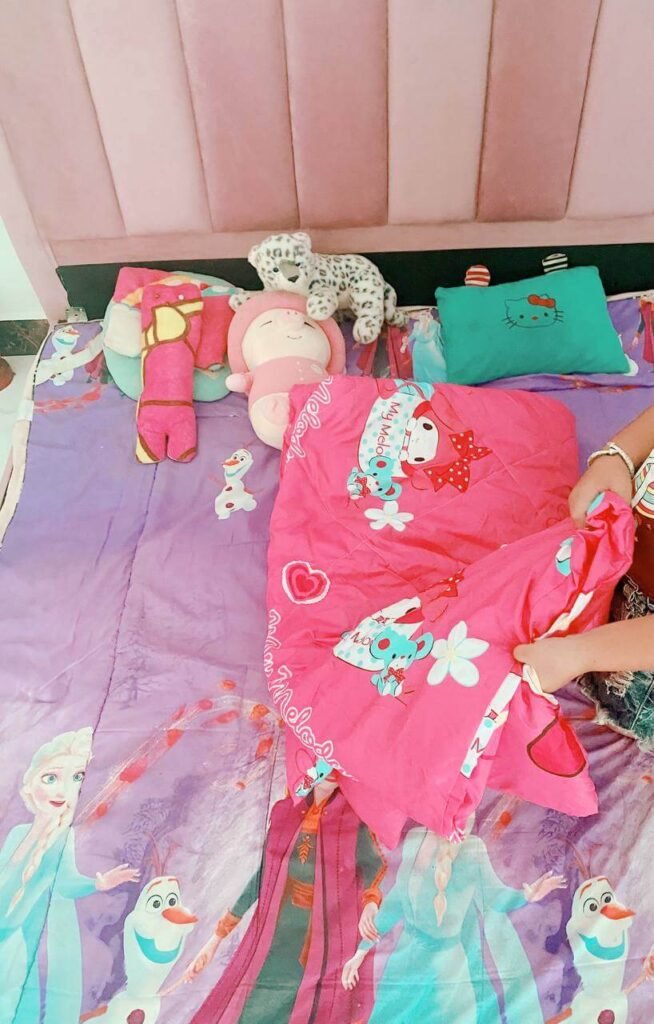
How we do it: I do not expect perfection. As long as the blanket is reasonably straight and the pillows are at the top, it counts.
The habit matters far more than the result.
10. Sweeping a “Target Zone.”
Sweeping an entire floor is boring for an adult.
For an eight-year-old, it feels endless.
This small change makes it manageable and even a little fun.
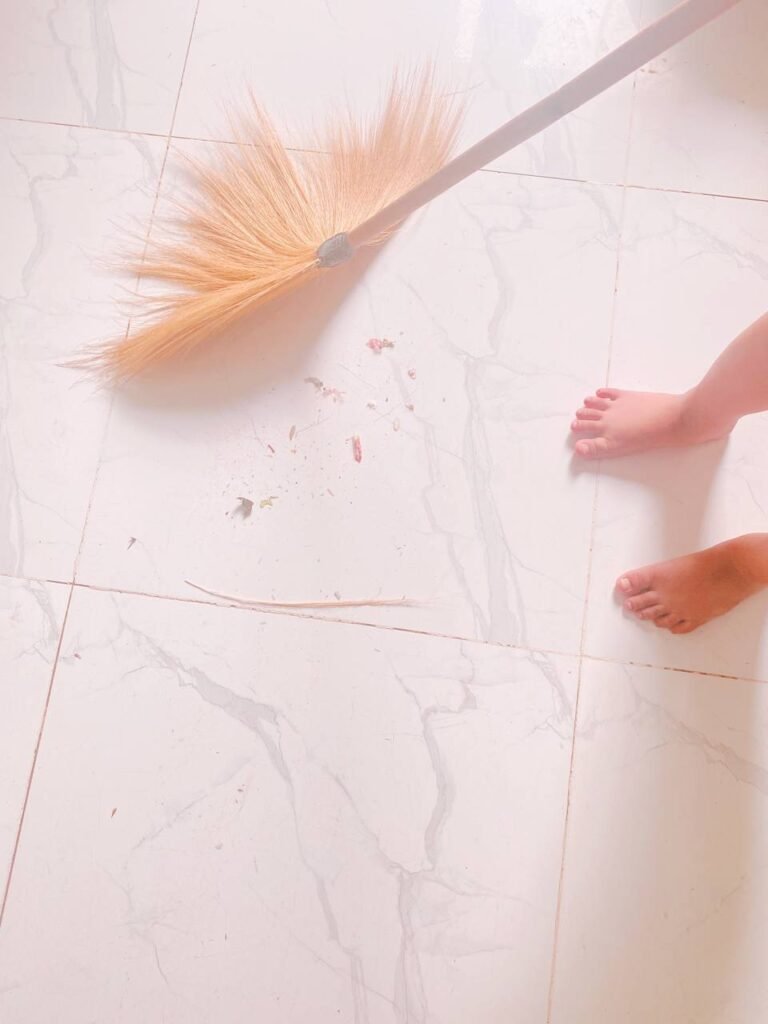
How we do it: I use tape to mark out a small square on the kitchen or living room floor.
The challenge: “Everything inside this square needs to be swept out.” It turns a chore into a game of coordination and focus.
11. Managing Her Own Shoes
To keep the entryway tidy and prevent her toddler brother from scattering things everywhere, her rule is to keep her shoes neatly in her own bedroom rather than by the front door.
12. Folding Towels
Towels are just geometry.
Fold in half, fold in half again, done.
This is a great beginner folding task because towels are forgiving and the result always looks reasonably tidy.
How we do it: I introduced it as a math game. “How many times do you need to fold to make it into quarters?”
She thought that was funny, and now she does it without being asked.
13. Helping Unpack Groceries
When we get home from the store, she helps carry bags in and sort items into two groups: refrigerator foods and pantry foods.
Over time, this builds real kitchen knowledge, not just chore compliance.
14. Watering Indoor Plants
This connects children to nature and teaches them that living things depend on consistent care, not just occasional attention.
How we do it: She uses a small watering can filled with a measured amount so she does not overwater.
She has her own plant to be responsible for, and she checks on it every few days, as if it were a pet.
15. Wiping Windows and Mirrors
Kids love spray bottles.
This is just a fact of childhood.
How we do it: I make a non-toxic solution of water and white vinegar, pour it into a small spray bottle, and let her wipe down any glass she can comfortably reach.
It builds arm strength, and the streak-free result gives her a clear sense of achievement.
16. Simple Snack Preparation
Letting children help in the kitchen builds confidence, and it starts simply.
At eight, washing fruit, peeling a banana, or rinsing vegetables are all appropriate starting points.
A Sample Daily Routine
A daily routine works far better than a long weekly chore list.
Here is what a simple weekday routine can look like:
Morning (before school)
- Make the bed
- Pack the school backpack using the checklist.
After school
- Empty the bedroom wastebasket
- Put away shoes
Evening
- Help set or clear the dinner table
- Feed the pet
On weekends, you can add the longer or less frequent tasks: sorting laundry, watering plants, dusting, and wiping windows.
How to Build the Habit (Without Nagging)
This is the question every parent actually wants answered.
Here is what works in real life.
- Start with one chore at a time. A long list is overwhelming. Introduce one new task, let your child master it, then add another. Within a few months, the routine feels natural.
- Explain the “why.” Children this age understand reasons. “When you clear the table, it means dinner can end faster, and we all get more time together” lands far better than “because I said so.”
- Use a visual chore chart. A simple printed list or chart on the fridge works well. Children get real satisfaction from checking things off. It also removes you from the equation; your child does the chore because the chart says so, not because you reminded them again.
- Do not fix their work. This is the most important rule. If she makes her bed and it is a little lumpy, leave it. If the spoons are facing the wrong direction, leave them. The moment you go back and quietly redo what your child just did, she sees it. She learns that her effort was not good enough. She stops trying. Focus entirely on effort, never on the result.
- Keep the mood light. Put on a favorite playlist during chore time. Set a timer and make it a race. Doing chores alongside your child, especially in the early stages, makes the whole thing feel less like a punishment and more like just part of how the household runs.
Should You Pay for Everyday Chores?
Most child development experts, including those at the American Academy of Pediatrics, suggest treating everyday chores as a matter of household responsibility rather than paid work.
The reason: children who only do chores for money quickly learn to negotiate, delay, or simply opt out.
That said, there is a middle ground that works well.
Keep a core set of daily responsibilities that are simply expected, then offer optional “bonus chores” that come with a small payment.
This teaches the link between extra effort and financial reward without turning basic responsibility into a transaction.
Conclusion
Teaching chores for 8-year-olds is never really about having a clean house.
It is about giving your child small, meaningful wins every single day.
Each time she feeds the dog, folds a towel, or makes her bed without being asked, she is practicing the habits that will carry her through life.
The 16 age-appropriate chores in this list are not complicated.
They do not require special tools or elaborate systems.
They just require consistency, patience, and the willingness to let your child do things imperfectly for a while.
Because imperfect effort, repeated every day, is exactly how a capable, confident person is built.
Frequently Asked Questions
What chores should an 8-year-old do without supervision?
Most children this age can independently make their bed, pack their backpack, empty small wastebaskets, feed pets, sort laundry, put away shoes, and water plants. Tasks involving sharp objects, hot water, heavy items, or stovetops always need adult supervision.
What is the difference between a chore and a life skill for an 8-year-old?
A chore is an ongoing household task that benefits the whole family, such as setting the table or emptying the wastebaskets. A life skill is something your child needs to know how to do before living independently, like doing laundry, cooking a simple meal, or managing money. At age eight, many chores double as early life skill practice, which is exactly why they are so valuable.
How much time should daily chores take for an 8-year-old?
Aim for 15 to 20 minutes of total chore time per day. At eight years old, a child’s attention span for household tasks is relatively short. Breaking this up into five minutes in the morning (like making the bed) and 10 to 15 minutes in the evening (like clearing the table and feeding pets) prevents burnout and keeps the routine sustainable.
Should I use a digital chore app or a paper chart for a second grader?
A physical paper chart is usually much more effective for an 8-year-old. Children at this age are highly tactile and get a genuine psychological boost from physically checking a box or placing a sticker. While digital apps are great for teenagers, using them for second graders often just creates another excuse to ask for a smartphone or tablet.
What should I do if my child takes an unusually long time to complete a simple task?
If a five-minute chore is taking thirty minutes, it is usually a focus issue, not defiance. Introduce a visual timer, like a simple sand glass or a kitchen timer. Turn the task into a race against the clock (“Can you beat the timer?”) to instantly shift the dynamic from a boring, dragged-out obligation into an upbeat game.
