

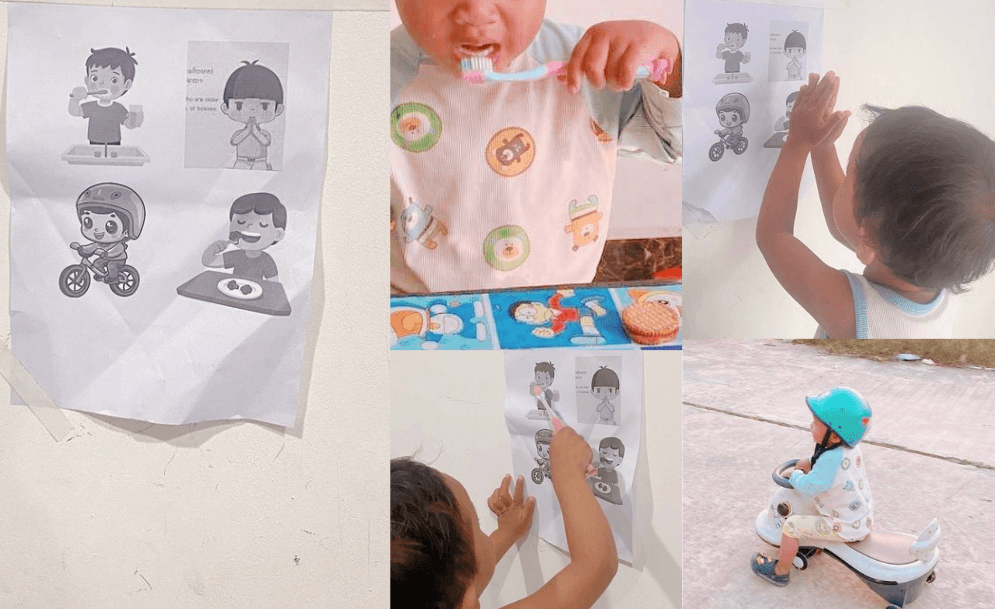
Disclaimer: The content on Sprout Upward is designed to encourage intentional family leadership. I am a mom of two and a former youth worker sharing my real-life experiences, not a licensed therapist or medical professional. These guides adapt my professional team management background to daily home life. Please consult your pediatrician for any clinical, medical, or psychological advice regarding your child.
I still remember when my daughter was little.
She would cry every time I tried to get her to brush her teeth.
When I asked her to sampeah (a Cambodian respectful greeting with hands pressed together), she would shake her head and refuse.
When I tried to put a helmet on her, she would throw it on the floor and cry.
I had even printed out daily routine charts and covered the walls with pictures.
I thought more information would help.
It did not.
The wall looked cluttered, she did not know where to focus, and I was a first-time mom running out of ideas.
Because of everything I learned the hard way with my daughter, teaching my 3-year-old son has been a completely different experience.
When I say, “Hey, Mr. Boy, it is time to brush your teeth,” he walks straight to find his toothbrush.
When I ask, “What do you do when you visit Grandma?” he immediately puts his hands together and sampeahs.
When we are about to go outside, he looks for his helmet without being asked.
The difference? A simple visual routine chart for toddlers, used the right way.
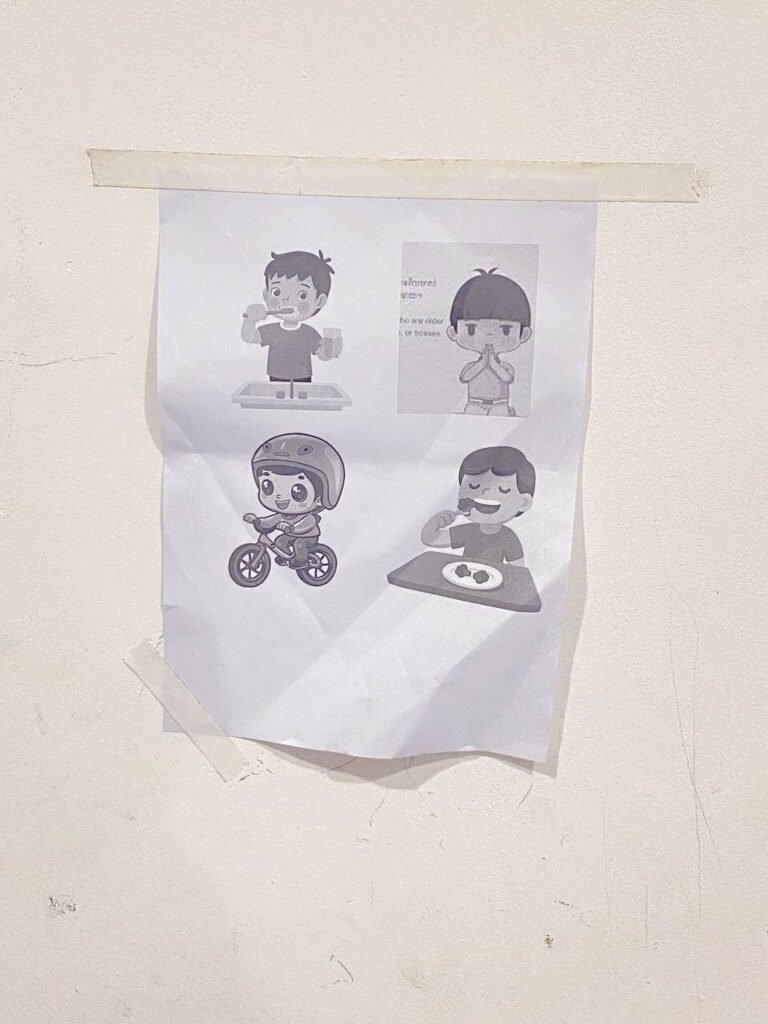
In this post, I’ll show you the exact 4-picture method I use, why ‘less is more,’ and how to teach habits without the tears.
Key Takeaways
- A visual routine chart with just 3 to 5 pictures works better than one overloaded with images
- Strategic placement at toddler eye level lets children touch and interact with the chart themselves
- Gamification, not repetition, is the most powerful tool for toddler habit formation
- You do not need long free time; building a toddler daily routine happens in small, everyday moments
- Consistency over weeks and months matters far more than perfection
- The real goal is awareness and independence, not perfect performance
What Is a Visual Routine Chart for Toddlers and Why Does It Work?
A visual routine chart is a set of pictures that shows a child what is expected of them each day.
No reading required.
No long explanations.
Just clear images a toddler can look at, point to, and connect to real actions in their world.
For children between 18 months and 4 years old, visual cues work far better than verbal reminders.
When a toddler sees a picture of someone brushing their teeth on the wall, they begin to form a mental connection between the image and the action.
That connection, repeated daily through play and modeling, becomes a real habit they carry out on their own.
The chart is not the magic. How you use it is.
What I Got Wrong the First Time
With my daughter, I believed more was better.
I printed a full daily routine chart, packed with 12 pictures, and stuck it all around the house.
To me, it made perfect sense. To her, it was too much to process at once.
When she could not follow one thing, I would add another reminder.
When she resisted, I pushed harder.
The result was the same every time: tears, refusals, and a worn-out mama.
Looking back, the problem was not my daughter.
The problem was that I gave her too much at once.
A cluttered visual schedule for kids does not teach them.
It overwhelms them.
And no amount of pushing gets around that.
The “Less Is More” Method: A Visual Routine Chart for Toddlers That Actually Works
When my son came along, I started completely fresh with a different approach.
I printed just four pictures: brushing teeth, sampeah, wearing a helmet, and eating.
That was it. Nothing more.
Why only four?
Because a toddler between two and three years old can realistically focus on a small number of habits at a time.
Trying to build twelve habits at once builds nothing.
But four habits, practiced every day with love and patience, can become a genuine part of who a child is.
This is what slow parenting looks like in practice: choosing depth over speed, and trusting the process even when progress feels invisible.
Strategic Placement Makes All the Difference
I placed the pictures in two spots: our daily play area and the dining room wall.
Most importantly, I hung them low enough for my son to touch them, point at them, and interact with them himself.
If you look at my pictures today, they are a little dirty and torn at the corners.
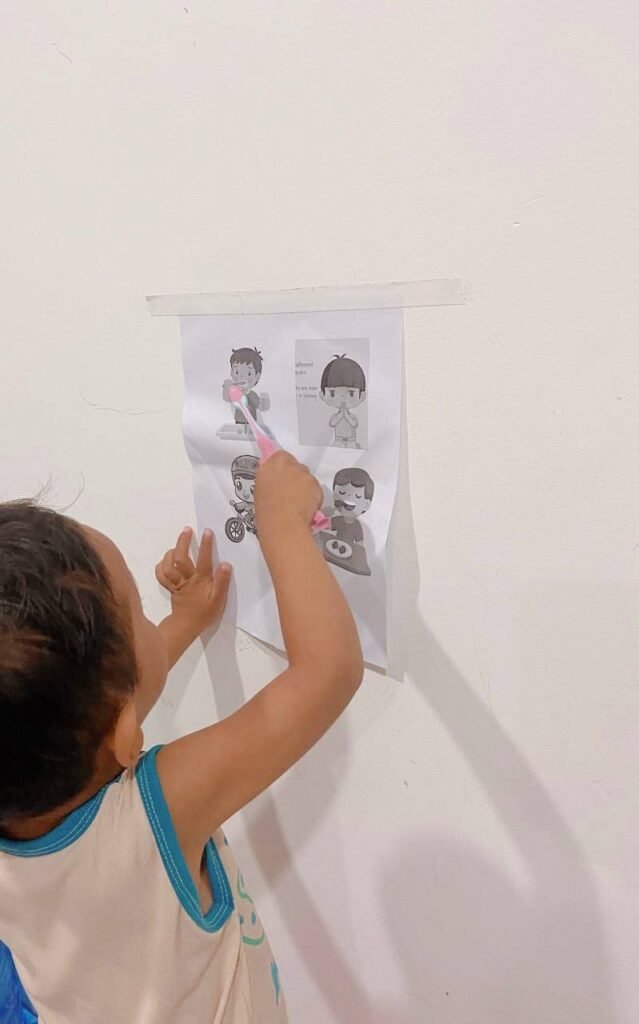
That is exactly the sign of a day well spent.
How I Teach Using the Chart: A Simple 3-Step Method
You do not need a schedule block or a perfect setup for this. You do not need to be a perfect parent either.
Here is how the method actually works, in real daily life.
Step 1: Introduction (Explain Before You Expect)
Before I ever asked my son to follow a picture, I introduced each one through talking, playing, and acting it out.
I never pointed to the chart and said, “Go do that.” Instead, I made it a story.
“Look, this little boy is brushing his teeth! He is so good at it.
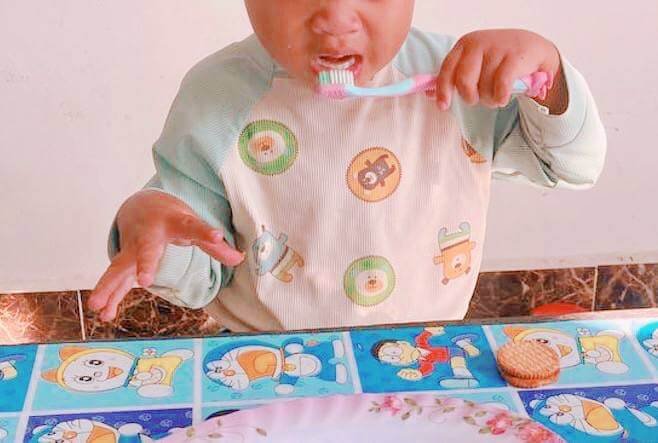
The toothbrush goes like this, and then like this.” Then I would pretend to brush my own teeth in an exaggerated way.
We would both laugh. Then I would hand him his toothbrush.
That is how to teach a 3-year-old to brush teeth without tears: not through pressure, but through play.
The habit gets introduced gently before it is ever expected.
Step 2: Engagement (You Can Do This While Cooking Dinner)
One thing that stopped me from being consistent before was thinking I needed dedicated time to sit down and do a proper lesson.
I do not. Neither do you.
Sometimes, while I am busy cooking, I will call out from the kitchen, “Oh no! Mommy forgot how to sampeah! Do you remember how to do it?”

And my son will drop what he is doing and run over to show me.
That is the engagement.
Thirty seconds while the rice is on the stove.
This kind of low-pressure, woven-into-the-day approach is what makes toddler habit formation feel natural for both parent and child.
Step 3: Gamification for Toddler Learning (The Step Most Parents Skip)
This is the most powerful part of the method, and it is also the one most parenting advice leaves out entirely.
I gave the character in the pictures a name: “Mr. B.” And I call my son “Mr. Boy.” They are best friends who do everything together.
When it is time to brush teeth: “Hey, Mr. B is already brushing his teeth! Have you brushed yours yet, Mr. Boy?”
When we go outside, “Mr. B never rides without a helmet. Are you ready like Mr. B?”
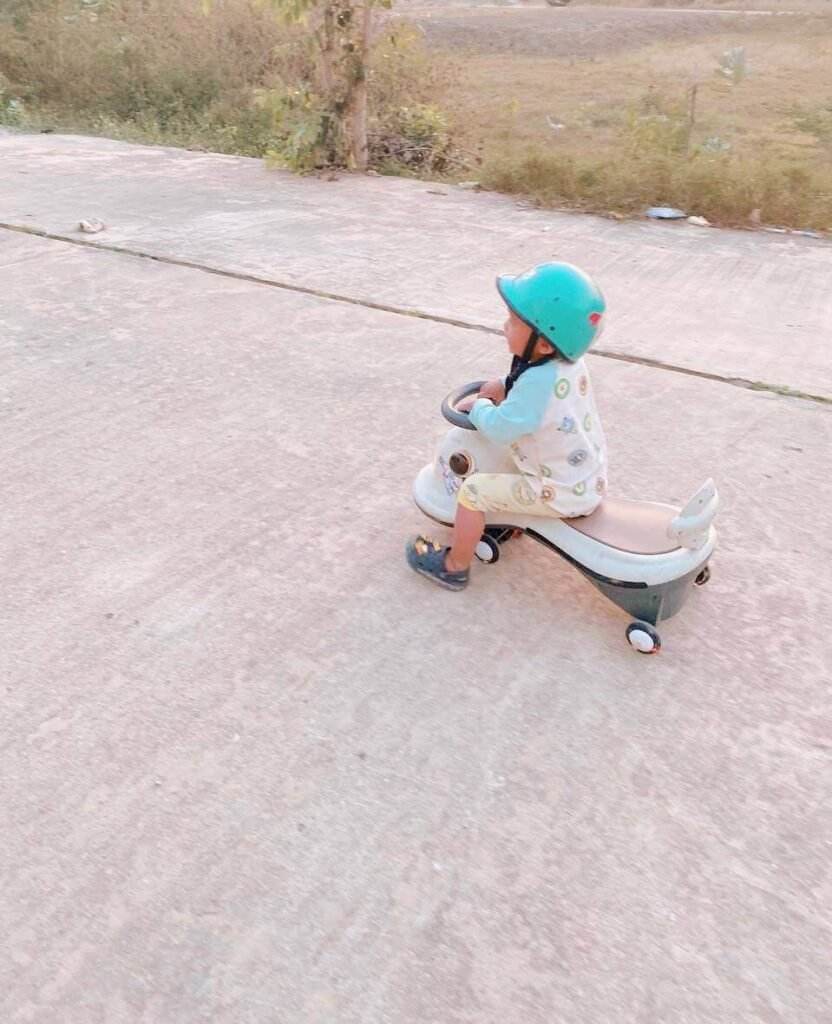
Gamification for toddler learning turns a rule into a game.
It removes the “because I said so” energy and replaces it with curiosity and a sense of belonging.
My son does not feel ordered to do something.
He feels invited to be part of something.
A few other things I always keep in mind:
- Be the role model. I let him watch me do the habit first, or I let his older sister demonstrate. Children at this age learn far more from watching than from being told.
- Never force. Every single task gets turned into play. If he is not ready, I will try again later with a different approach. Positive reinforcement, not pressure, is the foundation of everything.
- Consistent guidance. I use the same words, the same tone, and the same approach every single time. That consistency in parenting is what builds the groove in a young child’s brain and makes habits genuinely stick.
The Real Result: Awareness and Toddler Independence
I do not expect perfection. That was never the goal.
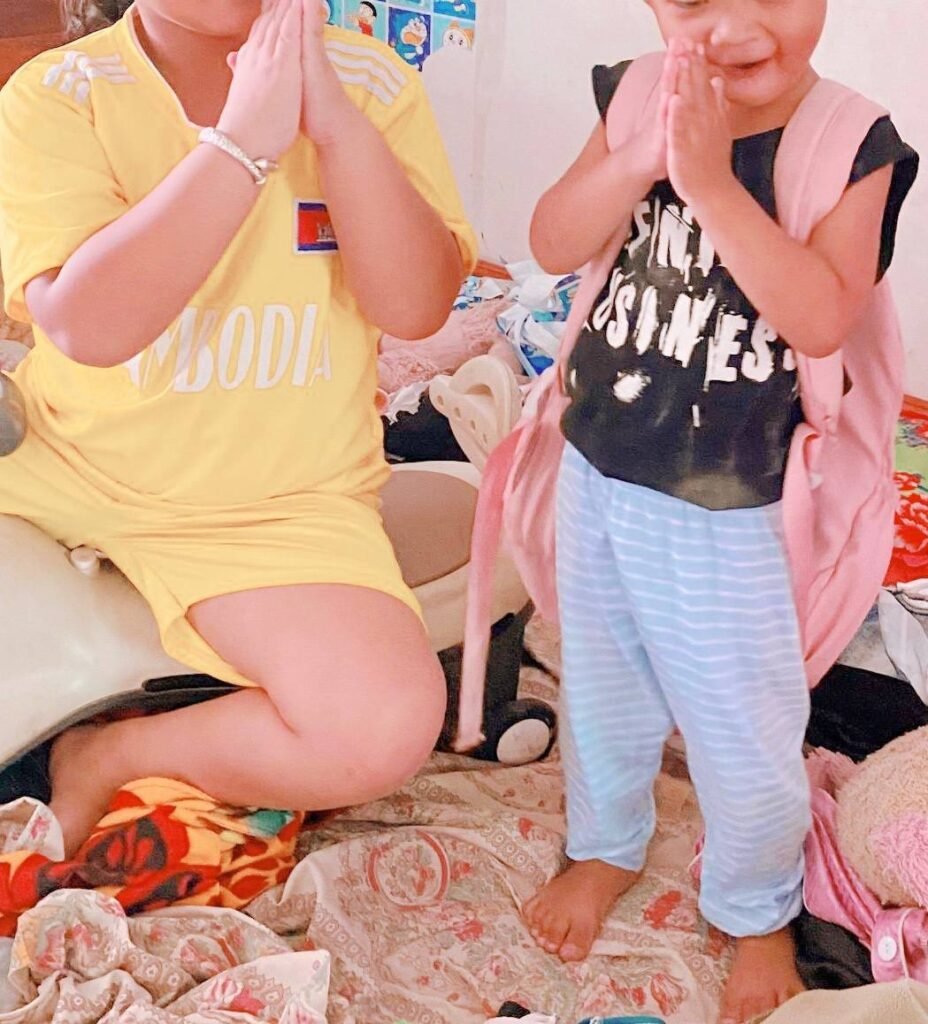
My real goal was for my son to understand and be aware of these habits, not to perform them flawlessly every single day.
He does most of them, not always perfectly, and that is completely fine.
Some days he brushes his teeth thoroughly.
Some days he gives a half sampeah and runs off to play.
Some days, he grabs his helmet without being reminded at all, and I feel like the proudest mama in the world.
What matters is that the awareness is there.
The habit is being built. Slowly, consistently, joyfully.
And bit by bit, it is becoming part of who he is.
This was never a one-week or one-month project.
It is an everyday journey of playing, explaining, and modeling behavior together.
The secret is simply to start small and stay consistent.
Why This Approach Works
What I discovered through trial and error with my children lines up perfectly with the gentle parenting philosophies I’ve embraced:
- Toddlers learn far better through visual cues than verbal instructions alone
- Repetition through play builds stronger habits than repetition through rules
- A predictable toddler daily routine gives children a sense of safety and control over their day
- Boundaries with empathy, guiding without forcing, build genuine trust and cooperation
- Role modeling is one of the most powerful teaching tools a parent has at any stage
This is not a rigid system. It is a gentle parenting approach that puts connection before compliance.
And it works.
Conclusion
A visual routine chart for toddlers does not need to be elaborate, expensive, or perfectly designed.
Mine is a slightly crumpled piece of paper with four cartoon pictures, taped to a wall at toddler height.
But that worn, touched, and well-loved paper is proof of something real: a child learning, engaging, and building habits one playful day at a time.
If you are struggling to teach your toddler good daily habits, start small.
Print three or four pictures.
Hang them low. Give the character a name.
Turn every reminder into a game.
Do not aim for a perfect routine.
Aim for a consistent one.
That is how toddler daily habits are actually built, one small, joyful moment at a time.
Frequently Asked Questions
How many pictures should be on a visual routine chart for toddlers?
Start with three to five pictures at most. Too many images overwhelm young children and make it harder for them to focus on any single habit. Once they have mastered a few, you can slowly introduce new ones.
At what age can I start using a visual routine chart with my child?
You can start as early as 18 months, though most children respond very well between the ages of two and four. Keep the pictures simple and clear, with easy-to-understand cartoon-style illustrations.
How long does it take to build toddler daily habits with a visual chart?
Expect weeks to months, not days. Building genuine habits is a slow and consistent process. The goal is not speed. The goal is for the habit to become a natural and familiar part of your child’s everyday life.
Does this method work for screen-free toddler learning at home?
Yes, completely. This entire approach is screen-free. It uses printed pictures, play, conversation, and role modeling to build habits, which actually strengthen a child’s real-world attention and independence far more effectively than digital tools do.
I am a first-time mom. Is this method easy to start?
It is one of the easiest things I have ever tried, and I wish someone had told me about it earlier. Print three or four pictures. Tape them to the wall at toddler height. Give the character a name. Start playing. That is the whole beginning.
