

Disclaimer: The content on Sprout Upward is designed to encourage intentional family leadership. I am a mom of two and a former youth worker sharing my real-life experiences, not a licensed therapist or medical professional. These guides adapt my professional team management background to daily home life. Please consult your pediatrician for any clinical, medical, or psychological advice regarding your child.
Every parent lights up when their child does something well.
That feeling comes naturally.
A tidy room, a page of careful writing, a new skill finally clicked into place, and out it comes without thinking: “Good job!”
I was exactly that parent.
With my 8-year-old daughter, “good job” and “you’re so smart” were practically automatic.
When she organized her room, finished her homework, or I checked her writing, those were my go-to responses.
I genuinely thought I was being encouraging.
My husband saw something I was missing.
Each night before bed, he would quietly suggest a different way to respond, one small change at a time.
At first, it felt like unnecessary fussing over words. Then I actually started paying attention to what those words were doing, and I understood exactly what he meant.
Knowing what to say instead of “good job” is not about being less warm or less loving.
It is about being more present, more specific, and far more useful to your child’s growing sense of self.
Here are the 8 approaches I now use, with real moments from our family to show exactly how each one works.
Key Takeaways
- “Good job” evaluates a result but tells your child nothing meaningful about what they did or how they did it.
- Descriptive praise using the “I notice” technique shows your child you are truly paying attention to their effort, not just the outcome.
- Praising effort rather than results is the foundation of growth-mindset parenting and builds real, lasting resilience.
- Asking “How do you feel about what you wrote?” teaches children to evaluate themselves from the inside.
- Saying “You did it!” keeps the joy focused on your child rather than on your feelings.
- Consistent, small language shifts over time make a far bigger difference than any single perfect response.
Why “Good Job” Falls Short
In my parenting journey, I’ve found the concepts from research on growth mindset, like that from psychologist Carol Dweck, incredibly helpful. I’ve noticed that when I focus on, rather than for results alone, develop stronger resilience and a more genuine love of learning.
When we say only “good job,” we are evaluating an outcome.
We are not acknowledging the child’s thinking, persistence, or problem-solving along the way.
The effects of empty praise on child confidence are subtle but cumulative.
Children gradually learn to wait for outside approval instead of developing their own sense of what they have accomplished.
They begin avoiding challenges because challenges carry the risk of not getting the praise they have come to depend on.
By around age 8, children start comparing themselves to classmates.
If your praise is tied only to achievement, failure starts to feel like something to hide from you.
That is the last thing any of us wants.
The Quick-Reference Table
| Instead of Saying… | Try Saying… | The Result |
| Good job cleaning! | I notice your toys are grouped and your blanket is centered. | Validates effort and shows you are truly paying attention. |
| You’re so smart! | You took deep breaths and kept trying until you solved it. | Builds resilience and reinforces a growth mindset. |
| You’re a good girl. | Thank you for organizing your shoes. It helps our mornings run smoothly. | Shows that her actions have a real, positive impact on the family. |
| I’m so proud of you! | You did it! You kept your balance the whole way. | Keeps the joy and feeling of accomplishment focused entirely on the child. |
8 Practical Alternatives to “Good Job” (With Real Examples)
1. The “I Notice” Technique: Descriptive Praise That Shows You Are Really Paying Attention
The “I notice” technique is one of the most practical tools for parents who want to move beyond generic praise.
It is simple, specific, and it works at almost any age.
When I saw my daughter’s organized room, I used to say, “Good job.”
In reality, that is just judging the result from a distance.
But when I say “I notice your toys are grouped together, and your blanket is centered on the bed,” I am describing what she actually did.

That tells her I was looking closely, not just glancing over and approving from afar.
How to practice it: Replace “you’re so smart” with “I notice…” or “I see that…”
Instead of “Good job cleaning your room,” try: “I notice you smoothed out the bedsheets and placed the pillows exactly on the headboard.
The floor looks so organized.”
Descriptive praise for children gives them specific, useful feedback that actually means something.
It makes them feel genuinely seen rather than just approved of.
2. Ask Questions to Build Self-Reflection
True confidence grows from the inside.
If you always tell a child they did well, they never build the habit of evaluating their own work.
Asking thoughtful questions is one of the most underused tools in parenting.
On June 5, 2026, my daughter came home with a full page of handwriting practice: the words “owl” and “head” written in careful rows across two full pages.
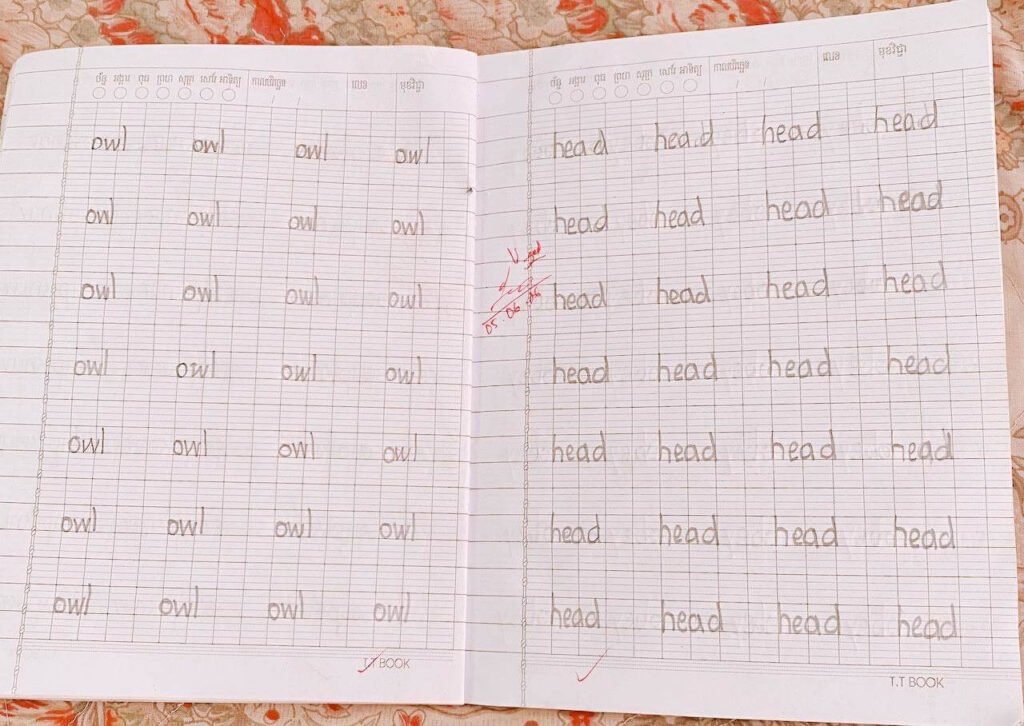
Instead of saying “Good writing!” I asked her: “You wrote a whole page! Which word is your favorite?” and “How do you feel about what you wrote?”
Her expression shifted immediately.
She looked at her page differently, as if seeing her own work for the first time through her own eyes rather than waiting for mine.
That moment of self-assessment is worth far more than my approval.
It is where real, internal confidence begins to form.
3. Praise the Effort, Not Just the Result
This is the heart of growth mindset parenting: shift your praise from the outcome to the process that got your child there.
When my daughter was struggling with fractions, I cut a fresh white onion into four equal pieces so she could see what one-quarter actually looks like in real life.
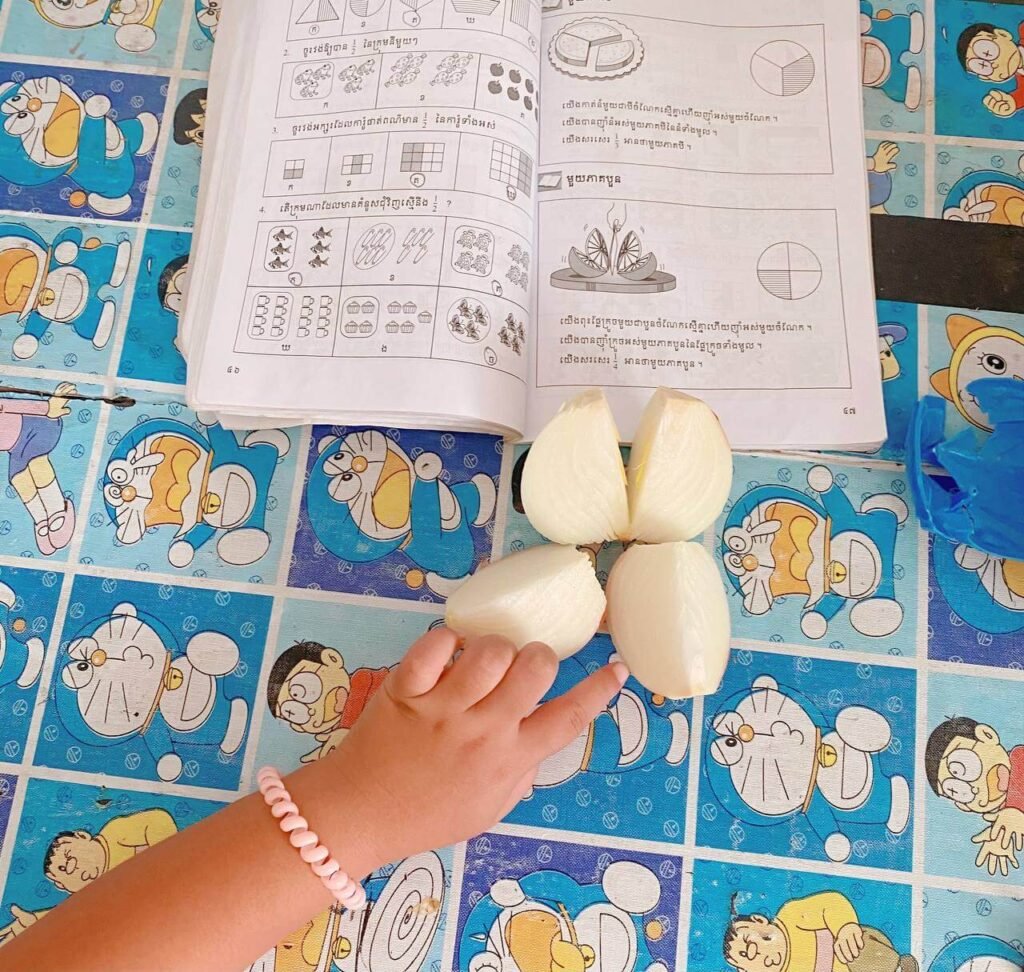
On another afternoon, I used fruit to show the same idea in a different way.
Each time, she worked through the problems with visible frustration, stopped, took a breath, and tried again.
When she finally understood, instead of “Good job, you got it right,” I said, “I saw that you were frustrated with this, but you did not give up.
You took deep breaths and kept trying until you solved it.
That is amazing persistence.”
Praising effort instead of results tells children that the struggle itself has value.
It teaches them that capability is not something fixed; you are either born with it or not.
It is something you build every time you stay with something hard.
4. Express Appreciation and Show Real Impact
Saying “you’re a good girl” sounds a little like praising a pet.
What children actually need to hear is that their actions have a real, specific effect on the people around them.
A simple formula that works well: “Thank you for [action]. It helped [benefit].”
When my daughter organized her shoes neatly against the bathroom wall, instead of “Good job getting ready,” I said, “Thank you for organizing your shoes and leaving them neatly by the wall as we talked about.
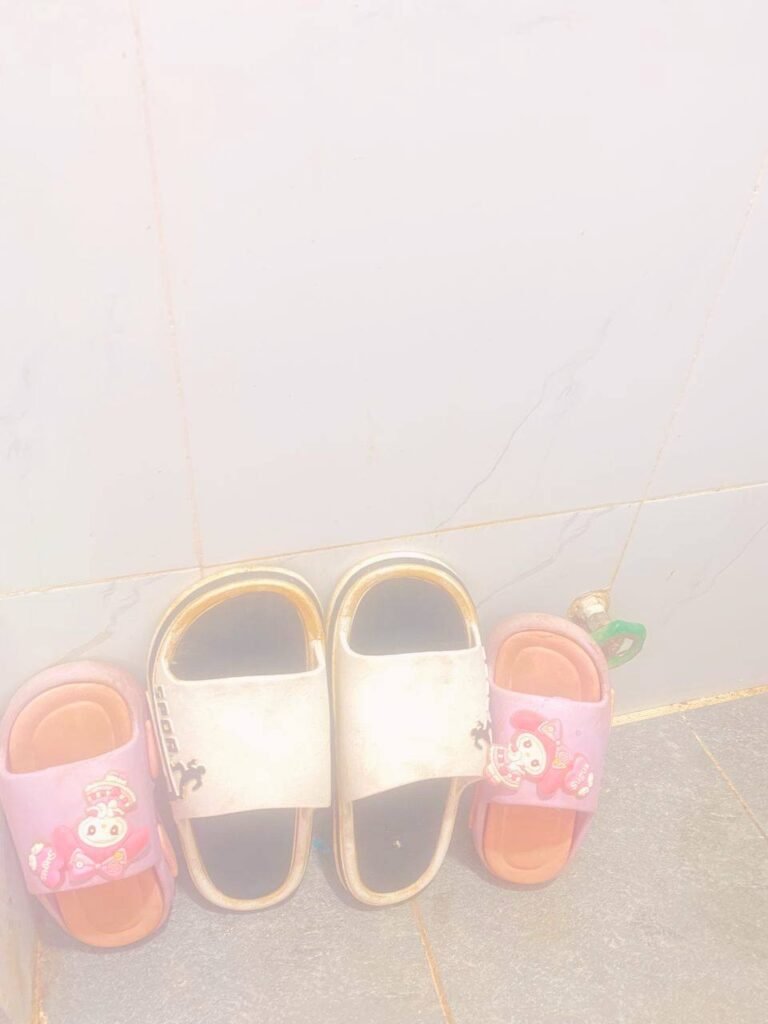
It really helps our mornings run smoothly so we are not late for school.”
She stood a little taller after that.
Not because I called her a good girl, but because she understood that what she did actually mattered to the family.
That is a much deeper kind of self-worth, and it does not evaporate when the compliment fades.
5. Say “You Did It!” and Keep the Joy Here
There is a meaningful difference between “I’m so proud of you” and “You did it!”
When I say “I’m so proud of you,” the success becomes at least partly about my feelings.
The spotlight shifts to me. When I say “You did it!”, the joy belongs entirely to her.
My daughter spent weeks asking to ride the big bicycle.
We finally agreed, once our family safety rules were clear: helmet always on, long clothes to protect her skin, and only on a quiet road away from traffic.
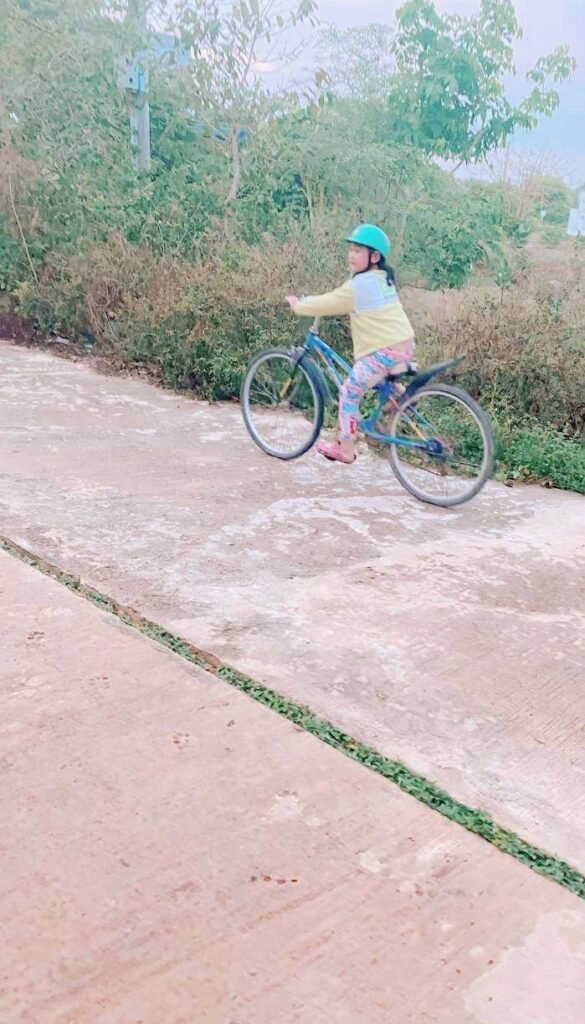
When she finally pedaled the whole stretch and kept her balance, I did not reach for “I’m so proud.” I said: “That’s incredible.
You did it! You kept your balance the whole way!”
The smile she gave back was different from her usual response to praise.
It was hers, completely.
6. Validate Feelings: “I Understand You.”
At age 8, children are dealing with real pressures.
Schoolwork gets harder.
Friendships get complicated.
Sometimes, they do not need a solution or a motivational speech.
They just need to feel genuinely heard.
When we are working on homework, and she starts looking tired and defeated, instead of saying “Don’t cry, it’s a small thing,”
I try: “I can see you’re feeling frustrated right now.
Let’s take a break and move around a bit.
It is completely normal to feel this way when something is hard.”
That response does not dismiss her feelings or hurry past them.
It tells her that her emotions make sense, and that I am a safe person to bring them to.
That is what it means to be a safe harbor for your child during the harder moments.
7. Quality One-on-One Time: Your Presence Is Its Own Message
Sometimes the most powerful thing a parent can offer is not a clever phrase.
It is full, undivided attention.
My husband does this naturally.
In the evenings, he sits with the children at the small learning table, working through things together with no phone nearby and no attention pulled elsewhere.
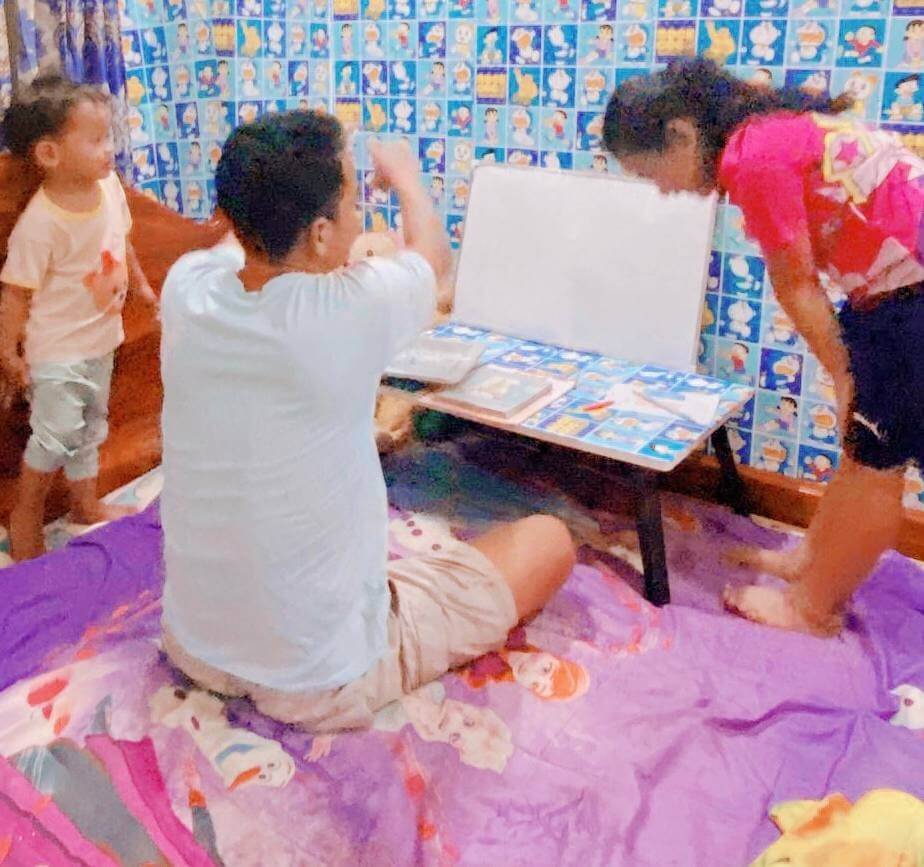
Just him, fully present with them.
Spending even 10 to 15 minutes a day in this kind of focused, screen-free time tells your child, without a single word, that they are worth your complete attention.
That message stays with them long after the session ends.
8. Collaborative Problem Solving: Let Her Brain Lead
One of the most important shifts in our home has been stepping back when a problem comes up.
Instead of jumping in with the answer or the solution, I ask.
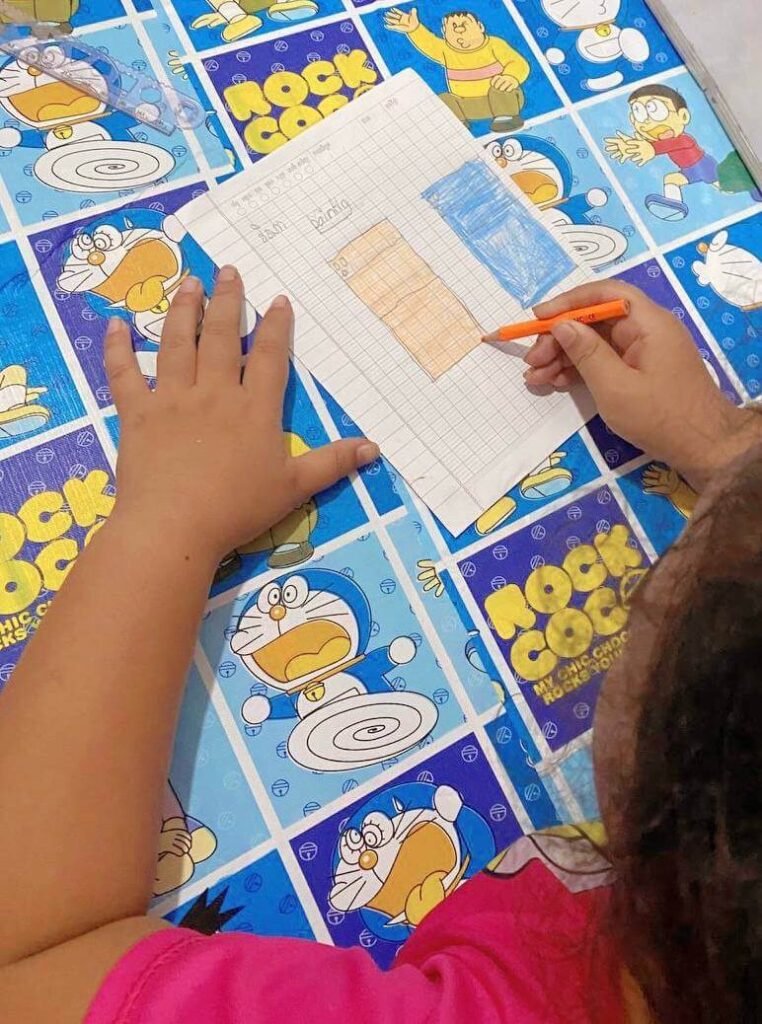
On a quiet weekend afternoon, my daughter decided to draw.
She drew two refrigerators side by side: one she colored in a warm orange for herself, and one in a bold teal for her younger brother.
Instead of “You drew that well,” I said, “I notice you chose a really vibrant orange for yours, and the shade of teal for your brother’s is so bold.”
And when she forgets her school book, instead of scolding her, I ask: “You forgot your book today.
What do you think we could try next time so that does not happen again?” She usually figures out her own solution.
Because it came from her own thinking, she actually follows through on it.
Collaborative problem solving with kids builds responsibility without shame.
It teaches them to think forward rather than getting stuck in the mistake.
A Note for Parents Who Are Still Getting Used to This
Changing how you speak to your child takes time.
There will be days when “good job” comes out before you have even thought about it.
That is completely fine.
You do not need to get this right every single time for it to matter.
A few things that have kept me consistent:
- Small changes count more than perfect ones. You do not need to overhaul every conversation. One more specific observation per day is already meaningful progress.
- Your actions teach as loudly as your words. Your child is watching how you handle difficulty, frustration, and your own mistakes in everyday life. That is always her biggest classroom.
- Consistency builds the pattern over time. These growth mindset praise phrases for kids do not work instantly. They work because they are repeated with genuine attention, adjusted as your child grows, and given with real care over many months.
Conclusion
If you have been wondering what to say instead of “good job,” the good news is that you do not need scripts or a complete parenting overhaul.
You need to start noticing more, asking more, and describing what you actually see in front of you.
Descriptive praise, effort-focused language, questions that build self-reflection, and appreciation that shows your child their actions have a real impact on the people they love: these are all practical, proven alternatives to empty praise.
They are also more honest, because they require you to actually pay attention rather than offer a reflex compliment.
You already love your child deeply.
These shifts just give that love a more specific, more useful, and more lasting voice.
Frequently Asked Questions
What if my child explicitly asks me, “Did I do a good job?”
It happens all the time! Because children are so used to hearing generic praise from the world around them, they actively look for it. When my daughter holds up a drawing and asks, “Is this good?”, I gently turn the question back to her.
I will say something like, “I love how you used so much blue right here. But what do you think of it?” or “Are you proud of how it turned out?” If she says yes, I validate her by saying, “That is the best part—doing something that makes you feel proud.” It gives them the warm connection they are looking for while keeping the evaluation internal.
Will my child think I’m upset with them if I suddenly stop praising them?
They might notice a shift if you suddenly go completely silent, which is why the goal is not to stop praising, but to change how you praise. You do not want to be less warm; you just want to be more specific.
If you usually say “good job” with a big smile and a high-five, keep the big smile and the high-five! Just swap the words to “You did it!” or “I saw how hard you worked on that.”
The affection and enthusiasm are what your child is really seeking, and they will feel that love just as deeply with your new words.
What if my partner or parents refuse to stop saying “good job”?
You cannot control how grandparents, teachers, or extended family speak. When my parents visit, the “good jobs” flow freely, and I used to stress over it. Now, I just let it be.
Your child’s mindset is shaped by consistency over time, primarily from you. If they receive generic praise from a relative, but thoughtful, descriptive feedback from you most days of the week, they are still getting exactly what they need. You are providing the foundation, and that is more than enough to build their resilience.
